Saturday, 23 August 2014

(137) Andrews of Ardara House and Maxwell Court, Comber

Andrews of Comber
The Andrews family of Comber played a prominent part in the industrial history of Ulster from the 18th to the 20th century, and in the late 19th and 20th centuries they have also been significant figures in the legal and political establishment. The family are said to have emigrated from Scotland to Ulster in the early 17th century, and to have settled at Mahee Island; their original name was Andrew.  Thomas Andrews (1698-1744) is the first of whom anything much is known.  He had a corn mill at Comber, but it was his son John Andrews (1721-1808) who developed industrial businesses at Comber. He built his first wash mill for bleaching linen at Comber in 1745 and in 1771 replaced it with a new flour mill with a bleach works and beetling mill alongside.  When he died in 1808 he was succeeded by his youngest son and partner, James Andrews (1762-1841), who lived at The Old House in the centre of Comber village (demolished in 1956).
The Old House, Comber. Image: PRONI
James had no less than nine sons, of whom the elder four worked in the Comber businesses, while the younger five were bred to the law. John Andrews (1792-1864) and Isaac Andrews (1799-1883) were chiefly responsible for the linen trade and William Glenny Andrews (1793-1871) and Thomas Andrews (1798-1838) for the bleaching and milling sections of the business.


In 1863 John Andrews (1792-1864) founded a limited company which built a flax spinning mill in 1863-64; this flourished under his son Thomas Andrews (1843-1916), and descended through several generations to Sir Jack Andrews (1903-86) and his son, John Maynard James Andrews (b. 1929). However in the late 20th century, linen production in Northern Ireland declined rapidly and in 1997 the firm ceased spinning flax and closed the Comber mill.  The firm established a mail order business in designer knitwear and Irish linen of traditional designs; they also have a shop in the stable court of Ballywilliam House. 

The older business of James Andrews & Sons was badly affected by a slump in the Irish linen industry in the late 1860s, and the family came to an arrangement by which Isaac Andrew (1799-1883) and his sons bought out the interests of the other members of the family in the business.  They closed the linen and bleaching sections of the firm, and put all their efforts into the milling and grain trade, and in 1883, they relocated the business from Comber to the long-established Belfast Flour Mills.  The firm, now Andrews Flour, has been in its present home in Percy St., Belfast, since 1895.

The family's growing wealth and social status was marked by the marriage of Thomas Andrews (1843-1916) with Eliza Pirrie (1845-1929), the elder sister of William James Pirrie (1847-1924), 1st Viscount Pirrie, who was chairman of Harland & Wolff, the shipbuilders who built the Titanic. The couple inherited both the Ardara and Maxwell Court estates at Comber, built a new Ardara House, and greatly extended Maxwell Court.  Their second son, Thomas Andrews (1873-1912) became the principal designer for Harland & Wolff and was lost with the Titanic when she sank on her first crossing to New York. Maxwell Court was left to their eldest son, John Miller Andrews (1871-1956) who was better known for a political career that culminated in his appointment as Prime Minister of Northern Ireland 1940-43. Maxwell Court descended to his son, Sir Jack Andrews (1903-86), who succeeded his father as MP for Mid Down and who ended his career as the Deputy Prime Minister, 1969-72. Sir Jack's grandson, John William Hunter Andrews (b. 1959) is the present owner.  Ardara House passed to his youngest son, William Andrews (1886-1966), who died without issue. He left it to his great-nephew, Thomas Miller Andrews (b. 1938), who converted it into apartments.

Ardara House, Comber, Co. Down
Ardara House, from an early 20th century photograph

A large two-storey house built in 1872 for Thomas Andrews in a plain sub-Italianate style with a projecting eaves cornice and a hipped slate roof.  The entrance front is on one end of the building, giving an initially misleading impression of its size.  Later additions of 1904 include curved bay windows added to both ends of the entrance front, lighting the main rooms, and probably the paired semi-circular headed windows either side of the projecting square porch. The house remains in the family's ownership but has been converted into apartments.

Descent: James Alexander Pirrie; to daughter, Eliza, wife of Thomas Andrews (1843-1916); to youngest son, William Andrews (1886-1966); to great-nephew, Thomas Miller Andrews (b. 1938).

Maxwell Court, Comber, Co. Down
Maxwell Court, Comber, in recent years

The house stands in quite extensive grounds on the outskirts of Comber, and was perhaps built originally for the Cairns family, as James Cairns was living here in 1837 and had a working corn mill in the grounds.. The five-bay two storey central block is in origin a late 18th or early 19th century house, but the appearance is now wholly Victorian, thanks to the addition in about 1885 of a gabled centrepiece, dormers in the roof, and long single-storey wings with bay windows to either side.  


Maxwell Court: the central block

Descent: James Cairns; to James Crea; who sold 1873 to John Miller (d. 1883); to Eliza Andrews (1845-1929); to son, Rt. Hon. John Miller Andrews (1871-1956); to son, Sir John Lawson Ormrod Andrews (1903-85); to son, John Maynard James Andrews (b. 1929); to son, John William Hunter Andrews (b. 1959).

Andrews family of Comber


John Andrews
(1721-1808)
Andrews, John (1721-1808). Eldest son of Thomas Andrews (1698-1743) of Comber, miller, and his wife Agnes Reid (d. 1776), born 1721. Linen-bleacher, miller, soapboiler, chandler and farmer at Comber; built a new bleach mill and flour mill. He served with the Belfast Volunteers garrisoning Carrickfergus Castle, 1745, and was an officer in the Down Foot Regiment, 1760; he raised and commanded a Volunteer company, 1779-88.  In 1783 he won £10,000 in the Irish State Lottery, and purchased the townland of Carnesure. He married, 1746, Mary (d. 1790), daughter of Michael Corbitt of Newtownards (Down) and had issue, with five other children who died young:
(1) Thomas Andrews (1747-1809) of Belfast, linen trader; an original member of Belfast Chamber of Commerce, 1783; a Lieutenant in his father's Volunteer Company, 1779; JP for Co. Antrim, 1796; Deputy Governor of Belfast, 1804; married, 28 November 1774, Ann (d. 1816), daughter of Capt. William Forde of 64th Foot, but died without issue;
(2) Agnes Andrews (c.1748-73); died unmarried, January 1773;
(3) Michael Andrews (c.1749-1805) of Annsborough (Down), linen bleacher; married, 1779, Elizabeth (d. 1841), daughter of John Meek of Watersough (Lanarks) and had issue three sons and three daughters;
(4) Mary Andrews (b. c.1750); married, May 1795, David Wilson of Belfast and Tullygirvan House (Down), merchant, and had issue two daughters;
(5) John Andrews (c.1751-1770) of Comber, miller; died unmarried, March 1770;
(6) Elizabeth Andrews (c.1754-78); died unmarried, November 1778;
(7) Margaret Andrews (c.1756-81); married, 17 November 1780, John Gaussen, shipowner, merchant and miller, but died without issue, 1781;
(8) Robert Andrews (b. c.1757), assistant to his father until 1784 when he moved to London;
(9) William Andrews (c.1761-84) of Comber, linen dealer; died unmarried, December 1784;
(10) James Andrews (1762-1841) (q.v.).
He erected the house later known as The Old House, Comber.
He died 3 June 1808.  His wife died 23 February 1790.


James Andrews
(1762-1841)
Andrews, James (1762-1841). Youngest son of John Andrews (1721-1808) of Comber, miller and bleacher, and his wife Mary, daughter of Michael Corbitt of Newtownards (Down), born 6 December 1762. In partnership with his father as John & James Andrews from 1792 and sole legatee of his father's property, subject to the payment of various legacies; Lieutenant in his father's Volunteer Company, 1779; co-founder of Comber Unitarian Church, 1838.  He married, 17 February 1792, Frances (d. 1835), daughter of William Glenny of Newry (Down) and had issue:
(1) John Andrews (1792-1864) (q.v.);
(2) William Glenny Andrews (1793-1871) of Comber, born 2 October 1793; educated at Crumlin Academy and Glasgow University; in partnership with his father from 1812; received Gold Medal of Royal Dublin Society, 1835, for an essay on the failure of the potato crop; erected the family mausoleum at Comber, 1867; died unmarried, 23 November 1871;
(3) Margaret Andrews (1795-1876), born 14 February 1795; died unmarried, 2 February 1876;
(4) Mary Andrews (1796-1884), born 14 March 1796; died unmarried, 19 October 1884;
(5) Thomas Andrews (1798-1838) of Comber, born 5 May 1838; educated at Crumlin Academy and Glasgow University; in partnership with his father from 1821; died unmarried, 29 May 1838;
(6) Isaac Andrews (1799-1883) of The Square House, Comber, born 8 April 1799; educated at Crumlin Academy and Glasgow University; in partnership with his father and brothers 1821-79 and then took over the milling side of the business as Isaac Andrews & Sons; awarded Gold Medal of Royal Agricultural Improvement Soc. of Ireland, 1845; married 1st, 25 April 1844, Mary Ann (d. 1852), daughter of John Drew of Glasgow and had issue one son and two daughters, and 2nd, 4 September 1862, Jane (d. 1882), daughter of Henry Quinn of Newry (Down) and widow of James Boomer of Seaview, Belfast; died 13 September 1883;
(7) James Andrews (1800-75) of Belfast and Dublin, born 1800; educated at Crumlin Academy and Glasgow University; admitted a solicitor, 1822; trustee of Belfast Savings Bank, 1836; instrumental in forming the Northern Law Court, of which he was the first President; married 1st, 1826, Isabella Anna Minty (d. 1854) and had issue two sons and three daughters; married 2nd, Jane Thompson (d. 1904) and had issue one daughter;
(8) Robert Andrews (1802-65) of Dublin, born 6 May 1802; educated at Crumlin Academy and Trinity College, Dublin (LLD 1830); barrister (QC 1849); chairman successively of the Louth, Carlow, Wexford, Cork (East Riding) and Donegal Quarter Sessions; member of Queen's University, Belfast; Commissioner enquiring into condition of lunatic asylums in Ireland, 1857; married, 17 December 1832, Anne Jane (d. 1895), daughter of James Thomas Kennedy of Summerhill, Dublin and had issue two sons and two daughters; died 20 February 1865;
(9) Joseph Andrews (1804-35), born 28 June 1804; educated at Crumlin Academy and Glasgow University; admitted a solicitor, 1828; in partnership with his brother, James; married, 12 December 1833, Jane (who m.2, George Boylan of Merino, Dublin), daughter of William Johnson of Fortfield, Belfast and had issue one son; died 24 July 1835;
(10) Frances Andrews (1806-1905); married, 6 April 1841, Henry James Leslie, barrister-at-law, son of John Leslie of Court McSharry (Cork); died 1905;
(11) Charles James Fox Andrews (1808-91), born 1808; educated at Crumlin Academy and Trinity College, Dublin (BA 1830; MA 1835); barrister-at-law (called to bar, 1832; QC 1858); married, 11 November 1839, Anne, daughter of John Leslie of Court McSherry (Cork) and had issue two sons and three daughters; died 1891;
(12) George Andrews (1810-33), born 19 March 1810; died unmarried, 11 April 1833.
He inherited The Old House at Comber from his father in 1808.
He died 2 July 1841.  His wife died 5 December 1835.
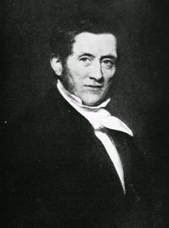

John Andrews
(1792-1864)
Andrews, John (1792-1864). Eldest son of James Andrews (1762-1841) and his wife Frances, daughter of William Glenny of Newry (Down), born 15 November 1792. Educated at Crumlin Academy and Glasgow University. In partnership with his father from 1812; founded firm of John Andrews & Co., flax spinners, of Comber, 1863; agent for the Marquess of Londonderry from 1830; member of Committee of Appeal on Valuation for Barony of Ards, 1833; committee member and later Chairman of Chemico-Agricultural Society of Ulster (formed 1846); committee member of North-East Agricultural Association, 1854. He married, 25 August 1825, Sarah (d. 1902), daughter of William Drennan MD of Dublin and Cabin Hill (Down), and had issue:
(1) Sarah Andrews (1827-29), born 12 November 1827; died in infancy, 17 October 1829;
(2) James Andrews (1829-82) of Carnesure House, Comber, born 23 November 1829; educated at Belfast Royal Academical Institution and Queens University, Belfast; partner in James Andrews & Sons, 1827 and John Andrews & Co., 1863; JP for Down (1870); married, 21 March 1863, his cousin, Mary Catherine (1836-86), daughter of Robert Andrews QC of Mountjoy Sq., Dublin and had issue four sons and two daughters; died 7 February 1882;
(3) William Drennan Andrews (1832-1924) of Dublin, born 24 January 1832; educated at Belfast Royal Academical Institution, Trinity College, Dublin (BA 1854; LLD 1860) and Kings Inns, Dublin (called to bar, 1855; QC 1872; bencher 1882; hon. bencher 1910); barrister-at-law; Judge of Exchequer Division of High Court in Ireland (later merged in King's Bench Division), 1882-1910; sworn of the Privy Council, 1897; married, 20 August 1857, Eliza (d. 1901), daughter of John Galloway of Monkstown (Dublin) but died without issue, 3 December 1924;
(4) Sarah Andrews (1834-45), born 23 May 1834; died young, 2 March 1845;
(5) John Andrews (1838-1903), born 27 January 1838; educated at Belfast Royal Academical Institution and Queens University, Belfast; partner in James Andrews & Sons and John Andrews & Co.; member of Grand Jury for Co. Down; married, 5 May 1868, his cousin Ann (1845-1937), daughter of Isaac Andrews of Uraghmore, Comber and had issue two sons and three daughters; died 28 March 1903;
(6) Thomas Andrews (1843-1916) (q.v.);
(7) Frances Andrews (1850-1936), born 19 February 1850; married, 3 April 1878, Edmund William Garrett (d. 1936) of Ardeevin, Epsom (Surrey), Metropolitan Police magistrate, son of Henry Garrett of Cromac House (Antrim) and had issue two sons and three daughters; died November 1936.
He inherited The Old House at Comber from his father in 1841.
He died 13 May 1864. His widow died 13 February 1902.


Thomas Andrews
(1843-1916)
Andrews, Rt. Hon. Thomas (1843-1916) of Ardara.  Fourth and youngest son of John Andrews (1792-1864) and his wife Sarah, daughter of William Drennan MD of Dublin and Cabin Hill (Down), born 26 February 1843. Educated at Belfast Royal Academical Institution and Queens University, Belfast. Partner and later Chairman of John Andrews & Co. from 1863; Chairman of Belfast & Co. Down Railway Co., 1895-1916. President of Ulster Liberal Unionist Association, 1892-1916; a promoter of the Great Ulster Convention, 1892; member of the Ulster Defence Union, 1893 and Recess Committee 1895; member of Appeal Commission under Local Government Act 1898 and Arterial Drainage Committee 1905; hon. sec. of the Ulster Unionist Council and member of the Ulster Day Committee; sworn of the Privy Council of Ireland, 1903; DL for Co. Down; High Sheriff of Co. Down, 1912; Chairman of Co. Down County Council, 1902-14.  He married, 15 September 1870, Eliza (1845-1929), only daughter of James Alexander Pirrie of Little Clandeboye (Down) and sister of 1st Viscount Pirrie, and had issue:
(1) Rt. Hon. John Miller Andrews (1871-1956) (q.v.);
(2) Thomas Andrews (1873-1912) of Dunallan, Windsor Ave., Belfast, born 7 February 1873; educated at Belfast Royal Academical Institution; Chief Designer and Managing Director of Harland & Wolff, shipbuilders, of Belfast; Member of Institute of Naval Architects and Institute of Mechanical Engineers; member of Society of Naval Architects and Society of Marine Engineers of New York; married, 26 June 1908, Helen Reilly (who m2. Henry Harland), daughter of John Doherty Barbour of Conway, Dunmurry (Antrim) and had issue one daughter; drowned at sea in loss of RMS Titanic, which he designed, 1912;
(3) Eliza Montgomery Andrews (1874-1930), born 21 June 1874; married, 26 April 1906, Lt-Col. Lawrence Arthur Hind (d. 1916), solicitor, son of Jesse Hind of Edwalton (Notts) and had issue three daughters; died 30 June 1930;
(4) Rt. Hon. Sir James Andrews (1877-1951), 1st bt., of Eusemere, Comber (Down), born 3 January 1877; educated at Belfast Royal Academical Institution, St. Stephen's Green School, Dublin, Trinity College, Dublin (BA 1899; hon. LLD 1938) and Kings Inns, Dublin (called to bar 1900; KC 1918; bencher 1920); barrister-at-law; Lord Justice of Northern Ireland, 1921-37 and Lord Chief Justice of Northern Ireland, 1937-50; sworn of Privy Council of Northern Ireland, 1924; Bencher of Inn of Court of Northern Ireland, 1926; Senior Pro-Chancellor of Queen's University, Belfast; Chairman of Ulster Savings Committee, 1939-46; created a baronet, 6 July 1942; married, 17 May 1922, Jane Lawson (d. 1964), daughter of Joseph Ormrod of Heaton (Lancs) and widow of Capt. Cyril Gerald Haselden of Spetisbury (Dorset), but had no issue; died, 18 February 1951, when the baronetcy became extinct;
(5) An unnamed son, born 26 December 1883 and died in infancy, 27 January 1884;
(6) William Andrews (1886-1966) of Ardara, born 25 August 1886; educated at Belfast Royal Academical Institution and Queens University, Belfast; director of John Andrews & Co. from 1916; member of committee of Northern Bank from 1940; served in WW1 and WW2 with Royal Army Ordnance Corps (Capt.) and Royal Navy Volunteer Reserve (Lt.); a well-known Ulster cricketer; died unmarried, 26 April 1966.
His wife inherited Ardara.
He died 17 September 1916. His widow died 10 March 1929.


John Miller Andrews
(1871-1956)
Andrews, Rt. Hon. John Miller (1871-1956) of Maxwell Court. Eldest son of Thomas Andrews (1843-1916) and his wife Eliza, only daughter of James Alexander Pirrie of Little Clandeboye (Down), born 17 July 1871. Educated at Belfast Royal Academical Institution. Chairman of John Andrews & Co. from 1916; Director of Belfast & Co. Down Railway Co., 1916-21, Belfast Ropeworks Co. Ltd., 1919-41; President, Belfast Chamber of Commerce, 1936; President, Ulster Unionist Labour Association; Patron, Ulster Unionist Council; Grand Master of Orange Institution of Co. Down from 1941, Orange Institution of Ireland, 1948 and Orange Imperial Grand Council of World, 1949; Freeman of the City of Derry, 1943; MP in Northern Ireland Parliament for Co. Down, 1921-29 and for Mid Down, 1929-56; Minister of Labour in NI Cabinet, 1921-37; Minister of Finance, 1937-40; Prime Minister of NI, 1940-43; sworn of Privy Council of NI, 1922; DL and County Councillor for Down, 1918-37; High Sheriff, Co. Down, 1929; appointed Companion of Honour, 1943; awarded Hon. LLD, Queen's University, Belfast, 1947. He married, 10 September 1902, Jessie (1874-1950), eldest daughter of Joseph Ormrod of Heaton (Lancs) and had issue:
(1) Sir John Lawson Ormrod Andrews (1903-86) (q.v.);
(2) Nina Morie Andrews (b. 1904), born 30 October 1904; married, 13 November 1933, Malcolm Adair Alexander Crawford, son of Lt-Col. Frederick Hugh Crawford of Belfast and had issue two sons;
(3) Josephine Miller Andrews (b. 1909), born 26 October 1909; married, 7 September 1932, Savell Ormrod Hicks, son of Rev. Ernest Savell Hicks of Dalkey (Dublin) and had issue two daughters;
(4) Lizzie Jean Andrews (b. & d. 1915), born 22 and died 25 September 1915.
He lived at Maxwell Court, Comber.
He died 5 August 1956. His wife died 26 November 1950.

Andrews, Sir John Lawson Ormrod (1903-86) of Maxwell Court. Only son of Rt. Hon. John Miller Andrews (1871-1956) and his wife Jessie, daughter of Joseph Ormrod of Heaton (Lancs), born 15 July 1903. Educated at Moure Grange Prep School and Shrewsbury School. Managing Director of John Andrews & Co. Ltd from 1927.  MP in Northern Ireland Parliament for Mid Down, 1953-64; sworn of Privy Council of Northern Ireland, 1957; Minister of Health & Local Government in NI Cabinet, 1957-61; Minister of Commerce, 1961-63; Minister of Finance, 1963-64; member of Northern Ireland Senate, 1964-72; Deputy Prime Minister of Northern Ireland, 1969-72; President of Unionist Party of Northern Ireland, 1974; appointed KBE 1974; DL for Co. Down, 1961. He married, 17 May 1928, Marjorie Elaine Maynard (1906-80), youngest daughter of Alfred Morgan James of Newport (Monmouths.), and had issue:
(1) John Maynard James Andrews (b. 1929) (q.v.);
(2) Heather Lillian Elaine Andrews (b. 1932), born 17 May 1932; married, 9 April 1955, Trevor Dempster Boyd, son of Austen Boyd of Cultra (Down);
(3) Thomas Miller Andrews (b. 1938) (q.v.);
(4) Charles James Morgan Andrews (b. 1945) of Ballymaleddy, Comber, born 15 April 1945; educated at Campbell College, Belfast; director of Isaac Andrews & Co. Ltd; married, 12 August 1969, Elizabeth Mary, only daughter of John Davidson Carson of Craigarusky, Ardmillan (Down) and had issue one son and one daughter.
He inherited Maxwell Court from his father in 1956.
He died 12 January 1986. His wife died in 1980.

Andrews, John Maynard James (b. 1929) of Maxwell Court.  Eldest son of Sir John Lawson Ormrod Andrews (1903-86) and his wife Marjorie Elaine Maynard, daughter of Alfred Morgan James of Newport (Monmouths.), born 25 September 1929. Educated at Shrewsbury School. Director of John Andrews & Co. Ltd. to 2007.  He married, 19 January 1957, Edith Morna, only daughter of Reginald Redvers Hunter of Bangor (Down) and had issue:
(1) John William Hunter Andrews (b. 1959) (q.v.); 
(2) Elaine Mary Andrews (b. 1961), born 8 November 1961; married, 29 April 1989, Kevin Hugh Lindley-Perry and had issue one son;
(3) Charles Robert M. Andrews (b. 1971), born 17 November 1971; married, 29 November 1999, Vicky Sunter.
He inherited Maxwell Court from his father in 1985.
Now living.

Andrews, John William Hunter (b. 1959) of Maxwell Court. Elder son of John Maynard James Andrews (b. 1929) of Maxwell Court, and his wife Edith Morna, only daughter of Reginald Redvers Hunter of Bangor (Down), born 6 August 1959. Educated at Campbell College, Belfast and Pembroke College, Cambridge (MA). Chartered accountant (FCA); finance director & co. secretary, John Andrews & Co. Ltd.; director, Comber Regeneration Community Partnership Ltd. JP for Co. Down. He married, 25 September 1990 (div. 2014), Iona Mary Erskine, and had issue:
(1) Morna Diana Gwendolyn Andrews (b. 1993), born 14 February 1993;
(2) Thomas John Erskine Andrews (b. 1996), born 4 June 1996.
Now living.

Andrews, Thomas Miller (b. 1938) of Ardara. Second son of Sir John Lawson Ormrod Andrews (1903-86) and his wife Marjorie Elaine Maynard, daughter of Alfred Morgan James of Newport (Monmouths.), born 17 September 1938. Educated at Campbell College, Belfast. Director of John Andrews & Co. Ltd, flaxspinners. He married, 22 June 1962, Dianne Maureen, eldest daughter of Lt-Cmdr. William Gifford Carson of Ballyrosky House, Killinchy (Down) and had issue:
(1) Christopher Thomas Andrews (b. 1963), born 30 November 1963; orthopaedic surgeon; Director of John Andrews & Co.;
(2) Michael William Andrews (b. 1968), born 28 February 1968; Director of John Andrews & Co.
He inherited Ardara from his great-uncle in 1966 but converted it into apartments.
Now living.


Sources


Burke's Irish Family Records, 1976, pp. 22-27; K. Rankin, The Linen Houses of County Antrim and North County Down, 2012, pp. 151-59; http://www.comberhistory.com/chsandrewsfamily.htm.


Location of archives


Andrews family of Ardara and Maxwell Court: account of Robert and James Andrews, 1756-1802; family correspondence, papers and photographs, 1796-1956 [Public Record Office of Northern Ireland, T3214; D3655].  Some business archives are also at the PRONI [D1769; D4189]


Coat of arms


Azure on a fesse or three mullets of the field


Revision and acknowledgements

This post was first published 23 August 2014 and was updated 14 February and 14 October 2017 and 2 January 2023.

Sunday, 17 August 2014

(136) Anderton of Lostock Hall, baronets

Anderton of Lostock
This branch of the Anderton family were no doubt closely connected to the Andertons of Euxton and the stem family of Anderton (Lancs), but the precise nature of the connection has not been established with certainty.  Christopher Anderton (c.1533-92) was a successful London lawyer and Duchy of Lancaster official, and in 1562 he purchased the manor of Lostock (Lancs) and built a new semi-timbered manor house there.  At the end of his life, perhaps after retiring to his estate, he also constructed a large new gatehouse, dated 1591, which still exists.  It could have been intended as the first phase of a general rebuilding, but if so, work was abandoned after his death. Lostock passed to his eldest son, James Anderton (1557-1613), who also succeeded him in his judicial appointment with the Duchy, but retired in 1608.  Brought up in a religiously conservative household, James either always had been, or reverted to being, a practising Catholic, and wrote a number of works defending and justifying the faith, although only one of these was published in his lifetime.  The rest were printed after his death by his younger brother, Roger Anderton (d. 1640), who operated a secret Catholic press at Birchley Hall between at least 1615 and 1621.

James Anderton died without issue in 1613 and the Lostock estate passed to his brother, Christopher Anderton (1559-1619), who was an avowed Recusant. He married late in life and his children were all minors at the time of his death, although his only son, Christopher Anderton (1608-50) had been through a child-marriage to Agnes Preston, which produced one daughter. In the mid 1620s Agnes must have died, for he married again, and his second wife, Alathea Smith, produced a large family. Christopher himself seems to have been ambivalent about the Royalist cause in the Civil War; declaring for the king but refusing to fight, he found himself taken prisoner by Prince Rupert and held at Liverpool and later at Chester.  He escaped into Wales and later to France, but was soon back in Lancashire and was present at the storming and massacre of Bolton in 1644, although he later maintained that he had not borne arms for the King. Despite his protestations, his estates were sequestered for the twin crimes of Recusancy and delinquency, and had not been recovered at the time of his death in 1650. In the 1650s his widow seems to have endured several years of real poverty, during which several of the children were put into service and apparently mistreated.  Two, perhaps three, of the sons, and two of the daughters entered the church, but the eldest son and heir, Sir Francis Anderton (1628-78), 1st bt. made an advantageous marriage into the Somerset family.  In the 1660s and 1670s he was able to increase the family estates significantly, buying the ancestral acres at Anderton from his distant cousins and setting up a marriage for his eldest son to the heiress of the Irelands of Lydiate Hall.  It was perhaps his connection to the Somersets which ultimately led to Francis being granted a baronetcy in 1677, the reasons for which are otherwise obscure.

Sir Charles Anderton (1657-91), 2nd bt. inherited the Lostock estate in 1678 and his wife inherited Lydiate Hall in 1682/3.
Lydiate Hall: a drawing for the Victoria County History, 1911
When Sir Charles died, the title passed in turn to four of his sons.  Sir Charles and Sir James died young, while studying at St. Omer, in 1705 and 1710. The next brother, Sir Lawrence Anderton (c.1680-1724)  became a Benedictine monk, and so the estate passed to the youngest brother, Francis Anderton (1681-1760), who also used the baronetcy title at this time although he did not inherit it until 1724.  He was part of the Jacobite uprising in 1715 and was present at the Battle of Preston in that year. For his part in the rebellion, he was convicted of high treason and sentenced to death, and although later pardoned his estates were sequestered for life. In 1724 his elder brother renounced his vows as a monk and converted to Anglicanism, allowing him to reclaim the estates, but five months later he died and since the title and estates passed once more to Sir Francis Anderton, the state resumed possession. Lostock Hall seems to have become a farmhouse from 1716 onwards; Sir Francis lived at Lydiate Hall, perhaps as a tenant of the Crown appointees who were put in to manage the estates. When he died without issue in 1760, the sequestration came to an end, and the estates passed to his sister's grandson, Henry Blundell of Ince Blundell (1724-1810), whose family will be the subject of a future post.


Lostock Hall, Lancashire


Lostock Hall, from an early 19th century engraving

A half-timbered house said to have been dated 1563 on the entrance doorcase, the year after Christopher Anderton acquired the manor.  The drawing in Philips's Views of Old Halls of Lancashire and Cheshire shows a half-timbered house with four overhanging timber gables in the principal front, the lower portion built in either stone or brick. Another of Philips's drawings in the same book shows three gables only, the large southern one having presumably been destroyed.  The house is said to have been modernised in 1702, which was the date formerly on a rainwater head from the house, but after the estate was sequestered by the Crown in 1716 the hall became a farmhouse, and it was partly demolished in 1816 and completely taken down in 1824.

Lostock Hall in the late 19th century.

The surviving large stone gatehouse (45 x 22½ feet, and 33 feet high) is dated 1591.  It is a three-storey stone building with a staircase tower at its north-west angle, and the main front faces east.  In the centre of the ground floor is a blocked archway, and above it in the two upper stages there are eight-light mullioned and transomed windows, all these features being flanked by pairs of widely-spaced columns: Tuscan on the ground floor, Ionic and Corinthian above. Between each stage are wide strings taking the form of cornice, frieze, and architrave, and breaking out over the columns, the cornices only being continued as strings all round the building. The whole composition shows a far more pronounced Renaissance spirit than is usually found in this part of Lancashire at this time. There were originally no windows on the ground floor, but two sashes have been introduced between the columns, one on each side. Over the large window on the first floor is a square panel with the arms of Anderton surmounted by helm, crest, and mantling, and over the second floor window is a similar panel with a shield bearing the royal arms of Queen Elizabeth, with the date 1591 and the royal initials E.R. The upper cornice is crowned with a scalloped parapet with traces of finials on the alternate crenallations. 


Lostock Hall c.2008. Image: Country Landscapes Ltd.

The other three sides of the building are faced with thin coursed rubble. The west arch of the gateway is also blocked up, but otherwise this face of the building preserves a good deal of its original appearance, having six mullioned windows, the lower ones with hood-moulds. The staircase wing at the north-west corner is built of rough thin-coursed stones and has its original windows; but the top of the tower, which formerly seems to have terminated in an octagonal turret with conical roof, has disappeared, and it is now finished with a plain lean-to roof sloping back from the level of the upper cornice. The original chimneystacks, too, have disappeared, and have been replaced by plain Victorian shafts. There is a range of buildings beyond the staircase tower on the north-west corner of the house extending westward, which was erected at about the time the main house was demolished. The building was used as a farm-house after 1816, and became derelict in the 20th century.  It was restored about 1960 and is now a private house; the interior has few features of interest apart from an original fireplace. 

Descent: sold 1562 to Christopher Anderton (c.1533-92); to son, James Anderton (1557-1613); to brother, Christopher Anderton (1559-1619); to son, Christopher Anderton (1608-50); to son, Sir Francis Anderton (1628-78), 1st bt.; to son, Sir Charles Anderton (1655-91), 2nd bt.; to Sir Charles Anderton (d. 1705), 3rd bt.; to brother, Sir James Anderton (d. 1710), 4th bt.; to brother, Francis Anderton (1680-1760), (later 6th bt.); sequestered following the Jacobite rising in 1715 but in 1724 released to Sir Laurence Anderton (d. 1724), 5th bt.; reverted to the Crown until 1760 when released to Henry Blundell (d. 1810), grandson of the sister of 6th baronet; to daughter, Catherine, wife of Thomas Stonor, who demolished the house in 1816 and 1824.


Anderton family of Lostock Hall, baronets


Anderton, Christopher (c.1533-92), of Lostock Hall. Son of Lawrence Anderton esq., and his wife Sybilla, daughter of Christopher Parker of Colne (Lancs), born about 1533. Lawyer in London. JP for Lancashire; Protonotary of the Court of Common Pleas for the Duchy of Lancaster from before 1573-1592. He appears to have supported the changes in religion, but in 1592 his widow was described as a recusant. He married Dorothy, daughter of Peter Anderton esq. of Anderton, and had issue:
(1) James Anderton (1557-1613) (q.v.);
(2) Christopher Anderton (1559-1619) (q.v.);
(3) Roger Anderton (d. 1640), of Birchley; a recusant who operated a secret Catholic press at Birchley Hall 1615-21 on which among other works were printed those of his brother, James, and his cousin, Fr. Lawrence Anderton SJ (1577-1620); he married Anne, daughter of Edward Stafford esq. of Perry Hall (Staffs) and had a large family including three or four daughters who became nuns; died in 1640;
(4) Elizabeth Anderton (fl. 1598); married Thomas Tildesley (d. 1590); reported to Lord Burghley in 1598 as 'one of the most obstinate recusants';
(5) Ann Anderton; married Roger Bradshaw (d. 1641) of Haigh (Lancs);
(6) Alice Anderton; married John Orrell (d. 1627) of Turton Tower (Lancs);
(7) Isabel Anderton; married 1st, [forename unknown] Langtree, and 2nd, 1589, Gervase Rockley of Rockley (Yorks);
(8) Dorothy Anderton; married [forename unknown] Thompson.
He purchased the manor of Lostock in 1562 and built a new hall there the following year. In 1591 he built the gatehouse.
He died at Lostock, 5 May 1592.

Anderton, James (1557-1613), of Lostock Hall. Eldest son of Christopher Anderton (c.1533-92) of Lostock Hall and his wife Dorothy, daughter of Peter Anderton esq. of Anderton (Lancs), born before 1559. JP for Lancashire; Protonotary of the Court of Common Pleas for the Duchy of Lancaster from 1592-1608, and a farmer of outlaw's goods.  He must have outwardly conformed to the established religion, but he was described in 1590 as 'backward in religion' and his wife as 'a recusant, only lately conformed'; he was reconciled to the Catholic church in later life, and left a bequest of £1,500 for the maintenance of Catholic clergy in England.  He published The Protestant's Apology for the Catholic church, 1604 (2nd edn., 1608) which was read by King James I himself. He married, 1582, Margaret, daughter of Edward Tyldesley, but died childless.
He inherited the Lostock Hall estate from his father in 1592.
He died 7 September 1613.

Anderton, Christopher (1559-1619), of Lostock Hall.  Second son of Christopher Anderton (c.1533-92) of Lostock Hall and his wife Dorothy, daughter of Peter Anderton esq. of Anderton (Lancs), born 1559. Educated at Grays Inn (admitted 1588). A recusant. He married, 1600, Anne, daughter of Edward Scarisbrick, and had issue:
(1) Christopher Anderton (1608-50) (q.v.);
(2) Dorothy Anderton; married Anthony Munson of Carleton (Lincs);
(3) Margaret Anderton; married Henry Turvile (1602-71) esq. of Aston Flamville (who married 2nd, Elizabeth, daughter of Thomas Ravenscroft and 3rd, Grace, daughter of Humphry Berry), but died without issue.
He inherited the Lostock Hall estate from his elder brother in 1613, but two-thirds of his estates were sequestered for his recusancy in 1615 and granted on lease to Patrick Malde and John Gibb.  It is not clear when or how they were recovered.
He died in 1619.

Anderton, Christopher (1608-50), of Lostock Hall. Only son of Christopher Anderton (1559-1619) of Lostock Hall, and his wife Anne, daughter of Edward Scarisbrick, born 10 February 1607/8.  He was a ward of the Crown, 1619-28. A recusant, he was educated at Douai Abbey, 1620-21, but left after eighteen months, being 'not inclined to study'. He paid a fine of £30 to avoid knighthood in 1632. At the outbreak of the Civil War he joined the Royalist cause, but appears to have tired of it, and was later imprisoned at Liverpool and Chester for refusing to act for the king; he then escaped to Wales and fled to France. He married 1st, as a child and before 1619, Agnes (b. c.1607), daughter of John Preston of Furness, and 2nd, Alathea, daughter of Sir Francis Smith of Wootton Wawen (Warks) and sister of Sir Charles Smith, 1st Viscount Carrington, and had issue:
(1.1) Margaret Anderton (fl. 1650); died unmarried;
(2.1) Mary Anderton (c.1626-1702); married William Jones (d. 1667) of Treowen and Llanarth Court (Monmouths.), son of Sir Philip Jones of Treowen, and had issue five children; buried at Llanarth, 9 February 1702;
(2.2) Sir Francis Anderton (1628-78), 1st bt. (q.v.);
(2.3) Christopher Anderton (1629-68); married Anne Anderton of Anderton and had issue;
(2.4) twin, Robert Anderton (d. 1700); perhaps a priest or monk; died unmarried in Rome;
(2.5) twin, James Anderton; married Elizabeth (surname unknown) and had issue a daughter;
(2.6) Fr. Thurstan Celestine Anderton (c.1635-97); ordained as a secular priest, 1646, but later joined the Benedictines; chaplain to Lord Molyneux at Sefton Hall (Lancs); died at Sefton, 12 August 1697;
(2.7) Alathea Anderton (1638-79); an Augustinian nun at Louvain, with the name in religion of Alethea Magdalen (scholar, 1653; professed 1658); died 28 March 1679;
(2.8) Stephen Anderton (c.1640-1711); married Katherine, daughter of Thomas Tempest and had issue at least one son;
(2.9) Elizabeth Anderton (1641-1736); an Augustinian nun in Paris, with the name in religion of Elizabeth (professed 1664; sub-prioress 1702-14); died in Paris, 2 April 1736;
(2.10) Bruno Anderton (1644-1723), born in Wales; a priest;
(2.11) Anne Anderton (fl. 1664); married, before 1655, John Turberville of Penclin Castle (Glamorgans.) and had issue at least three sons and one daughter;
(2.12) Dorothy Anderton (d. 1653);
(2.13) Emeria Anderton (fl. 1664);
He inherited the Lostock Hall estate from his father in 1619, but was a ward of the Crown until 1628. By 1638, two-thirds of his property had been sequestered for his recusancy. His estates were sequestered by Parliament 'for popery and delinquency' and had not been recovered at his death. His widow lived in humble circumstances at Clitheroe (Lancs) during the Commonwealth.
He died in London, 7 July, and was buried 9 July 1650.

Anderton, Sir Francis (1628-78), 1st bt., of Lostock Hall. Eldest son of Christopher Anderton (1608-50) and his second wife, Alathea, daughter of Sir Francis Smith of Wootton Wawen (Warks), born 1628. He renounced the Catholic faith in order to secure possession of his family estates, but appears to have subsequently been reconciled to the faith. Created a baronet, 8 October 1677. He married, 1654, Elizabeth (d. 1706), daughter of Sir Charles Somerset of Troy House (Monmouths.), second son of the Earl of Worcester, and had issue including:
(1) Sir Charles Anderton (1657-91), 2nd bt. (q.v.);
(2) Christopher Anderton (fl. 1691);
(3) Fr. Francis Anderton (d. 1723), a Jesuit priest;
(4) John Anderton (fl. 1691).
He succeeded his father in 1650 as head of the family and, with his mother, petitioned the Crown for the release of the family estates. He purchased the manors of Anderton (Lancs) in 1668 and Lady Hall in Anderton in 1673.
He died in Paris, 9 February 1678, and was buried in St. Edmund's, the English Benedictine church there, where he is commemorated by a monument.

Anderton, Sir Charles (1657-91), 2nd bt., of Lostock Hall. Eldest son of Sir Francis Anderton (1628-78), 1st bt., and his wife Elizabeth, daughter of Sir Charles Somerset of Troy House (Monmouths.), born 1657. He married, 1675, Margaret (d. 1720), daughter of Lawrence Ireland of Lydiate Hall (Lancs) and had issue:
(1) Sir Charles Anderton (d. 1705), 3rd bt.; died unmarried at St. Omer (France), 1705.
(2) Sir James Anderton (d. 1710), 4th bt.; died unmarried at St. Omer (France), 5 October 1710;
(3) Sir Lawrence Anderton (c.1680-1724), 5th bt.; educated at St. Omer (France); an English Benedictine monk at Dieulwart near Verdun and at Lanspey (Germany); renounced his faith to secure possession of the sequestered Lostock estate from the Crown, 21 May 1724; died unmarried in London, 4 October 1724;
(4) Sir Francis Anderton (1681-1760), 6th bt. (q.v.);
(5) Mary Anderton (fl. 1720); married, 1697, Henry Blundell (1663-1711) of Ince Blundell (Lancs) and had issue, including Robert Blundell (1700-73), whose son Henry Blundell (1724-1811) inherited the Lostock estate in 1760;
(6) Elizabeth Anderton;
(7) Anne Anderton.
He inherited the Lostock Hall estate from his father in 1678. His wife was heir to the Lydiate Park estate, which came into their possession in 1682/3 and passed to their children in turn.
He died 30 December 1691 and was buried at Bolton-le-Moors (Lancs), 4 January 1691/2. His will was proved at Chester, 8 March 1693. His widow died in London, 26 August 1720 and was buried at St Pancras (Middx).

Anderton, Sir Francis (1681-1760), 6th bt., of Lostock Hall. Fourth and youngest son of Sir Charles Anderton (1657-91), 2nd bt., of Lostock Hall, and his wife Margaret, daughter of Lawrence Ireland of Lydiate Hall (Lancs), born 1680.  He wrongfully assumed the baronetcy in 1710 in the place of his brother who was a Catholic priest, and was widely known by that title before inheriting it in earnest in 1724.  He took part in the Jacobite rising, was present at the Battle of Preston, 1715, and was convicted of high treason and sentenced to death, but afterwards reprieved; he forfeited his estates for life. He was later described as a 'gallant sportsman', and in 1744 caught a prize perch which many years after was kept stuffed at Lydiate Hall. He married, c.1707/8, Frances (1686-1740), daughter of Sir Henry Bedingfield, 2nd bt. of Oxburgh Hall (Norfolk) but had no issue.
He inherited the Lostock Hall estate from his brother in 1710, but it was sequestered in 1716 for his participation in the Jacobite rebellion of 1715. In 1724 it was returned to his elder brother, Sir Lawrence Anderton, 5th bt. when he abjured his faith, but on his death reverted to the Crown and remained sequestered until Sir Francis' death in 1760. At the time of his death be was living at Lydiate Hall. Following his death the estates passed to his sister's grandson, Henry Blundell (1724-1810) of Ince Blundell.
He died 12 February and was buried at Halsall (Lancs), 18 February 1760.


Sources


J.B. Burke, Extinct and Dormant Baronetcies, 1841, pp. 10-11; N.G. Philips, Views of Old Halls of Lancashire and Cheshire, 1822; H. Shaw, Details of Elizabethan architecture, 1839, pl. 7; G.E. Cokayne, Complete Baronetage, vol. 4, p. 92; VCH Lancashire, vol. 5, 1911, pp. 95-99; J.M. Robinson, A guide to the country houses of the north-west, 1991, p.217; A.F. Allison, "Who was John Brereley?", Recusant History, 16 (1982), pp. 17-40; M. Hardman, A kingdom in two parishes: Lancashire religious writers and the English monarchy, 1521-1689, 1998, especially ch.23; C. Hartwell, M. Hyde & Sir N. Pevsner, The buildings of England: Lancashire - Manchester and the South-East, 2004, pp. 243-44.

Location of archives

Anderton family of Lostock, baronets: deeds and a few estate papers, 16th-19th cents are included in the Blundell of Ince Blundell papers [Lancashire Record Office DDIN]. There are also a few relevant documents among the Anderton of Euxton muniments.

Coat of arms

Sable, three shacklebolts argent.

Revision and acknowledgements
This post was first published 17 August 2014, and was updated 17 November 2022.

Wednesday, 13 August 2014

(135) Anderton of Euxton Hall

The Andertons are first recorded at Euxton (pronounced Eckston) in 1489 but can trace their origins in central Lancashire much further back. Hugh Anderton (fl. 1466-1503) inherited his mother's estates in Lancashire from his elder brother in 1485 and by 1489 had taken a lease of Euxton from the Molyneux family. A new manor house is said to have been built in the early 16th century, presumably by James Anderton (d. 1551), but nothing is known about it, and no illustration of it seems to survive. James' son, Hugh Anderton (1516-66) was recorded in 1564 as being unfavourable to the changes in religion, and the family became one of the most diehard adherents of the Catholic faith in a county with a strong Recusant tradition. William Anderton (c.1564-1618) sired seven sons, of whom the eldest inherited the estate and the rest took monastic vows on the continent, one as a Franciscan friar and the rest as Benedictine monks. The heir, Hugh Anderton (1600-70), was able to purchase the freehold of Euxton in 1627, but he was a hot-headed supporter of the Royalist cause.  He was imprisoned and his estates were confiscated and sold during the Commonwealth years, although with the Restoration of King Charles II in 1660 he recovered his property. The next owner, William Anderton (1638-1704), was one of the Catholics appointed to as a Justice of the Peace by King James II in 1687; after the overthrow of the king in 1689 he was suspected of complicity in a Jacobite plot and imprisoned, although released without charge the following year. His son, Hugh Anderton (1673-1721) was less fortunate: he took up arms in the 1715 Jacobite rebellion, was convicted of treason and outlawed in 1716. His life interest in the settled estate was seized by the Crown and auctioned off, but bought on behalf of his heir by other members of the family, keeping the estate intact. 

His son, William Anderton (c.1708-44), rebuilt Euxton Hall on a suprisingly grand scale, showing that the disabilities under which Catholic families laboured did not prevent them accumulating significant wealth. He died before the second Jacobite rebellion of 1745 and his twin sons were too young to play any part in it, so the family was saved any further difficulties in the Stuart cause. Their commitment to the Old Faith was far from extinguished however, and the heir, Francis Anderton (1739-79) became a Benedictine monk at Douai Abbey and later chaplain at Linley Hall in Shropshire. In 1763 he made the Euxton estate over to his brother William Anderton (1739-1811), and a few years later William made a valuable marriage with another local Catholic family, the Inces of Ince Hall at Ince-in-Makerfield. His bride, Frances Sobieski Ince (d. 1816), was heir to the Ince estate and the couple seem to have lived there in preference to Euxton, even though Euxton was apparently the newer and grander house.  His son, William Ince Anderton (1770-1848), lived long enough to see the Catholic faith tolerated once more, and was able to resume the roles of JP and military officer from which his family's faith had debarred his ancestors. He sold Ince Hall in about 1818 and returned to live at Euxton, rebuilding the new Catholic chapel adjoining the house with the aid of a public subscription.

William Michael Ince Anderton (1825-84) was an archetypal Victorian improving squire. In 1848-50 he remodelled or even rebuilt the house at Euxton and in the 1860s he built both a Catholic church in the village and a new Gothic chapel in the grounds of the Hall for his family's own use. He married Lady Emma Frances Plunkett, daughter of the 9th Earl of Fingall, who was a talented amateur artist, and her social status helped to ensure her daughters married well: one into the Curzons and the other into the Starkies of Huntroyde. With the couple's sons, however, the male line of the family petered out: the heir, Col. William Anderton (1855-1926) married but had no issue; and the second and third sons, Sir Francis Anderton (1859-1950) and Henry Anderton (1880-1936) never married.  Sir Francis sold the Euxton estate in 1927, ending a connection of nearly 450 years, and shortly afterwards the house was largely destroyed by fire.  The new owner, Peter Reid (d. 1949), had it reconstructed as a much smaller single-storey house, and this survives, although it became a hospital in 1984.

A younger son of Hugh Anderton (1516-66), James Anderton (b. 1542), was married at the age of 12 to Elizabeth Elston, who was probably only eleven. In 1561 she secured an annulment of the marriage on the grounds of their ages at the time and of coercion by their parents, in what must have been an interesting test-case at a time when child-marriage was not uncommon, though increasingly frowned upon. James subsequently married the heiress of Bardsea Hall at Ulverston, and this estate passed, together with his father's property at Clayton-le-Woods, to his son, James Anderton (1576-1658). This James, like his cousin of Euxton, was a strong supporter of the Royalist cause, and sacrificed three sons who were killed in engagements during the 1640s. His surviving children all died without issue, and Clayton was sold to the 3rd Viscount Molyneux in 1683 and Bardsea to the 4th Viscount in 1705.  Since almost nothing is known of the Bardsea Hall of this time, an account of this house is reserved for a future post on the Gale family, who rebuilt it in the 18th and 19th centuries.


Euxton Hall, Lancashire

Euxton Hall as rebuilt in 1739, from an engraving published in 1846.


Nothing is known of the Tudor house of the Andertons at Euxton, said to have been erected in the reign of Henry VIII, which was demolished and rebuilt by William Anderton (d. 1744), reputedly in 1739.  The new house had a thirteen bay front and two storeys, with a central pediment and a four-column portico. The house contained plasterwork by Francesco Consiglio, who also worked at Lyme Park (Ches.); this included the ceilings of the entrance hall and staircase hall, and perhaps the bust of James II crowned with laurel and surrounded by military trophies which stood over the fireplace in the entrance hall.


Euxton Hall from 6" map surveyed in 1844-47,
showing the Georgian house
Euxton Hall from 6" map surveyed in 1892-93,
showing the house as rebuilt in 1848-50.


This house in turn is said to have been rebuilt (but probably only remodelled), still in the Classical style, in 1848-50 for William Michael Ince Anderton, who inherited the estate in 1848.  This house was again of thirteen bays and had giant pilasters and ornate decoration. In 1927 the estate was sold out of the Anderton family and shortly afterwards there was a disastrous fire. In 1929, the Hall was reduced in size and reconstructed as a single-storey seven-by-six bay house by H.S. Fairhurst of Manchester. This now has a fine pedimented doorcase with unfluted Ionic columns, which could be a survivor from the 18th century house.  The masonry of the building is probably 18th and 19th century, but the cupola and mansard roof are wholly of 1929.  The side windows with shallow canopies supported by consoles look convincingly of 1850.  Inside, there survives a drawing room with an elaborate Victorian plasterwork ceiling, now concealed by a false ceiling. The two lodges are attractive classical buildings of 1850. The house became a private hospital in 1982.


Euxton Hall as reduced in size in 1929. 

What is now the Anglican parish church of Euxton was built as a chapel of ease of Leyland parish church for the Molyneux family and remodelled or rebuilt in 1573; it was presumably leased to the Andertons along with the Hall, and certainly remained a Catholic chapel after the Reformation.  In the 18th century, the Molyneuxs conformed to Protestantism and gave the building to the Established church.  For a time the family had masses said in a room in the house, but Fr. Thomas Anderton (1675-1741) created a new Catholic chapel adjoining the hall, which was rebuilt by public subscription in 1817: it can be seen in the engraving above, to the right of the house. The present chapel of 1866 was designed by E.W. Pugin (who had just built a Catholic parish church at Euxton) and is a simple three-bay single-cell building of rock-faced red sandstone with traceried windows.  It was deconsecrated in 1982 and was converted into a private house in 2004.


Euxton Hall chapel, 1866.


Descent: Hugh Anderton (fl. 1489-1503); to son, James Anderton (d. 1551); to son, Hugh Anderton (1516-66); to son, William Anderton (c.1564-1618); to son, Hugh Anderton (1600-70); to son, William Anderton (1638-1704); to son, Hugh Anderton (1673-1721); confiscated 1716 and sold 1719 to trustees for his son, William Anderton (d. 1744); to son, Fr. Francis Anderton (1739-79), who gave it 1763 to his brother, William Anderton (1739-1811); to son, William Ince Anderton (1770-1848); to son, William Michael Ince Anderton (1825-84); to son, William Arthur Alphonsus Joseph Ince Anderton (1855-1926); to brother, Sir Francis Robert Ince Anderton (1859-1950), who sold 1927 to Peter Reid (d. 1949), who reconstructed the house after a fire in 1929; sold 1950 to Sir Stanley Bell; sold 1982 and converted for use as a private hospital.


Anderton family of Euxton Hall


Anderton, Hugh (fl. 1466-1503) of Euxton Hall.  Third son of Oliver de Anderton (d. 1466) and his wife Ellen (d. 1466), daughter of Matthew de Kenyon. Recorded as a juror in 1501. He married Joan (fl. 1504/5) and had issue:
(1) James Anderton (d. 1551) (q.v.);
(2) William Anderton (fl. 1504/5);
(3) Thomas Anderton (fl. 1508);
(4) Margaret Anderton (d. 1535); married, about July 1508, Nicholas Rigby (d. 1557) of Harrock (Lancs).
He inherited his mother's estates at Culcheth, Kenyon and Haslingden etc. in Lancashire from his elder brother in 1485. He purchased a lease of Euxton and settled there by 1489.
He died after 1503.

Anderton, James (d. 1551) of Euxton Hall.  Eldest son of Hugh Anderton (fl. 1466-1503) and his wife Joan.  Recorded as a juror in 1515-16. He married, c.1510-16, Agnes, widow of Thomas Farington (d. 1508) of Little Farington (Lancs) and daughter of Henry Banastre of Bank Hall, Bretherton, and had issue:
(1) Hugh Anderton (1516-66) (q.v.);
(2) Isabel Anderton (d. 1573), married, about December 1520, Piers Worthington (d. 1577) of Blainscough in Coppull (Lancs) and had issue including Thomas Worthington DD (1549-1627), editor of the Douai Bible; buried at Standish church, 12 October 1573;
(3) Alice Anderton (fl. 1522-85); married, about January 1522/3, William Chorley (d. 1585/6) of Chorley (Lancs); living in December 1585;
(4) Mary Anderton (d. 1604), married 1st, 21 February c.1540, Thomas Asshaw (d. 1578) of Hall o' th' Hill in Heath Charnock (Lancs) and 2nd, June or July 1580, Robert Langton MP (d. 1594) of Low in Hindley; buried at Standish, 1603/4 and in her will left £300 found a free school at Standish.
He inherited the leasehold Euxton estate from his father, and apparently rebuilt the hall in the early 16th century. He also acquired a considerable estate in Bretherton and in 1523 endowed chantries in Leyland and Eccleston and at Euxton to pray for the souls of himself and his wife.
He died 29 December 1551.  His widow died before 1565.

Anderton Hugh (1516-66) of Euxton Hall.  Only son of James Anderton (d. 1551) and his wife Agnes, daughter of Henry Banastre of Bank Hall, Bretherton (Lancs), born before 16 April 1516. Took part in Henry VIII's campaign against the Scots in 1544 and was one of the Leylandshire magistrates noted as unfavourable to the changes in religion, 1564.  He married 1st, c.1538, Grace (c.1513-55), daughter of John Butler of Middle Rawcliffe Hall (Lancs) and 2nd, about August 1556, Alice, daughter of Alexander Standish of Standish (Lancs), and had issue:
(1.1) James Anderton (1542-1612) [see below, Anderton family of Clayton and Bardsea];
(1.2) Dorothy  Anderton (fl 1555), married c.1555, Adam, son and heir of Henry Banastre of Bank Hall, Bretherton but had no issue;
(1.3) Anne Anderton;
(2.1) William Anderton (c.1564-1618) (q.v.);
(2.2) Dorothy Anderton (d. 1637); JP and Clerk of the Crown at Lancaster; married 26 July 1581, Edward Rigby (d. 1627) of Burgh Hall, Duxbury (Lancs); buried 24 February 1636/7;
(2.3) Jane Anderton (d. 1621); died unmarried and was buried 1621;
(2.4) Alice Anderton (d. 1624); married c.1575, Cuthbert Clifton (d. 1579/80 of Westby (Lancs); died 1624;
(2.5) Anne Anderton (d. c.1629); married, about May 1576, William Hesketh (d. 1623) of Little Poulton Hall and Mains Hall in Little Singleton (Lancs); living 15 January 1623/4 but a grant of administration of her goods was granted, 20 April 1629.
He inherited the leasehold Euxton Hall estate from his father in 1551 and purchased a moiety of the manor of Clayton-le-Woods (Lancs) in 1557.
He died 18 January 1566.  His first wife died 10 February 1554/5.  His widow was living in 1594/5.

Anderton, William (c.1564-1618) of Euxton Hall.  Only son of Hugh Anderton (1516-66) of Euxton Hall and his second wife Alice, daughter of Alexander Standish of Standish (Lancs), baptised 16 January 1564/5. Educated at Barnard's Inn and Grays Inn (admitted 1587/8). He married, 1598/99, Isabel (1578/9-1652), daughter and coheir of William Hancock of Pendle Hall, Higham (Lancs) and widow of Richard Assheton (d. 1596) of Pendle Hall, and had issue:
(1) Hugh Anderton (1600-70) (q.v.);
(2) William Anderton (c.1602-72), an English Franciscan friar whose name in religion was William of St. Anthony; approved for preaching, 1634; died 24 June 1672, aged 70;
(3) James Anderton (d. 1645), a Benedictine monk at Douai (professed October 1623); died 27 August 1645;
(4) Christopher Anderton (d. 1653), a Benedictine monk at Douai (professed August 1624); died of the plague, 1 or 11 July 1653;
(5) Thomas Anderton (1612-71), baptised 26 September 1612; a Benedictine monk (ordained 1637); prior of the English Benedictines at Paris, 1640 and 1668-69 and at St Malo, 1661-62; died 9 October 1671;
(6) Robert Anderton (d. c.1680); a Benedictine monk (ordained 1639); titular prior of Ely, 1669; denounced by Titus Oates and retired to the Continent, where he died between June 1678 and 1681;
(7) Andrew Anderton (fl. 1618); a Benedictine novice at Douai who died before ordination;
(8) Dorothy Anderton (d. 1683); married, before 1633, William Rishton (1603-after 1682) of Pouthalgh in Church (Lancs) and later of Preston (Lancs); buried 5 August 1683;
(9) Eleanor Anderton (d. 1664); a nun; died about 20 September 1664;
(10) Alice Anderton (d. 1663); born before 1612; died unmarried and was buried 21 September 1663;
(11) Anne Anderton (d. 1678); lived with her married sister at Preston; died unmarried and was buried 1 December 1678.
He inherited the leasehold Euxton Hall estate from his father in 1566 and renewed the lease; farmer of the tithes of Euxton in 1590 and was at law with his step-brother over them in 1595. He acquired Pendle Hall (Lancs) in right of his wife in 1598/99.
He died 2 April 1618. His widow died 14 May 1652.

Anderton, Hugh (1600-70) of Euxton Hall. Eldest son of William Anderton (c.1564-1618) of Euxton Hall and his wife Isabel, daughter of William Hancock of Pendle Hall, Higham (Lancs), born 16 June 1600. A ward of the King in respect of his property in the West Riding of Yorkshire, 1618-21. A Major in the Royalist army; Commissary for the Hundred of Amounderness and Lonsdale, 1642; for his actions as one of the most prominent and active Lancashire Cavaliers in the Civil War, he was imprisoned and his estates were confiscated and sold by Parliament, but restored after the Restoration of the Monarchy in 1660.  On the march south to the Battle of Worcester in 1651, King Charles II released him from imprisonment in Lancaster Castle and stayed the night of 14 August 1651 at Euxton Hall; he fought at the Battle of Wigan Lane, 25 August 1651 and was falsely reported among the slain; imprisoned again in Chester Castle, 1656.  He married, about December 1636, his first cousin once removed, Margaret (d. 1684), daughter of Ralph Kirkby of Kirkby Ireleth (Lancs) and had issue:
(1) William Anderton (1638-1704) (q.v.);
(2) Hugh Anderton (1643-1720) of Euxton, born May 1643; married Isabel (d. 1717) [surname unknown] but apparently died without issue; buried 3 December 1720;
(3) Margaret Anderton (1639-99), born October 1639; a nun at the royal French Benedictine abbey of Faremoutiers-en-Brie (professed 1657; sub-prioress); died 18/28 June 1699;
(4) Dorothy Anderton (b. 1641), born May 1641; married 1st, about 1663, John Bradshaw of Lleiniog (Anglesey) and probably 2nd, 1674, John Farnworth (d. 1691) of Runshaw in Euxton; living in August 1679;
(5) Jane Anderton (1648-90), born 3 August 1648; married, about August 1670, William Haydock (d. 1707) of Cottam Hall (Lancs); buried 25 November 1690.
He inherited the leasehold Euxton Hall estate and the Pendle Hall estate from his father in 1618. He purchased the freehold of Euxton Hall in 1627 from his kinsman, Sir Richard Molyneux, 2nd bt. of Sefton, later 1st Viscount Molyneux, and sold Pendle Hall to another relation, Pierce Starke, early in 1664. He sold lands at South Kirkby in Malhamdale (Yorks WR) and bought the tithes of Euxton and land in Clayton-le-Woods from his kinsman, James Anderton (d. 1676) (q.v.).
He died 28 August 1670.  His widow died in June 1684.

Anderton, William (1638-1704) of Euxton Hall. Elder son of Hugh Anderton (1600-70) and his wife Margaret, daughter of Ralph Kirkby of Kirkby Ireleth (Lancs), born 1638. One of those marked out for banishment on account of his religion, 1680, but appointed as a JP for Lancashire by King James II, 1687; arrested in connection with an alleged Jacobite plot, June 1689 and imprisoned in Manchester, but released without charge early in 1690. He married, 6 July 1670, Mary (d. 1703), daughter of William Farington of Worden and widow of David Lake of Wavertree (Lancs), and had issue:
(1) Elizabeth Anderton (d. 1672); died in infancy and was buried 6 September 1672;
(2) twin, Hugh Anderton (1673-1721) (q.v.);
(3) twin, William Anderton (1673-1718), born 20 February 1672/3; a Benedictine monk whose name in religion was Placid; prior of the English priory in Paris 1713-17; died 4 April 1718;
(4) Thomas Anderton (1675-1741), born 22 May 1675; a secular R.C. priest (ordained in Rome, 1702); chaplain at Towneley Hall (Lancs), 1705-41; R.C. archdeacon of Lancashire, 1732-41; died 13 July 1741;
(5) James Anderton (d. 1720); died 30 January 1719/20;
(6) Isabel Anderton (fl. 1722); married, c.1710, Robert Plumpton (b. 1670) of Plumpton (Yorks WR) but had no issue; living 1722;
(7) Mary Anderton (fl. 1735); died unmarried; living in 1735;
(8) Margaret Anderton (d. 1771); married Simeon Jenkinson (d. 1715/6) of Bleasdale (Lancs) but had no issue; will proved 1 June 1771.
He inherited the Euxton Hall estate from his father in 1670.
He died 21 May 1704. His wife died 26 February 1702/3.

Anderton, Hugh (1673-1721) of Euxton Hall.  Eldest son of William Anderton (1638-1704) of Euxton Hall and his wife Mary, daughter of William Farington of Worden, born 20 February 1672/3.  An active participant in the Jacobite rising in 1715, for which he was attainted for High Treason and outlawed, 24 July 1716.  He married, about 26 June 1707, Catherine (1676-1762), daughter of Francis Trappes-Bymand (d. 1701) and eldest sister and eventual co-heir of Francis Trappes-Bymand (d. 1761) of Nidd Hall (Yorks NR), and had issue:
(1) William Anderton (c.1708-44) (q.v.);
(2) Francis Anderton (c.1710-42); educated at the English College, Douai; a surgeon in Preston; buried at Leyland, 29 January 1741/2;
(3) Robert Anderton (b. c.1712); died young;
(4) Catherine Anderton (d. 1724); died unmarried and was buried, 14 April 1724;
(5) Elizabeth Anderton (d. 1742) of Ormskirk (Lancs); died unmarried and was buried, 27 December 1742;
(6) Mary Anderton (d. 1796) of Ormskirk (Lancs); died unmarried and was buried at Leyland, 18 March 1796; will proved 23 March 1796;
(7) Margaret Anderton (1717-98); married, 4 May 1752, Robert Blundell (d. 1773) of Ince Blundell Hall and had issue; died 28 January 1798.
He inherited the Euxton Hall estate from his father in 1704, but in 1716 his life interest was forfeited on his outlawry, and subsequently bought on behalf of his family at the auction sale in 1719.
He died 23 May 1721. His widow died in 1762.

Anderton, William (c.1708-44) of Euxton Hall. Eldest son of Hugh Anderton (1673-1721) of Euxton Hall and his wife Catherine, sister of Francis Trappes of Nidd Hall (Yorks NR), born c.1708.  Educated at English College, Douai; Mayor of the Jacobite mock corporation of Walton-le-Dale, 1734.  He married, about June 1738, Hon. Mary (d. 1752), daughter and co-heir of Richard Molyneux, 5th Viscount Molyneux, and widow of Thomas Clifton of Lytham (Lancs), and had issue:
(1) twin, Francis Anderton (1739-79), born 20 August 1739; became a Benedictine monk at Douai, 1757; later chaplain to Mr. Lacon of Linley Hall (Salop); died at Linley Hall, 5 July 1779;
(2) twin, William Anderton (1739-1811) (q.v.);
(3) Catherine Anderton (1741-1821); married, 1 May 1770, Sir Robert Cansfield Gerard (c.1725-84), 9th bt. of Bryn and Garswood (Lancs) and had issue; died 13 January 1821;
(4) Anne Anderton (1744-1807), born 16 April or 13 May 1744; a French Dominican nun at Calais whose name in religion was Catherine, until the French Revolution; died 30 November 1807.
His father's life interest in the Euxton Hall estate was bought in his interest in 1719 and he inherited the freehold on his father's death in 1721. He rebuilt the house in 1739. After his death the estate passed to his eldest son, who became a Benedictine monk and transferred the estate in 1762 or 1763 to his twin brother.
He was buried 17 October 1744. His widow died at Woolton (Lancs), 5/15 February 1752.

Anderton, William (1739-1811) of Euxton Hall. Second son of William Anderton (c. 1708-44) and his wife, the Hon. Mary, daughter of Richard Molyneux, 5th Viscount Molyneux, born 20 August 1739.  Educated at St. Gregory's, Douai. He married, 11 October 1769, Frances Sobieski (d. 1816), daughter of Christopher Ince of Ince New Hall, Wigan (Lancs) and had issue:
(1) William Ince Anderton (1770-1848) (q.v.);
(2) Robert Charles Anderton (1771-1842) of Clayton Villa, Clayton Green, Chorley (Lancs), born 23 November 1771; died unmarried, 14 September 1842;
(3) Thomas Christopher Anderton (1773-1834) of Liverpool, born 23 February 1773; Lieutenant of Ashton troop of Lancashire Volunteer Cavalry, 1798; died unmarried, 11 September 1834;
(4) Francis Joseph Anderton (1775-1863) of Clayton Villa, born 17 April 1775; died unmarried, 6 January 1863.
His elder twin brother made over the Euxton Hall estate to him in 1762 or 1763, and he acquired the Ince New Hall estate in right of his wife.
He died 6 August 1811. His widow died 3 July 1816.

Anderton, Col. William Ince (1770-1848) of Euxton Hall.  Eldest son of William Anderton (1739-1811) of Euxton Hall and his wife Frances Sobieski, daughter and heir of Christopher Ince of Ince New Hall, Wigan (Lancs), born 2 September 1770. JP for Lancashire; Major in 2nd Lancashire Fencible Regiment of Light Dragoons; Lt-Col. of Wigan Rifle Corps; Col. of Warrington Militia.  He married, 17 November 1823, Mary Frances (d. 1858), daughter of Christopher Crooke of London, and had issue:
(1) William Michael Ince Anderton (1825-84) (q.v.).
He inherited Euxton Hall and Ince Hall from his father in 1811, but he seems to have sold Ince Hall about 1818.
He died 8 November 1848 and was buried at St Mary's R.C. church, Euxton. His widow died 28 December 1858.


William Michael Ince
Anderton (1825-84)
Anderton, William Michael Ince (1825-84) of Euxton Hall. Only child of William Ince Anderton (1770-1848) of Euxton Hall and his wife Mary Frances, daughter of Christopher Crooke of London, born 29 September 1825.  Educated at Stonyhurst and Oscott College. Served in 17th Lancers. He married 1st, 12 September 1850, Lady Emma Frances Mary Plunkett (1826-66), daughter of Arthur James Plunkett, 9th Earl of Fingall, and 2nd, 20 November 1867, Casilda (d. 1929), daughter of Sir Henry John Joseph Hunloke, 6th bt., of Wingerworth Hall (Derbys), and had issue:
(1.1) Mary Louisa Anne Frances Josephine Martha Anderton (1852-89), born 26 July 1852; married, 19 March 1873, Col. George Augustus Curzon (1836-1912) and had issue a daughter, later 17th Baroness Zouche; died 2 November 1889; will proved 27 May 1890 (estate £92);
(1.2) William Arthur Alphonsus Joseph Ince Anderton (1855-1926) (q.v.)
(1.3) Sir Francis Robert Ince Anderton (b. 1859) (q.v.);
(1.4) Emma Adelaide Mary Sobieski Anderton (b. 1860); married, 17 January 1887, Brig-Gen. Dayrell Talbot Hammond CB CBE (1856-1942) of Corballis, Dunsany (Meath) but had no issue; living in Ireland, 1911;
(2.1) Henry Philip John Anderton (1880-1938), born 7 June 1880; educated at Beaumont, Stonyhurst and Magdalen College, Oxford; author of antiquarian papers on Lancashire subjects, including Collections relating to the family of Anderton, 1906; died unmarried in Switzerland, 7 March 1938; will proved 24 August 1938 (estate £183,366);
(2.2) Maud Margaret Dolores Anna Anderton (1873-1929), born 29 September 1873; married, 19 July 1898, Edmund Arthur Le Gendre Starkie of Huntroyde (Lancs) and had issue one son, who died in infancy; died 19 March 1929; her will was proved 8 October 1929 (estate £34,085).
He inherited Euxton Hall from his father in 1848 and rebuilt or remodelled the house in 1848-50. He also built a new R.C. church in Euxton, 1864-65 and rebuilt the Catholic chapel at Euxton Hall, 1866.
He died 24 January 1884; his will was proved 13 March 1884 (estate £16,058). His first wife died 14 October 1866. His widow died in Switzerland, 19 January 1929; her will was proved 1 November 1929 (estate £4,635).

Anderton, Col. William Arthur Alphonsus Joseph Ince (1855-1926) of Euxton Hall. Elder son of William Michael Ince Anderton (1825-84) of Euxton Hall and his first wife, Lady Emma Frances Mary Plunkett, daughter of 9th Earl of Fingall, born 22 December 1855. Educated at the Oratory School. Major in Grenadier Guards (retired 1896); Col. commanding Knockaloe Prisoner of War camp in the Isle of Man, 1915-19; JP and DL for Lancashire. He married, 1887, Ida Mary Winifred (fl. 1952), daughter of L.J. Johnstone of Barnard Castle (Yorks NR) but had no issue.
He inherited Euxton Hall from his father in 1884. At his death he was succeeded by his brother, Sir Francis Anderton.
He died 29 August 1926; his will was proved 30 April and 15 July 1927 (estate £107,131).

Anderton, Sir Francis Robert Ince (1859-1950). Second son of William Michael Ince Anderton (1825-84) of Euxton Hall and his first wife, Lady Emma Frances Mary Plunkett, daughter of 9th Earl of Fingall, born 22 February 1859. Educated at the Oratory School, Edgbaston; London University (MA 1879) and Lincolns Inn (called to bar, 1882); barrister-at-law on the Northern Circuit; JP; member of London County Council 1913-25 for Hammersmith (chairman, 1922-23; alderman, 1925-31); knighted, 1923; appointed Knight Commander of the Order of St Gregory the Great by Pope Pius XI, 1923. His portrait by George Fiddes Watt is in the Guildhall Art Gallery, London. He was unmarried and without issue.
He inherited Euxton Hall from his elder brother in 1926 but sold it the following year. At the time of his death he lived at Castle Mead, Windsor (Berks).
He died 4 January 1950, aged 90; his will was proved 16 May 1950 (estate £12,642).

Anderton family of Clayton and Bardsea Hall, Ulverston.

Anderton, James (b. 1542) of Clayton and Bardsea.  Eldest son of Hugh Anderton (1516-66) of Euxton Hall and his first wife, Grace, daughter of John Butler of Middle Rawcliffe Hall (Lancs), born 1542. Educated at Grays Inn (admitted 1562). He subscribed towards the defence of the realm in 1588-9 and signed the loyal address of the Lancashire gentry to King James I on his accession, 1603. He was married at Leyland, 18 June 1554 (annulled in Chester consistory court, 1561, on her petition, on the grounds of their ages and of parental compulsion), to Elizabeth (1542/3-1611), daughter and heir of Richard Elston of High Brockholes, Grimsargh (Lancs). His was first legally married about 1575 to Dorothy (d. 1627), elder daughter and co-heir of Nicholas Bardsey of Bardsea, and had issue:
(1) James Anderton (1576-1658) (q.v.);
(2) Hugh Anderton (1578-1603); educated privately at Oxford, 1591-92 and at Grays Inn, 1593-99; admitted to English College at Rome, 1600; received into Society of Jesus on his deathbed; died 9 or 19 September 1603;
(3) Thurstan Anderton (b. c.1580); educated at Barnards Inn and Grays Inn (admitted 1600/1); living at Clayton-le-Woods, 1641;
(4) William Anderton (d. 1600); born before 2 April 1582; died November 1600;
(5) Matthew Anderton (1585-1640); educated at Brasenose College, Oxford (admitted 1602; BA 1602) and All Souls College, Oxford (BCL 1609); Vicar-General and Commissary of the Archbishop of York during his visitation of the Diocese of Chester, 1633-34; Judge of Vice-Admiralty at Chester, 1635; married Eleanor (d. 1639), daughter of Edmund Gamull, mayor of Chester, and widow of Richard Swinton of Knutsford (Ches.) and Thomas Harvey, mayor of Chester, but had no issue; buried 29 April 1640;
(6) Thomas Anderton (d. 1600); born before June 1586; died about November 1600;
(7) Anne Anderton (fl. 1599); married by 1599 her kinsman, Henry Banastre (d. 1617) of Bank Hall, Bretherton (Lancs); died before 1616;
(8) Dorothy Anderton (fl. 1630-39); married, about December 1630, William Parker of Malton (Yorks NR); living 1639.
He inherited his father's property at Clayton-le-Woods (Lancs) in 1566, and nearly all the Lancashire property of the Bardsey family in right of his wife in 1586.
His date of death is unknown.

Anderton, James (1576-1658) of Clayton and Bardsea Hall.  Eldest son of James Anderton (b. 1542) and his wife Dorothy, daughter and co-heir of Nicholas Bardsey of Bardsea, born 1576.  Educated as a private scholar at Oxford University (matriculated 1590) and Grays Inn (admitted 1593).  He compounded for not accepting the honour of knighthood, 1633; but was a supporter of the Royalist cause and was taken prisoner by the Parliamentarians at the capture of Preston, 9 February 1642/3; his estates were seized and sold under the Rump Act of 1652, but subsequently restored to his son.  He married 1st, about March 1601/2, Dorothy (d. 1603), daughter of Sir Richard Assheton of Middleton (Lancs), and 2nd, 29 July 1610, Anne (d. 1660), daughter of Thomas Shuttleworth of Forcett Hall (Yorks NR) and sister of Richard Shuttleworth of Gawthorpe (Lancs), and had, among other issue who died young or unmarried:
(1.1) Capt. James Anderton (1603-76) (q.v.);
(2.1) Nicolas Anderton (1613-43), baptised 21 June 1613; Captain in the Royalist army and Governor of Greenhalgh Castle, Garstang which he long defended until he was killed in a Parliamentarian assault, 1643;
(2.2) Dorothy Anderton (1615-97) of Bardsea, baptised 25 July 1615; married, 1635, Thomas Singleton (d. 1643) of Staining (Lancs); will proved 10 July 1697;
(2.3) Thomas Anderton (1618-46), baptised 17 February 1617/18; Captain in the Royalist army; killed in action, 1646;
(2.4) Thurstan Anderton (1619-83) of Clayton and Bardsea, baptised November 1619; a R.C. secular priest (ordained 1646); buried 29 August 1683;
(2.5) Matthew Anderton (1621-42); a Captain in the Royalist army; killed in a skirmish at Sheriff Hutton (Yorks WR) in the summer of 1642;
(2.6) Anne Anderton (1622-1701); married, after 1669, John Hoghton (d. 1676) of Park Hall, Chorley (Lancs) but died without issue, and was buried 7 December 1701;
(2.7) Christopher Anderton (1626-94) of Bardsea; one of the R.C. JPs appointed by King James II, 1687; died unmarried; buried 14 December 1694;
(2.8) Mary Anderton (1629-1709); inherited Bardsea from her brother Christopher, 1694, but sold it to 4th Viscount Molyneux, 26 May 1705; died unmarried and was buried 22 February 1708/9.
He inherited the Clayton and Bardsea estates from his father.  At his death they passed to the only son of his first marriage.
He was buried at Leyland (Lancs), 31 May 1658. His first wife died in childbirth early in 1603.  His widow was buried at Leyland, 24 December 1660.

Anderton, Capt. James (1603-76) of Clayton and Bardsea Hall.  Only child of James Anderton (1576-1658) of Clayton and Bardsea and his first wife Dorothy, daughter of Sir Richard Assheton of Middleton (Lancs), born early in 1603.  He was under arms with the Earl of Derby at Garstang in 1651. He married, c.1660-64, Jane [surname unknown] (who married 2nd, [forename unknown] Polwhele and had issue two sons); but had no issue.
He inherited the Clayton and Bardsea estates from his father in 1658.  At his death without issue they were divided among his surviving half-brothers. Thurstan Anderton sold Clayton to 3rd Viscount Molyneux 16 March 1682/3; Christopher bequeathed Bardsea to his sister Mary Anderton, who sold it to 4th Viscount Molyneux, 26 May 1705.
He was buried in the cloisters at Westminster Abbey, 11 July 1676.


Sources

Burke's Landed Gentry, 1952, pp. 41-43; E. Baines, History of the County Palatine and Duchy of Lancaster, 1825, pp. 452-4; E. Twycross, The mansions of England & Wales: Lancashire, 1846; J.M. Robinson, A guide to the country houses of the north-west, 1991, pp. 158, 182, 209-10; C. Hartwell & Sir N. Pevsner, The buildings of England: Lancashire - North, 2009, pp. 287-88.


Location of archives

Anderton family of Euxton Hall: deeds and papers, c.1280-1831 [Wigan Archives Service, D/D An]; estate accounts, 1869-1930 [Lancashire Archives, DDX 1063/1]


Coat of arms

Variously, "Sable, a chevron between three shacklebolts argent" or "Sable, three shacklebolts argent with a crescent for difference".  The crest bears a marked similarity to that of the Anderdons of Henlade.

Revision and acknowledgements

This post was first published 13 August 2014, and was updated 28 July 2026.