|
| Agnew of Lochnaw |
This family is reputed to be of Norman origin, and to come from Agneaux near St. Lô. Herbert d'Agneaux, recorded there in 1082, had an eldest son Herbert who acquired lands at Redenhall in Norfolk after the Norman Conquest. His son Corbin inherited the family's English lands, and a descendant of his is said to have taken part in the 12th century Norman conquest of Ireland. The Agnews may have arrived in Scotland from Ulster about 1200 when William des Aigneus witnessed a charter in Liddesdale in eastern Dumfriesshire. They originally had a charter of Lochnaw c 1330, but later lost it to the Douglases. A continuous descent is recorded from Andrew Agnew in the 15th century.
Andrew Agnew was appointed Constable of Lochnaw by Margaret, Countess of Douglas, in 1426. The family were also Hereditary Sheriffs of Wigton until 1651, when Cromwell abolished hereditary offices in Scotland. The present house has its origins in a tower house built later in the 15th century which was extended in 1663 by Sir Andrew Agnew and again in 1704 by Sir James Agnew. In 1820-21 Archibald Elliot designed a large Jacobean block for Sir Andrew Agnew. Another Sir Andrew Agnew, the 8th bt., carried out restoration work in 1882, but the house was later sold, and in 1953 the west range of 1704 and the neo-Jacobean block were demolished. In 1957 Adeline Grant (née Agnew), a descendant of a branch of the family which had been in Australia for several generations, repurchased the castle but it was sold again in 2002. The present owners have undertaken a major restoration and built a small extension to the castle, in keeping with the style of the original tower house.
William Agnew, a younger son of Andrew
Agnew (d. 1484) was established in a separate estate at Croach (Wigtowns) which
descended through several generations to Col. Andrew Agnew, who built Lochryan
House on his estate in 1701. However, his
son died without surviving male issue and the estate passed to his neice and
her husband John Dunlop of Dunlop.
Gilbert Agnew, a younger son of Andrew
Agnew (d. 1547) was in possession of Galdenoch Castle (Wigtowns) by 1574 and it
continued in his family until Patrick Agnew (d. 1705) was forced by debts to
sell it to his kinsman James Agnew of Lochnaw, later the 4th bt.
Patrick Agnew, a younger son of Sir
Patrick Agnew of Lochnaw, 1st bt. (d. 1661), was established in
lands at Sheuchan near Stranraer (Wigtowns) which descended to his great-granddaughter
Margaret, who married John Vans of Barnbarroch and was the ancestor of the
Vans Agnews of Barnbarroch (q.v.).
Sir Andrew Agnew, 3rd bt. (d.
1702) had a natural son, Andrew Agnew (d. 1730), who was sheriff clerk of
Wigton and established himself on a farm at Dalreagle which descended through
several generations to Patrick Alexander Agnew (b. 1831).
Lochnaw Castle, Wigtownshire
The
estate was granted to Andrew Agnew by Margaret, Countess of Douglas, in
1426. Probably a little later in the 15th century a small tower house was built here – this has often been ascribed to
the 16th century but its simple rectangular form and lack of
gunloops point to an early date, and there is a reset plaque dated 1486. In 1663 Sir Andrew Agnew added a three-storey
L-plan house to the south of the tower, and in 1704 Sir James Agnew extended
this with a west range, producing a U-plan complex surrounding three sides of a
deep courtyard and including a chapel in the courtyard.
A large neo-Jacobean block designed by Archibald Elliot was added south of the 17th century range in 1819-32; the main body of the building was built in 1819-21 but the fitting-out continued for a further decade. There was some later 19th century restoration including the replacement or recutting of most of the dormer gables and the conical-roofed tower at the NW corner of the 17th century house; this was carried out by Richard Park in two campaigns in 1882 and 1899. In the 20th century the house was used as a school, a hotel, and a religious centre, and fell into disrepair. The 1704 and 1820-21 ranges were demolished in c.1950-53, leaving a rather unsatisfactory rambling building. It has now been restored as a private house, and a modest extension in the style of the 17th century ranges has recently been added which recreates a sense of enclosure in the courtyard.
Inside, the arrangements of the original
tower house are little altered. Below the
house is a substantial lake, with the ruins of the previous Lochnaw Castle on
an island in the middle. On the far side
of the lake is an irregular polygonal walled garden, built by James McKie in
1819, with a circular tower summerhouse at one angle.
 |
| A 19th century drawing of Lochnaw Castle by David Kennedy. Image: Historical Society of Pennsylvania |
 |
| Lochnaw Castle before 20th century demolitions. Image: Scottish Castles Association |
A large neo-Jacobean block designed by Archibald Elliot was added south of the 17th century range in 1819-32; the main body of the building was built in 1819-21 but the fitting-out continued for a further decade. There was some later 19th century restoration including the replacement or recutting of most of the dormer gables and the conical-roofed tower at the NW corner of the 17th century house; this was carried out by Richard Park in two campaigns in 1882 and 1899. In the 20th century the house was used as a school, a hotel, and a religious centre, and fell into disrepair. The 1704 and 1820-21 ranges were demolished in c.1950-53, leaving a rather unsatisfactory rambling building. It has now been restored as a private house, and a modest extension in the style of the 17th century ranges has recently been added which recreates a sense of enclosure in the courtyard.
 |
| Lochnaw Castle in 2013 after recent restoration. Image: Scottish Castles Association |
 |
| Lochnaw Castle: the recent extension is the two-bay section nearest the camera. Image: C&C Conservation |
Descent: Andrew Agnew (d. 1484); to son, Quentin Agnew (d. 1494); to son, Patrick
Agnew (d. 1514); to son, Andrew Agnew (d. 1547); to son, Patrick Agnew (d.
1591); to son, Sir Andrew Agnew (d. 1616); to son, Sir Patrick Agnew, 1st bt. (c.1578-1661); to son, Sir Andrew Agnew, 2nd bt. (c.1600-71); to son, Sir Andrew Agnew, 3rd bt. (c.1630-1702); to son, Sir James Agnew, 4th bt. (c.1660-1735);
to son, Sir Andrew Agnew, 5th bt. (1687-1771); to son, Sir Stair
Agnew, 6th bt. (1734-1809); to grandson, Sir Andrew Agnew, 7th bt. (1793-1849); to son, Sir Andrew Agnew, 8th bt. (1818-82); to
son, Sir Andrew Noel Agnew, 9th bt. (1850-1928), who sold the estate
in 1921 to Sir Charles Hambro, who sold c.1957 to Adeline Grant (née Agnew); sold c.2002 and since restored.
Lochryan House, Wigtownshire
Descent: William Agnew (d. c.1500); to son, Nevin
Agnew (fl. early 16th cent.); to son, Gilbert Agnew (d. c.1528?); to
son, Nevin Agnew (fl. 1528); to son, Gilbert Agnew (fl. 1547-50); to son,
Alexander Agnew (d. by 1620); to son, William Agnew (fl. 1620); to son,
Alexander Agnew (fl. c.1650); to son, Col. Andrew Agnew (d. 1730); to son,
Thomas Agnew (d. 1736); to niece, Frances Anna Wallace (1730-1815), later wife of (Sir) John
Dunlop (1707-85) of Dunlop, (5th bt.) who claimed and used the Wallace baronetcy after it became extinct in 1770; to grandson, General Sir John Alexander Agnew Dunlop-Wallace (1774-1857), KCB (7th bt.); to son, Lieutenant-Colonel (Sir) William Thomas Francis Alexander Agnew Dunlop-Wallace (1830-92), (8th bt); to nephew, John Alexander Agnew-Wallace (1862-1946); to son, Maj. John Alexander Agnew Wallace (1898-1956); to son, John Malcolm Agnew Wallace (b. 1928).
Galdenoch Castle, Leswalt, Dumfriesshire
Descent: Gilbert Agnew (c.1500-c.1600); to son, Uchtred Agnew (d. 1635); to son, Patrick Agnew (d. 1667); to son, Patrick Agnew (d. 1705); sold to Sir James Agnew (c.1660-1735), 4th bt. of Lochnaw, and then
with Lochnaw Castle.
Howlish Hall, Co. Durham
Descent: Hopper family (for whom perhaps
built?); thence by William Byrom and Thomas Wilkinson to Margaret Wilkinson,
wife of James Agnew (b. c.1690); to son James Tanner Agnew (killed in action 1777); to
son Robert Agnew; to son James Agnew who squandered and sold the estate in 1808
to David Crawford of Newcastle; bought 1848 by Sir William Eden... owned 1924 by
Bolckow Vaughan & Co.
The Agnews of Lochnaw
Agnew, Andrew (d. 1455) of Lochnaw. Granted Constableship of Lochnaw Castle by Margaret, Countess of Douglas, 1426; appointed hereditary sheriff of Wigtownshire, 1451; supported James II in the Douglas rebellion of 1455 and died in that service, when the Douglases were defeated. He married and had issue:
(1) Andrew Agnew (d. 1484) (q.v.);
(2) Gilbert Agnew.
He also had an illegitimate son,
(X1) Patrick Agnew.
He died in 1455, probably at the Battle of Arkenholm, 1 May 1455.
Agnew, Andrew (d. 1484) of Lochnaw. Son of Andrew Agnew (d. 1455) of Lochnaw. Hereditary Sheriff of Wigtownshire from 1455; Provost of Wigtown 1476. He married [forename unknown] Macdowall of Garthland and had issue:
(1) Quentin Agnew (d. 1498) (q.v.);
(2) William Agnew (d. c.1500) of Croach; married and had issue;
(3) Nevin Agnew (fl. 1510); indicted in July 1510 for 'riding with the Sheriff of Wigtown and the oppression done to Sir David Kennedy'.
Had sasine of Lochnaw 16 May 1455 from George Douglas of Leswalt, by whose forfeiture for treason Lochnaw became held of the Crown. Either he or his son was probably responsible for building the tower house at Lochnaw Castle.
He died in 1483 or 1484.
Agnew, Quentin (d. 1498) of Lochnaw. Eldest son of Andrew Agnew (d. 1484) of Lochnaw. Hereditary Sheriff of Wigtownshire from 1484; involved in raiding between 1469 and 1489; Provost of Wigtown in 1488; Nevin Agnew appointed curator of his affairs 19 Jan 1497/8. He married 1469 Mariotta, third daughter of Robert Vans of Barnbarroch and had issue:
(1) Patrick Agnew (d. 1513) (q.v.);
(2) Michael Agnew, Canon of Whithorn Abbey;
(3) Mariotta Agnew.
Inherited Lochnaw Castle from his father in 1483/4. Either he or his father was probably responsible for building the tower house at Lochnaw Castle, where there is an ex situ datestone of 1486.
He died in 1498.
Agnew, Patrick (d. 1513) of Lochnaw. Eldest son of Quentin Agnew (d. 1498) and his wife Mariotta, daughter of Robert Vans of Barnbarroch. Hereditary Sheriff of Wigtownshire from 1498; much involved in feuds with the McKies, the Kennedys and the Maclellans in court and in battle, including the Battle of Bloody Burn near Stranraer. He married c.1499 Katherine, daughter of Sir Robert Gordon of Lochinvar and had issue:
(1) Andrew Agnew (d. 1547) (q.v.);
(2) Katherine Agnew, m. Ninian Adair (d. 1525) of Kinhilt and had issue;
(3) Margaret Agnew, m. William Cairnis of Orchardton;
(4) Christina Agnew, m. Blaize McGhie, probably of Balmaghie.
He inherited Lochnaw Castle from his father in 1498.
He died in 1513, shortly after the Battle of Flodden, probably having been wounded there.
Agnew, Andrew (d. 1547) of Lochnaw. Only son of Patrick Agnew (d. 1513) and his wife Katherine, daughter of Sir Robert Gordon of Lochinvar. Hereditary Sheriff of Wigtownshire from 1513; outlawed in 1527 with Sir Robert Gordon of Lochinvar, his uncle, for the murder in Edinburgh of Sir Thomas Maclellan of Bomby; outlawry remitted 1538. He married Agnes, daughter of Sir Alexander Stewart of Garlies and had issue:
(1) Patrick Agnew (1529-91) (q.v.);
(2) Gilbert Agnew (c.1530-c.1600) of Galdenoch; m. Margaret, co-heiresws of Uchtred MacDowell of Baraj, and had issue one son;
(3) Alexander Agnew of Ardoch, sheriff depute;
(4) Helen Agnew, m. John MacCulloch of Torhouse.
He inherited Lochnaw Castle from his father in 1513.
Killed in action at the Battle of Pinkie in 1547.
Agnew, Patrick (1529-91) of Lochnaw. Eldest son of Andrew Agnew (d. 1547) and his wife Agnes, daughter of Sir Alexander Stewart of Garlies, born 1529. Hereditary Sheriff of Wigtownshire from 1547; a supporter of Queen Mary and opponent of the Regent Moray; assessor at trial of the Earl of Gowrie, who plotted to seize Stirling Castle and was beheaded 1584. He married 1550 Janet, daughter of Sir James Gordon of Lochinvar and had issue:
(1) Sir Andrew Agnew (d. 1616), kt. (q.v.);
(2) Patrick Agnew of Sheuchan, believed to be the ancestor of the Agnews of Kilwaughter in Ulster;
(3) William Agnew of Barmeill and Wigg (later Castlewigg), sheriff depute (d. 1625);
(4) Thomas Agnew, who married and had issue a son, who succeeded his uncle in Castlewigg;
(5) Katherine Agnew, m.1, 1575 Alexander McKie of Larg, and m.2, Alexander Gordon of Clanyard;
(6) Helen Agnew, m. John MacDowell of Curghie.
He inherited Lochnaw Castle from his father in 1547.
He died in 1591.
Agnew, Sir Andrew (d. 1616), knight, of Lochnaw. Eldest son of Patrick Agnew (1529-91) and his wife Janet, daughter of Sir James Gordon of Lochinvar, born 1529. Hereditary Sheriff of Wigtownshire from 1591; knighted and Chamberlain of Galloway by 1595. He married 1576 Agnes, daughter of Alexander Stewart the younger of Garlies and had issue:
(1) Sir Patrick Agnew (c.1578-1661), 1st bt. of Lochnaw (q.v.);
(2) Andrew Agnew in Knocktym, m. Mary MacDowall;
(3) Alexander Agnew of Barvennan;
(4) Quentin Agnew;
(5) Jean Agnew, m. James Kennedy of Cruggleton, son of Sir John Kennedy of Blairquhan;
(6) Rosina Agnew, m. William Maclellan of Glenshannock and had issue (including a son, Thomas, who succeeded as 2nd Baron Kirkcudbright).
He inherited Lochnaw Castle from his father in 1591.
He died in 1616.
Agnew, Sir Patrick (c.1578-1661), knight and 1st baronet, of Lochnaw. Eldest son of Sir Andrew Agnew (d. 1616), kt., and his wife Agnes, daughter of Alexander Stewart the younger of Garlies, born about 1578. Hereditary Sheriff of Wigtownshire from 1616 until Cromwell abolished heritary jurisdictions in Scotland in 1651; MP for Wigtownshire 1628-33 and 1643-47; knighted; created 1st baronet of Nova Scotia, 28 July 1629, with remainder to his heirs male whatsoever. He married Margaret, daughter of Sir Thomas Kennedy of Culzean and had issue:
(1) Sir Andrew Agnew (c.1600-71), knight and 2nd bt. (q.v.);
(2) Lt-Col. James Agnew of Auchrochar; served in Lord Kirkcudbright's Regiment and was thanked by Parliament for the services of his regiment at the Battle of Philiphaugh near Selkirk in 1645, when Parliamentary forces defeated the Royalists under Montrose; m. Marion, daughter of Thomas Kennedy of Ardmillan but died without issue in the lifetime of his father;
(3) Patrick Agnew (b. c.1620) of Sheuchan; m. Elizabeth, daughter of William Gordon of Craighlaw and had issue;
(4) Lt-Col. Alexander Agnew of Whitehills; served in Earl of Galloway's Regiment; m. and had issue, three sons;
(5) Jane Agnew, m. 1621 Alexander MacDowell of Logan;
(6) Agnes Agnew, m. 1622, Uchtred MacDowell of Freuch;
(7) Elizabeth Agnew, m. J. Baillie of Dunragit;
(8) Marie Agnew, m. Hew MacDowell of Knockglass;
(9) Rosina Agnew, m. 1632, John Cathcart of Genoch.
He inherited Lochnaw Castle from his father in 1616. He also leased from the Earl of Antrim an estate at Kilwaughter and Larne in Co. Antrim which he recovered after they were forfeited to Cromwell.
He died in the autumn of 1661 and was buried in the old church at Leswalt.
Agnew, Sir Andrew (c.1600-71), knight and 2nd baronet, of Lochnaw. Eldest son of Sir Patrick Agnew (c.1578-1661) and his wife Margaret, daughter of Sir Thomas Kennedy of Culzean, born about 1600. Knighted in the lifetime of his father; MP for Wigtownshire 1644, 1647, 1665, 1667 and 1669; one of the commissioners governing Scotland under Cromwell, 1649; fined £6,000 for his adherence to Cromwell; sheriff of Kirkcudbrightshire and Wigtownshire 1656-71, and restored as Hereditary Sheriff in 1661. He married, about 22 March 1625, Lady Anne Stewart, daughter of 1st Earl of Galloway and had issue:
(1) Sir Andrew Agnew (c.1630-1702), 3rd bt. (q.v.);
(2) William Agnew of Wigg, m. Elizabeth, daughter and heir of Patrick Agnew of Castlewigg and had issue;
(3) Grizel Agnew, m. 1650, Hugh Cathcart of Carlton;
(4) Margaret Agnew, m.1, 1656, John Maxwell younger of Monreith, and m.2, Rev. Walter Laurie.
He inherited Lochnaw Castle from his father in 1661, and built a large new L-plan house onto the original tower house in 1663. He also inherited the Larne and Kilwaughter estate in Co. Antrim from his father.
He died in 1671.
Agnew, Sir Andrew (c.1630-1702), 3rd baronet, of Lochnaw. Elder son of Sir Andrew Agnew (c.1600-71), 2nd bt., and his wife Lady Anne Stewart, daughter of 1st Earl of Galloway, born about 1630. Hereditary Sheriff of Wigtownshire, 1671-1702, but suspended 1682-89 for refusing to take the Test Act; MP for Wigtownshire 1685 and 1689-1702; member of the Grand Convention of Estates, held to settle the Scottish Crown in 1689. He married, about 24 October 1656, Jean or Jane, daughter of Sir Thomas Hay of Park and had issue:
(1) Sir James Agnew (c.1658-1735), 4th bt. (q.v.);
(2) Andrew Agnew, d. young;
(3) Thomas Agnew (d. 1690), cornet in Roy Scots Dragoons; died unmarried at Inverness;
(4) Grizel Agnew, m. Sir Charles Hay of Park.
He also had an illegitimate son:
(X1) Andrew Agnew of Dalreagle (d. 1730), sheriff clerk of Wigtown, who purchased the Barony of Myrton-McKie and renamed it Myrton-Agnew, m. 1704 Mary, daughter of William Coltran of Drummorail and had issue four sons and two daughters.
He inherited Lochnaw Castle and the Larne and Kilwaughter estates from his father in 1671.
He was buried 9 June 1702.
Agnew, Sir James (c.1658-1735), 4th baronet, of Lochnaw. Eldest son of Sir Andrew Agnew (c.1630-1702), 3rd bt., and his wife Jean or Jane, daughter of Sir Thomas Hay of Park, born about 1660. Hereditary Sheriff of Galloway, 1702-24, when he resigned it to his son. He married, about 22 June 1683, Lady Mary Montgomerie (c.1652-1742), daughter of 8th Earl of Eglinton and had issue:
(1) Sir Andrew Agnew (1687-1771), 5th bt. (q.v.);
(2) Patrick Agnew, cornet in Earl of Stair's Dragoons; died young;
(3) Charles Agnew, cavalry officer, died young;
(4) Maj. James Agnew (b. c.1690) of Howlish Hall (Durham); Major, 7th Hussars; married, 19 November 1719 at Stanwick (Yorks NR), Margaret, daughter of Thomas Wilkinson of Kirkbrig, and had issue three sons and three daughters;
(5) Capt. Alexander Agnew, Captain in Royal Scots Guards; killed in a duel by a fellow officer, Maj. Harrison;
(6) Capt. George Agnew, Captain in Royal Scots Guards; m.1, Elizabeth, daughter of Sir James Dunbar of Mochrum dsp and m.2 an Irish woman, daughter of a physician and had issue by his second wife, a daughter;
(7) Lt. Peter Agnew; Lieutenant in 6th Dragoons;
(8) Capt. John Agnew; served in 6th Dragoons (Lt.) and Royal Irish Hussars (Capt.);
(9) Jane Agnew, m. 1705, John Chancellor of Shieldhill;
(10) Margaret Agnew, m. 1700, Col. Andrew Agnew of Croach;
(11) Anne Agnew, m. James Nisbet of Orkney.
He inherited Lochnaw Castle from his father in 1702 and extended the house with a new range and chapel in 1704. He also inherited the Larne and Kilwaughter estate in Co. Antrim, but sold it to his agent, Patrick Agnew of Kilwaughter, in 1708 [see previous post] He bought the Galdenoch estate from his kinsman, Patrick Agnew (d. 1705).
He died in Edinburgh, 9 March 1735, and was buried in Holyrood Abbey. His widow died in April 1742, aged 90, and was also buried in Holyrood Abbey.
Agnew, Lt-Gen. Sir Andrew (1687-1771), 5th baronet, of Lochnaw. Eldest son of Sir James Agnew (c.1658-1735), 4th bt. and his wife, Lady Mary Montgomerie, daughter of 8th Earl of Eglinton, born at Innermessan Castle (Wigtowns.), 21 December 1687. Served in the Royal Scottish Dragoons (Scots Greys) and saw action at Ramillies, Oudenarde, and Malplaquet (Cornet, 1705); Captain in Lord Strathnaver's regiment of foot, 1709 (half-pay, 1714); served in Ireland in Col. Pocock's Regiment during the Jacobite rebellion, 1715; transferred 1718 to Royal Scots Fusiliers and served in Ireland 1728-37 (Major, 1737; Lt-Col., 1739); commanded regiment at Battle of Dettingen, 1743; commanded garrison of Blair Atholl against Lord George Murray's Jacobites in the last seige of a British castle, 1745; transferred to 10th Marines as Colonel, 1746; governor of Tynemouth Castle (Northumb), 1748; promoted Maj-General, 1756 and Lt-General, 1759. JP for Wigtownshire; Hereditary Sheriff of Galloway, 1724-47, when on the final abolition of all hereditary jurisdictions in Scotland, he received £4,000 in compensation. He married, 12 May 1714, Eleanor (1699-1785), daughter and eventually sole heir of Thomas Agnew of Croach after eloping against her father's wishes, and had among other issue:
(1) Mary Agnew (b. 1715), born 21 April 1715; m. Sir Michael Bruce (d. 1795) of Stenhouse, 6th bt. and had issue two sons;
(2) Elizabeth Agnew (b. 1716), born 24 April 1716; m. Charles Innes of Urrell;
(3) Andrew Agnew (1718-51), born 7 September 1818; served in 32nd Light Infantry; m. 29 August 1750, Elizabeth, daughter of William Dunbar and had issue a daughter who died young; died without surviving male issue;
(4) Thomas Agnew (b. 1720), born 10 July 1720; died unmarried in the lifetime of his father;
(5) Katherine Agnew (b. 1722), born 3 August 1722; m. 1749 John Gillon (c.1705-75) of Wallhouse;
(6) Wilhelmina Agnew (1727-1800), born 6 September 1727; m. John Campbell (c.1701-81) of Skerrington and had issue two sons and five daughters; died 21 January 1800;
(9) Sir Stair Agnew (1734-1809), 6th bt. (q.v.);
(10) Penelope Agnew (b. 1736), born 12 January 1736; m. Alexander Agnew of Dalreagle, grandson of the illegitimate son of the 3rd bt;
(11) Patrick Agnew (b. 1739), born June 1739; died young.
He inherited the Lochnaw Castle estate from his father in 1735.
He died 14/21 August 1771, aged 83. His widow died 29 May 1785.
Agnew, Sir Stair (1734-1809), 6th baronet, of Lochnaw. Fifth son of Lt-Gen. Sir Andrew Agnew (1687-1771), 5th bt., and his wife Eleanor, daughter and heir of Thomas Agnew of Croach, born 9 October 1734. As a younger son he did not expect to inherit the baronetcy and was established as a Virginia merchant. He married 1st, 23 June 1763, Mary (d. 1769), daughter of Thomas Baillie of Polkemmet and 2nd, 11 April 1775, Margaret (d. 1811), daughter of Thomas Naesmyth of Dunblair and had issue, with another son and two daughters who died young:
(1.1) Andrew Agnew (d. 1792) (q.v.);
(1.2) Isabella Agnew (b. 1765), born 20 June 1765; m. Robert Stewart of Physgill.
He inherited the Lochnaw Castle estate from his father in 1771.
He died 28 June 1809. His widow died 30 May 1811.
Agnew, Andrew (d. 1792). Only son of Sir Stair Agnew (1734-1809), 6th bt. and his first wife Mary, daughter of Thomas Baillie of Polkemmet, born about 1764. Lieutenant, 12th Regiment. He married 21 May 1792 (after eloping) Hon. Martha de Courcy, daughter of 19th Baron Kingsale and had issue:
(1) Sir Andrew Agnew (1793-1858), 7th bt. (q.v.).
He died 11 September 1792 in the lifetime of his father.
Agnew, Sir Andrew (1793-1858), 7th baronet, of Lochnaw. Only son of Andrew Agnew (d. 1792) and his wife Hon. Martha de Courcy, daughter of 19th Baron Kingsale, born posthumously at Kinsale, 21 March 1793. Educated at Edinburgh and Oxford Univs; Vice-Lord Lieutenant of Wigtownshire, 1828; MP for Wigtownshire 1830-37; an enthusiastic but ultimately unsuccessful promoter of Sabbatarian legislation and strong anti-Catholic. He married, 11 June 1816, Madeline (d. 1858), daughter of Sir David Carnegie of Pitarrow, 4th bt., and had issue:
(1) Sir Andrew Agnew (1818-92), 8th bt. (q.v.);
(2) Capt. John de Courcy Andrew Agnew RN (1819-1916), born 8 October 1819; Captain in Royal Navy; m.1, 30 October 1849, Anne (dsp 1852), daughter of Rev. David Wauchope, rector of Warkton (Northants); m.2, 17 October 1854 Patricia Elizabeth (d. 1870), eldest dau. of William Henry Dowbiggin and neice of Lord Panmure and had issue three sons and two daughters; m.3, 14 May 1872, Patricia (dsp 1910), daughter of Sir Alexander Ramsay of Balmain, 2nd bt.; died 20 September 1916, aged 96;
(3) Rev. David Carnegie Andrew Agnew (1821-87), born 3 May 1821; m. 18 April 1855, Eleanora James Kerr Ross (d. 1903), daughter of George Bell FRSE and had issue one son and two daughters; died 16 March 1887;
(4) James Andrew Agnew CE (1823-1918); born 21 June 1823; died 27 January 1918;
(5) Agnes Agnew (1825-93), m. 16 October 1845, Rev. Thomas Blizzard Bell (d. 1866) and had issue;
(6) Martha Agnew (1826-1904), m. 3 October 1848, Frederick Lewis Maitland-Heriot of Ramornie (Fife) (d. 1881) and had issue; died 28 July 1904
(7) Elizabeth Agnew (b. 1828);
(8) Sir Stair Andrew Agnew KCB MA JP (1831-1916); born 6 December 1831; educated at Trinity College, Cambridge (BA 1855; MA 1858); Lt. in 9th Regiment; Legal Secretary to Lord Advocate General of Scotland, 1861-66, 1868-70; Queen's Remembrancer for Scotland, 1870-81; Registrar General for Scotland 1881-1909, m. 1 December 1870 Georgina (d. 1916), daughter of George More Nisbett of Cairnhill and had issue two sons and three daughters; died 12 July 1916;
(9) Madalane Elizabeth Agnew (b. 1831);
(10) Thomas Frederick Andrew Agnew (1834-1924), born 5 July 1834; m. 9 October 1861, Julia (d. 1934), dau of Charles Pelly and had issue six sons and four daughters; died 20 November 1924;
(11) Lt-Col. Gerald Andrew Agnew (1835-1927), born 18 December 1835; Lt-Col. of 90th Light Infantry; m. 19 May 1870, Margaret Cunninghame (d. 1924), only daughter and heiress of William Bonar of Warriston (Midlothian) and had issue a daughter; died 16 May 1927;
(12) Mary Graham Agnew (1838-85), m. 23 June 1858, James Douglas of Cavers (dsp 1878); died 13 July 1885.
He inherited Lochnaw Castle from his grandfather in 1809 and enlarged it to the designs of David Hamilton and Archibald Elliot in 1819-21.
He died of scarlet fever at his home in Rutland Square, Edinburgh, 28 April 1849, aged 56. His widow died 21 January 1858, aged 62.
Agnew, Sir Andrew (1818-92), 8th baronet, of Lochnaw. Eldest son of Sir Andrew Agnew (1793-1849), 7th bt., and his wife Madeline, daughter of Sir David Carnegie of Pitarrow, born 2 January 1818. Educated at Harrow; entered the army, 1835, serving in Canada in 93rd Foot, and as Capt. 4th Light Dragoons; JP and DL Wigtownshire; MP for Wigtownshire 1856-68; wrote a history of his family, The Agnews of Lochnaw, 1864. He married, 20 August 1846, Lady Louisa Noel (d. 1883), daughter of 1st Earl of Gainsborough and had issue:
(1) Madeline Diana Elizabeth Agnew (1847-1907), m1, 7 February 1867, Thomas Henry Clifton MP (d. 1880) of Lytham Hall (Lancs) and had issue and m2, 30 January 1889, Sir James Hamlyn Williams-Drummond, 4th bt (d. 1913) and had further issue;
(2) twin, Arabella Frances Georgiana Agnew (1848-1910), died unmarried, 23 June 1910;
(3) twin, Caroline Charlotte Agnew (1848-1934), died unmarried, 15 January 1934;
(4) Sir Andrew Noel Agnew (1850-1928), 9th bt. (q.v.);
(5) Henry de Courcy Agnew (1851-1910), JP for Wigtownshire; m. 23 December 1885, Ethel Anne (d. 1928), dau of Capt. Thomas William Goff (who m.2, 1911, Edmund Charrington) and had issue two daughters;
(6) Louisa Lucia Agnew (1852-1913), m. 10 July 1877 Duncan MacNeill (d. 1892) and had issue;
(7) Mary Alma Victoria Agnew (1854-1923), m. 19 August 1875, Arthur Fitzgerald Kinneard, 11th Lord Kinnaird (1847-1923) and had issue;
(8) Catherine Carnegie Agnew (d. 1858), died young, 31 March 1858;
(9) Maj. Charles Hamlyn Agnew (1859-1928); JP for Wigtownshire; Major, 4th Hussars; served in Burma 1885-87 and Rhodesia 1896; m. 30 June 1897 (div. 1908) Lillian Anne (d. 1937), daughter of Lt-Gen. Sir James Wolfe Murray of Cringletie KCB JP DL RA and had issue a son, Sir Fulque Melville Gerald Noel Agnew, who succeeded as 10th bt. in 1928;
(10) Col. Quentin Graham Kinnaird Agnew DSO MVO, JP, DL (1861-1937), born 8 January 1861; Col. Royal Scots Fusiliers and served in Burma 1885-86, Tirah 1897-98 and Boer War, 1899-1902; Military Sec. to Governor of Gibraltar, 1902-05; served in WW1 at Gallipoli and in France; member of the Gentlemen-at-Arms, 1906; m.1, 9 February 1899 Evelyn Mary (d. 1913), dau of Capt. John Hobhouse Inglis Alexander CB RN and had issue three sons and one daughter; and m.2, 3 July 1916, Cicely Anne Churchhill (d. 1964), youngest daughter of James Inskip of Clifton Park House, Clifton and had further issue one son; died 23 March 1937;
(11) Gerard Dalrymple Agnew (1862-1919); born 24 April 1862; served at Lt. in the Buffs; died 24 November 1919;
(12) Rosina Constance Agnew (1863-1920), m. 14 April 1898 Rev. James Davidson of Blackadder Manse, and had issue; died 23 June 1920;
(13) Margeurite Violet Maud Agnew (1866-1939), m. 23 July 1890, Lt-Col. Sir Francis Dudley Williams-Drummond KBE DL and had issue.
He inherited the Lochnaw Castle estate from his father in 1849. In 1883 he owned 6,777 acres in Wigtownshire.
He died 25 March 1892, aged 74. His wife died 27 June 1883, aged 61.
Agnew, Sir Andrew Noel (1850-1928), 9th baronet, of Lochnaw. Eldest son of Sir Andrew Agnew (1818-92), 8th bt., and his wife, Lady Louisa Noel, daughter of 1st Earl of Gainsborough, born at Exton Park, 14 August 1850.
Educated at Harrow, Trinity College, Cambridge (LL.B 1871), and Inner Temple (called to bar, 1874); Capt. 1st Ayrshire & Galloway Artillery Volunteers; Liberal MP for Edinburgh South 1900-06; JP and DL Wigtownshire 1893; member of Royal Company of Archers. He married, 15 October 1889, Gertrude (1860-1932), daughter of Hon. Gowran Charles Vernon but died without issue. At his death his title passed to his nephew, Sir Fulque Melville Gerard Noel Agnew (1900-75), 10th bt., whose son, Sir Crispin Agnew (b. 1944) is the current holder of the title and Rothesay Herald.
He inherited the Lochnaw Castle estate from his father in 1891 but sold it in 1921. In 1909 he also had a house at Woodcock Lodge, Little Berkhamsted (Herts).
He died 14 July 1928. His widow died in 1932.
The Agnews of Croach alias Lochryan
Agnew, William (d. c.1500), of Croach. Second son of Andrew Agnew (d. 1484) of Lochnaw (q.v.). He married and had issue including:
(1) Nevin Agnew (fl. 1498) (q.v.).
He was given the Croach estate by his father.
He died about 1500.
Agnew, Nevin (fl. 1498), of Croach. Only recorded son of William Agnew (d. c.1500) of Croach. In 1498 he was appointed curator of the affairs of his cousin, Quentin Agnew of Lochnaw, who died later that year. He married and had issue including:
(1) Gilbert Agnew (d. 1528?) (q.v.).
He inherited the Croach estate from his father c.1500.
His date of death is unknown.
Agnew, Gilbert (d. 1528?) of Croach. Only recorded son of Nevin Agnew (fl. 1498) of Croach. Sheriff depute. He married Margaret Mure and had issue:
(1) Nevin Agnew (d. c.1547) (q.v.).
He inherited the Croach estate from his father.
He died in about 1528.
Agnew, Nevin (d. c.1547), of Croach. Only recorded son of Gilbert Agnew (d. 1528?) and his wife Margaret Mure. An active border raider with his kinsman, Andrew Agnew (d. 1547) of Lochnaw. He married and had issue including:
(1) Gilbert Agnew (d. c.1590) (q.v.).
He inherited the Croach estate from his father in 1528.
His died in about 1547.
Agnew, Gilbert (d. c.1590), of Croach. Only recorded son of Nevin Agnew (d. c.1547). He married and had issue including:
(1) Alexander Agnew (d. c.1620) (q.v.).
He inherited the Croach estate from his father in about 1547.
He died in about 1590.
Agnew, Alexander (d. c.1620), of Croach. Only recorded son of Gilbert Agnew (d. c.1590). Sheriff depute. He married Jane MacNaughten and had issue including:
(1) Gilbert Agnew, died unmarried in the lifetime of his father;
(2) William Agnew (fl. early 17th cent.) (q.v.).
He inherited the Croach estate from his father in about 1590.
He died about 1620.
Agnew, William (fl. early 17th cent.), of Croach. Second but eldest surviving son of Alexander Agnew (d. c.1620) and his wife Jane MacNaughten. He married Mary, daughter of John MacDougall of Logan and had issue:
(1) Alexander Agnew (fl. late 17th cent.) (q.v.).
He inherited the Croach estate from his father.
His date of death is unknown.
Agnew, Alexander (fl. late 17th cent.), of Croach. Only recorded son of William Agnew (fl. early 17th cent.) and his wife Mary, daughter of John MacDougall of Logan. He was fined £600 for his adherence to Cromwell. He married Sarah, daughter of John Dunbar of Mochdrum and had issue:
(1) Andrew Agnew (c.1665-1730) (q.v.);
(2) Thomas Agnew (d. 1725), Capt, Royal Scots Dragoons; retired c.1708 and purchased an estate at Richmond Hill, Surrey; lost all his money in the South Sea Bubble, 1721; m. Florence Stewart and had issue a daughter (Eleanor Agnew (1699-1785), who m. Sir Andrew Agnew (1687-1771) of Lochnaw, 5th bt. and had issue).
He inherited the Croach estate from his father.
His date of death is unknown.
Agnew, Col. Andrew (c.1665-1730) of Lochryan. Elder son of Alexander Agnew (fl. late 17th cent.) and his wife Sarah, daughter of John Dunbar of Mochdrum, born about 1665. Colonel in Royal Scots Dragoons. He married 1st Margaret, daughter of Sir James Agnew of Lochnaw, 4th bt; 2nd, Margaret, daughter of Kennedy of Dunure, and had issue:
(1.1) Alexander Agnew, dvp;
(1.2) Col. Thomas Agnew (c.1704-36), Guards officer, killed falling from his horse;
(2.1) Grizel Agnew, died young;
(2.2) Anne Agnew, died young;
(2.3) Eleonora or Elizabeth Agnew (1706-61), m. Sir Thomas Wallace (1702-70) of Craigie, to whose daughter and heiress, Frances Wallace, the Lochryan-Croach estate passed.
He inherited the Croach estate from his father and rebuilt the house (thereafter Lochryan House) in 1701; at his death it passed to his surviving son, Thomas (d. 1736) and then to his granddaughter, Frances Wallace (1730-1815).
He died in 1730.
Sources
Seat
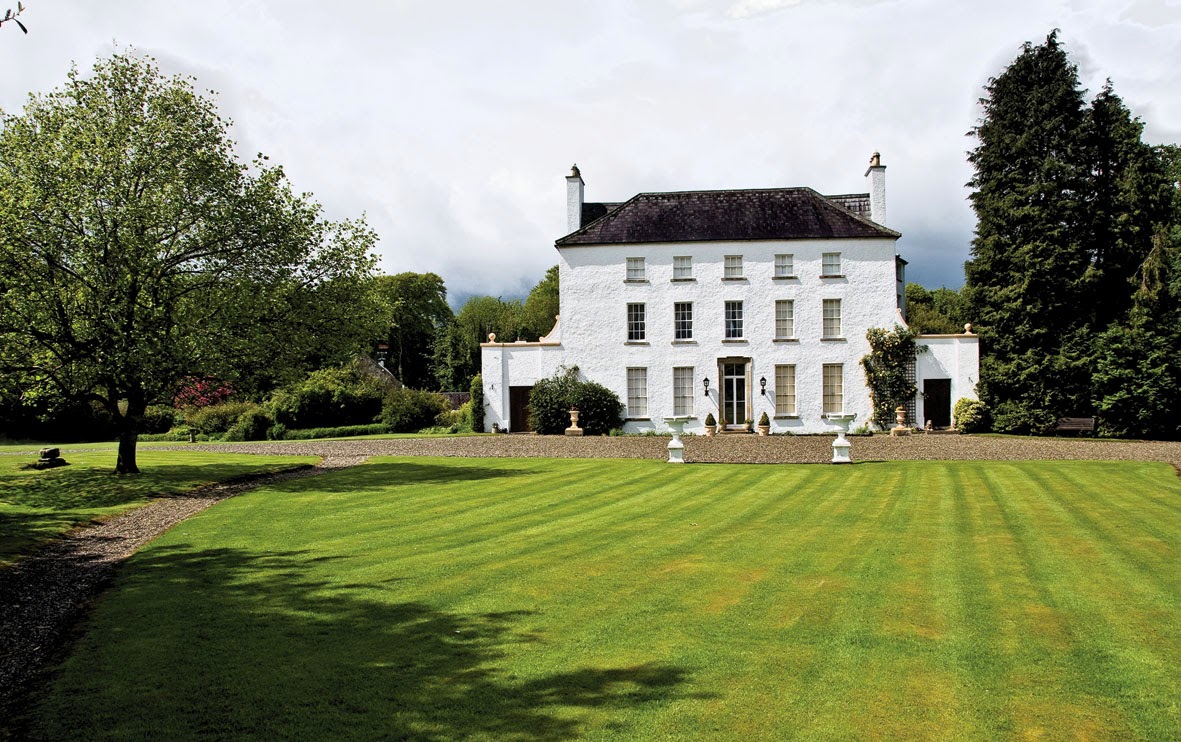
of a cadet branch of the Agnews of Lochnaw from the late 15th century until the 18th century, when it passed to the Dunlops.
 |
| Lochryan House. Image: Julia MacDonald. Licensed under a Creative Commons licence. |
Lochryan (formerly known as Croach) is a charming small white-painted house, with an
H-plan main block built for Col. Andrew Agnew of Croach in 1701. This was originally all of two storeys with a
basement and attic, but the recessed centre was given an extra storey by Alan
Dickie in 1820-24; the wings have also been altered with the addition of the
canted dormer windows in the 19th century, and the rear elevation of
the house was extended with single-storey and basement wings, perhaps the
improvements recorded by James Brown, mason, in 1826. At the front the main block is joined by
balustrades and screen walls to single-storey service buildings of the early 18th century.
Inside the house, the 18th century interiors were extended and improved in a consistent style in the late
19th century, so that it is now difficult to be sure what is
original and what is replacement or addition.
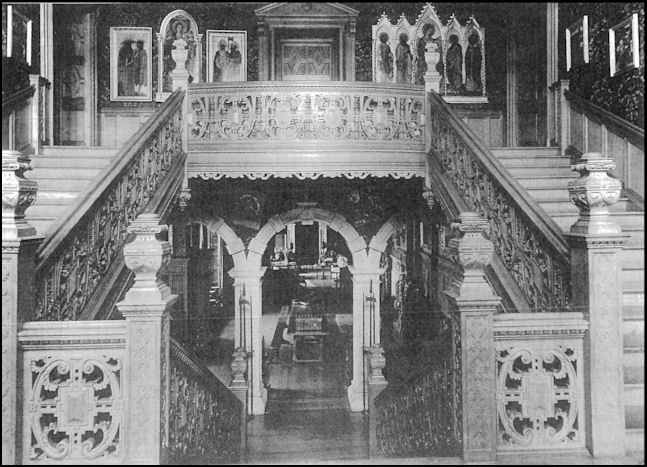
The centre of the main block is filled with a large entrance hall and
the staircase behind; these two rooms were thrown into one space in the 20th century, and the staircase, of an 18th century form, is thought to
be all 19th century work. The
garden behind the house retains the main elements of its 18th century layout, with a central avenue leading to a transverse terrace with
square pavilions at either end.
Galdenoch Castle, Leswalt, Dumfriesshire
 |
| Galdenoch Castle. Image: Mary and Angus Hogg. Licensed under a Creative Commons licence. |
A
roofless, rubble-built tower house, probably built in the mid 16th century for Gilbert Agnew, who was in possession by 1574. It is an L-plan building with the principal
stair in the NE wing. Inside there is a
tunnel-vaulted room on the ground floor of the main block and above the remains
of a first-floor hall. The house was
probably abandoned in the late 17th century when it was reabsorbed
by the Lochnaw Castle estate of the main branch of the Agnews.
Howlish Hall, Co. Durham
 |
| Howlish Hall. Image: Howlish Hall Nursing Home. |
A
white painted house of ashlar and render, dating from c.1700 with extensive
late 18th century alterations and additions, plus a 19th century billiard room on the east and a 19th century west wing. The interior has much original detail of each
period, including a contemporary staircase in the earliest part of the house. The house became derelict in the 20th century and was restored as a nursing home in the 1980s. It has since been extended.
The Agnews of Lochnaw
Agnew, Andrew (d. 1455) of Lochnaw. Granted Constableship of Lochnaw Castle by Margaret, Countess of Douglas, 1426; appointed hereditary sheriff of Wigtownshire, 1451; supported James II in the Douglas rebellion of 1455 and died in that service, when the Douglases were defeated. He married and had issue:
(1) Andrew Agnew (d. 1484) (q.v.);
(2) Gilbert Agnew.
He also had an illegitimate son,
(X1) Patrick Agnew.
He died in 1455, probably at the Battle of Arkenholm, 1 May 1455.
Agnew, Andrew (d. 1484) of Lochnaw. Son of Andrew Agnew (d. 1455) of Lochnaw. Hereditary Sheriff of Wigtownshire from 1455; Provost of Wigtown 1476. He married [forename unknown] Macdowall of Garthland and had issue:
(1) Quentin Agnew (d. 1498) (q.v.);
(2) William Agnew (d. c.1500) of Croach; married and had issue;
(3) Nevin Agnew (fl. 1510); indicted in July 1510 for 'riding with the Sheriff of Wigtown and the oppression done to Sir David Kennedy'.
Had sasine of Lochnaw 16 May 1455 from George Douglas of Leswalt, by whose forfeiture for treason Lochnaw became held of the Crown. Either he or his son was probably responsible for building the tower house at Lochnaw Castle.
He died in 1483 or 1484.
Agnew, Quentin (d. 1498) of Lochnaw. Eldest son of Andrew Agnew (d. 1484) of Lochnaw. Hereditary Sheriff of Wigtownshire from 1484; involved in raiding between 1469 and 1489; Provost of Wigtown in 1488; Nevin Agnew appointed curator of his affairs 19 Jan 1497/8. He married 1469 Mariotta, third daughter of Robert Vans of Barnbarroch and had issue:
(1) Patrick Agnew (d. 1513) (q.v.);
(2) Michael Agnew, Canon of Whithorn Abbey;
(3) Mariotta Agnew.
Inherited Lochnaw Castle from his father in 1483/4. Either he or his father was probably responsible for building the tower house at Lochnaw Castle, where there is an ex situ datestone of 1486.
He died in 1498.
Agnew, Patrick (d. 1513) of Lochnaw. Eldest son of Quentin Agnew (d. 1498) and his wife Mariotta, daughter of Robert Vans of Barnbarroch. Hereditary Sheriff of Wigtownshire from 1498; much involved in feuds with the McKies, the Kennedys and the Maclellans in court and in battle, including the Battle of Bloody Burn near Stranraer. He married c.1499 Katherine, daughter of Sir Robert Gordon of Lochinvar and had issue:
(1) Andrew Agnew (d. 1547) (q.v.);
(2) Katherine Agnew, m. Ninian Adair (d. 1525) of Kinhilt and had issue;
(3) Margaret Agnew, m. William Cairnis of Orchardton;
(4) Christina Agnew, m. Blaize McGhie, probably of Balmaghie.
He inherited Lochnaw Castle from his father in 1498.
He died in 1513, shortly after the Battle of Flodden, probably having been wounded there.
Agnew, Andrew (d. 1547) of Lochnaw. Only son of Patrick Agnew (d. 1513) and his wife Katherine, daughter of Sir Robert Gordon of Lochinvar. Hereditary Sheriff of Wigtownshire from 1513; outlawed in 1527 with Sir Robert Gordon of Lochinvar, his uncle, for the murder in Edinburgh of Sir Thomas Maclellan of Bomby; outlawry remitted 1538. He married Agnes, daughter of Sir Alexander Stewart of Garlies and had issue:
(1) Patrick Agnew (1529-91) (q.v.);
(2) Gilbert Agnew (c.1530-c.1600) of Galdenoch; m. Margaret, co-heiresws of Uchtred MacDowell of Baraj, and had issue one son;
(3) Alexander Agnew of Ardoch, sheriff depute;
(4) Helen Agnew, m. John MacCulloch of Torhouse.
He inherited Lochnaw Castle from his father in 1513.
Killed in action at the Battle of Pinkie in 1547.
Agnew, Patrick (1529-91) of Lochnaw. Eldest son of Andrew Agnew (d. 1547) and his wife Agnes, daughter of Sir Alexander Stewart of Garlies, born 1529. Hereditary Sheriff of Wigtownshire from 1547; a supporter of Queen Mary and opponent of the Regent Moray; assessor at trial of the Earl of Gowrie, who plotted to seize Stirling Castle and was beheaded 1584. He married 1550 Janet, daughter of Sir James Gordon of Lochinvar and had issue:
(1) Sir Andrew Agnew (d. 1616), kt. (q.v.);
(2) Patrick Agnew of Sheuchan, believed to be the ancestor of the Agnews of Kilwaughter in Ulster;
(3) William Agnew of Barmeill and Wigg (later Castlewigg), sheriff depute (d. 1625);
(4) Thomas Agnew, who married and had issue a son, who succeeded his uncle in Castlewigg;
(5) Katherine Agnew, m.1, 1575 Alexander McKie of Larg, and m.2, Alexander Gordon of Clanyard;
(6) Helen Agnew, m. John MacDowell of Curghie.
He inherited Lochnaw Castle from his father in 1547.
He died in 1591.
Agnew, Sir Andrew (d. 1616), knight, of Lochnaw. Eldest son of Patrick Agnew (1529-91) and his wife Janet, daughter of Sir James Gordon of Lochinvar, born 1529. Hereditary Sheriff of Wigtownshire from 1591; knighted and Chamberlain of Galloway by 1595. He married 1576 Agnes, daughter of Alexander Stewart the younger of Garlies and had issue:
(1) Sir Patrick Agnew (c.1578-1661), 1st bt. of Lochnaw (q.v.);
(2) Andrew Agnew in Knocktym, m. Mary MacDowall;
(3) Alexander Agnew of Barvennan;
(4) Quentin Agnew;
(5) Jean Agnew, m. James Kennedy of Cruggleton, son of Sir John Kennedy of Blairquhan;
(6) Rosina Agnew, m. William Maclellan of Glenshannock and had issue (including a son, Thomas, who succeeded as 2nd Baron Kirkcudbright).
He inherited Lochnaw Castle from his father in 1591.
He died in 1616.
Agnew, Sir Patrick (c.1578-1661), knight and 1st baronet, of Lochnaw. Eldest son of Sir Andrew Agnew (d. 1616), kt., and his wife Agnes, daughter of Alexander Stewart the younger of Garlies, born about 1578. Hereditary Sheriff of Wigtownshire from 1616 until Cromwell abolished heritary jurisdictions in Scotland in 1651; MP for Wigtownshire 1628-33 and 1643-47; knighted; created 1st baronet of Nova Scotia, 28 July 1629, with remainder to his heirs male whatsoever. He married Margaret, daughter of Sir Thomas Kennedy of Culzean and had issue:
(1) Sir Andrew Agnew (c.1600-71), knight and 2nd bt. (q.v.);
(2) Lt-Col. James Agnew of Auchrochar; served in Lord Kirkcudbright's Regiment and was thanked by Parliament for the services of his regiment at the Battle of Philiphaugh near Selkirk in 1645, when Parliamentary forces defeated the Royalists under Montrose; m. Marion, daughter of Thomas Kennedy of Ardmillan but died without issue in the lifetime of his father;
(3) Patrick Agnew (b. c.1620) of Sheuchan; m. Elizabeth, daughter of William Gordon of Craighlaw and had issue;
(4) Lt-Col. Alexander Agnew of Whitehills; served in Earl of Galloway's Regiment; m. and had issue, three sons;
(5) Jane Agnew, m. 1621 Alexander MacDowell of Logan;
(6) Agnes Agnew, m. 1622, Uchtred MacDowell of Freuch;
(7) Elizabeth Agnew, m. J. Baillie of Dunragit;
(8) Marie Agnew, m. Hew MacDowell of Knockglass;
(9) Rosina Agnew, m. 1632, John Cathcart of Genoch.
He inherited Lochnaw Castle from his father in 1616. He also leased from the Earl of Antrim an estate at Kilwaughter and Larne in Co. Antrim which he recovered after they were forfeited to Cromwell.
He died in the autumn of 1661 and was buried in the old church at Leswalt.
Agnew, Sir Andrew (c.1600-71), knight and 2nd baronet, of Lochnaw. Eldest son of Sir Patrick Agnew (c.1578-1661) and his wife Margaret, daughter of Sir Thomas Kennedy of Culzean, born about 1600. Knighted in the lifetime of his father; MP for Wigtownshire 1644, 1647, 1665, 1667 and 1669; one of the commissioners governing Scotland under Cromwell, 1649; fined £6,000 for his adherence to Cromwell; sheriff of Kirkcudbrightshire and Wigtownshire 1656-71, and restored as Hereditary Sheriff in 1661. He married, about 22 March 1625, Lady Anne Stewart, daughter of 1st Earl of Galloway and had issue:
(1) Sir Andrew Agnew (c.1630-1702), 3rd bt. (q.v.);
(2) William Agnew of Wigg, m. Elizabeth, daughter and heir of Patrick Agnew of Castlewigg and had issue;
(3) Grizel Agnew, m. 1650, Hugh Cathcart of Carlton;
(4) Margaret Agnew, m.1, 1656, John Maxwell younger of Monreith, and m.2, Rev. Walter Laurie.
He inherited Lochnaw Castle from his father in 1661, and built a large new L-plan house onto the original tower house in 1663. He also inherited the Larne and Kilwaughter estate in Co. Antrim from his father.
He died in 1671.
Agnew, Sir Andrew (c.1630-1702), 3rd baronet, of Lochnaw. Elder son of Sir Andrew Agnew (c.1600-71), 2nd bt., and his wife Lady Anne Stewart, daughter of 1st Earl of Galloway, born about 1630. Hereditary Sheriff of Wigtownshire, 1671-1702, but suspended 1682-89 for refusing to take the Test Act; MP for Wigtownshire 1685 and 1689-1702; member of the Grand Convention of Estates, held to settle the Scottish Crown in 1689. He married, about 24 October 1656, Jean or Jane, daughter of Sir Thomas Hay of Park and had issue:
(1) Sir James Agnew (c.1658-1735), 4th bt. (q.v.);
(2) Andrew Agnew, d. young;
(3) Thomas Agnew (d. 1690), cornet in Roy Scots Dragoons; died unmarried at Inverness;
(4) Grizel Agnew, m. Sir Charles Hay of Park.
He also had an illegitimate son:
(X1) Andrew Agnew of Dalreagle (d. 1730), sheriff clerk of Wigtown, who purchased the Barony of Myrton-McKie and renamed it Myrton-Agnew, m. 1704 Mary, daughter of William Coltran of Drummorail and had issue four sons and two daughters.
He inherited Lochnaw Castle and the Larne and Kilwaughter estates from his father in 1671.
He was buried 9 June 1702.
Agnew, Sir James (c.1658-1735), 4th baronet, of Lochnaw. Eldest son of Sir Andrew Agnew (c.1630-1702), 3rd bt., and his wife Jean or Jane, daughter of Sir Thomas Hay of Park, born about 1660. Hereditary Sheriff of Galloway, 1702-24, when he resigned it to his son. He married, about 22 June 1683, Lady Mary Montgomerie (c.1652-1742), daughter of 8th Earl of Eglinton and had issue:
(1) Sir Andrew Agnew (1687-1771), 5th bt. (q.v.);
(2) Patrick Agnew, cornet in Earl of Stair's Dragoons; died young;
(3) Charles Agnew, cavalry officer, died young;
(4) Maj. James Agnew (b. c.1690) of Howlish Hall (Durham); Major, 7th Hussars; married, 19 November 1719 at Stanwick (Yorks NR), Margaret, daughter of Thomas Wilkinson of Kirkbrig, and had issue three sons and three daughters;
(5) Capt. Alexander Agnew, Captain in Royal Scots Guards; killed in a duel by a fellow officer, Maj. Harrison;
(6) Capt. George Agnew, Captain in Royal Scots Guards; m.1, Elizabeth, daughter of Sir James Dunbar of Mochrum dsp and m.2 an Irish woman, daughter of a physician and had issue by his second wife, a daughter;
(7) Lt. Peter Agnew; Lieutenant in 6th Dragoons;
(8) Capt. John Agnew; served in 6th Dragoons (Lt.) and Royal Irish Hussars (Capt.);
(9) Jane Agnew, m. 1705, John Chancellor of Shieldhill;
(10) Margaret Agnew, m. 1700, Col. Andrew Agnew of Croach;
(11) Anne Agnew, m. James Nisbet of Orkney.
He inherited Lochnaw Castle from his father in 1702 and extended the house with a new range and chapel in 1704. He also inherited the Larne and Kilwaughter estate in Co. Antrim, but sold it to his agent, Patrick Agnew of Kilwaughter, in 1708 [see previous post] He bought the Galdenoch estate from his kinsman, Patrick Agnew (d. 1705).
He died in Edinburgh, 9 March 1735, and was buried in Holyrood Abbey. His widow died in April 1742, aged 90, and was also buried in Holyrood Abbey.
Agnew, Lt-Gen. Sir Andrew (1687-1771), 5th baronet, of Lochnaw. Eldest son of Sir James Agnew (c.1658-1735), 4th bt. and his wife, Lady Mary Montgomerie, daughter of 8th Earl of Eglinton, born at Innermessan Castle (Wigtowns.), 21 December 1687. Served in the Royal Scottish Dragoons (Scots Greys) and saw action at Ramillies, Oudenarde, and Malplaquet (Cornet, 1705); Captain in Lord Strathnaver's regiment of foot, 1709 (half-pay, 1714); served in Ireland in Col. Pocock's Regiment during the Jacobite rebellion, 1715; transferred 1718 to Royal Scots Fusiliers and served in Ireland 1728-37 (Major, 1737; Lt-Col., 1739); commanded regiment at Battle of Dettingen, 1743; commanded garrison of Blair Atholl against Lord George Murray's Jacobites in the last seige of a British castle, 1745; transferred to 10th Marines as Colonel, 1746; governor of Tynemouth Castle (Northumb), 1748; promoted Maj-General, 1756 and Lt-General, 1759. JP for Wigtownshire; Hereditary Sheriff of Galloway, 1724-47, when on the final abolition of all hereditary jurisdictions in Scotland, he received £4,000 in compensation. He married, 12 May 1714, Eleanor (1699-1785), daughter and eventually sole heir of Thomas Agnew of Croach after eloping against her father's wishes, and had among other issue:
(1) Mary Agnew (b. 1715), born 21 April 1715; m. Sir Michael Bruce (d. 1795) of Stenhouse, 6th bt. and had issue two sons;
(2) Elizabeth Agnew (b. 1716), born 24 April 1716; m. Charles Innes of Urrell;
(3) Andrew Agnew (1718-51), born 7 September 1818; served in 32nd Light Infantry; m. 29 August 1750, Elizabeth, daughter of William Dunbar and had issue a daughter who died young; died without surviving male issue;
(4) Thomas Agnew (b. 1720), born 10 July 1720; died unmarried in the lifetime of his father;
(5) Katherine Agnew (b. 1722), born 3 August 1722; m. 1749 John Gillon (c.1705-75) of Wallhouse;
(6) Wilhelmina Agnew (1727-1800), born 6 September 1727; m. John Campbell (c.1701-81) of Skerrington and had issue two sons and five daughters; died 21 January 1800;
(7) James Agnew (1729-49), born 1 January 1729; midshipman RN, died unmarried at sea, 1749;
(8) Lt. William Agnew (d. 1756), 2nd Lt., 7th Marines and later Royal Scots Fusiliers; died unmarried at Gibraltar, 1756; (9) Sir Stair Agnew (1734-1809), 6th bt. (q.v.);
(10) Penelope Agnew (b. 1736), born 12 January 1736; m. Alexander Agnew of Dalreagle, grandson of the illegitimate son of the 3rd bt;
(11) Patrick Agnew (b. 1739), born June 1739; died young.
He inherited the Lochnaw Castle estate from his father in 1735.
He died 14/21 August 1771, aged 83. His widow died 29 May 1785.
Agnew, Sir Stair (1734-1809), 6th baronet, of Lochnaw. Fifth son of Lt-Gen. Sir Andrew Agnew (1687-1771), 5th bt., and his wife Eleanor, daughter and heir of Thomas Agnew of Croach, born 9 October 1734. As a younger son he did not expect to inherit the baronetcy and was established as a Virginia merchant. He married 1st, 23 June 1763, Mary (d. 1769), daughter of Thomas Baillie of Polkemmet and 2nd, 11 April 1775, Margaret (d. 1811), daughter of Thomas Naesmyth of Dunblair and had issue, with another son and two daughters who died young:
(1.1) Andrew Agnew (d. 1792) (q.v.);
(1.2) Isabella Agnew (b. 1765), born 20 June 1765; m. Robert Stewart of Physgill.
He inherited the Lochnaw Castle estate from his father in 1771.
He died 28 June 1809. His widow died 30 May 1811.
Agnew, Andrew (d. 1792). Only son of Sir Stair Agnew (1734-1809), 6th bt. and his first wife Mary, daughter of Thomas Baillie of Polkemmet, born about 1764. Lieutenant, 12th Regiment. He married 21 May 1792 (after eloping) Hon. Martha de Courcy, daughter of 19th Baron Kingsale and had issue:
(1) Sir Andrew Agnew (1793-1858), 7th bt. (q.v.).
He died 11 September 1792 in the lifetime of his father.
Agnew, Sir Andrew (1793-1858), 7th baronet, of Lochnaw. Only son of Andrew Agnew (d. 1792) and his wife Hon. Martha de Courcy, daughter of 19th Baron Kingsale, born posthumously at Kinsale, 21 March 1793. Educated at Edinburgh and Oxford Univs; Vice-Lord Lieutenant of Wigtownshire, 1828; MP for Wigtownshire 1830-37; an enthusiastic but ultimately unsuccessful promoter of Sabbatarian legislation and strong anti-Catholic. He married, 11 June 1816, Madeline (d. 1858), daughter of Sir David Carnegie of Pitarrow, 4th bt., and had issue:
(1) Sir Andrew Agnew (1818-92), 8th bt. (q.v.);
(2) Capt. John de Courcy Andrew Agnew RN (1819-1916), born 8 October 1819; Captain in Royal Navy; m.1, 30 October 1849, Anne (dsp 1852), daughter of Rev. David Wauchope, rector of Warkton (Northants); m.2, 17 October 1854 Patricia Elizabeth (d. 1870), eldest dau. of William Henry Dowbiggin and neice of Lord Panmure and had issue three sons and two daughters; m.3, 14 May 1872, Patricia (dsp 1910), daughter of Sir Alexander Ramsay of Balmain, 2nd bt.; died 20 September 1916, aged 96;
(3) Rev. David Carnegie Andrew Agnew (1821-87), born 3 May 1821; m. 18 April 1855, Eleanora James Kerr Ross (d. 1903), daughter of George Bell FRSE and had issue one son and two daughters; died 16 March 1887;
(4) James Andrew Agnew CE (1823-1918); born 21 June 1823; died 27 January 1918;
(5) Agnes Agnew (1825-93), m. 16 October 1845, Rev. Thomas Blizzard Bell (d. 1866) and had issue;
(6) Martha Agnew (1826-1904), m. 3 October 1848, Frederick Lewis Maitland-Heriot of Ramornie (Fife) (d. 1881) and had issue; died 28 July 1904
(7) Elizabeth Agnew (b. 1828);
(8) Sir Stair Andrew Agnew KCB MA JP (1831-1916); born 6 December 1831; educated at Trinity College, Cambridge (BA 1855; MA 1858); Lt. in 9th Regiment; Legal Secretary to Lord Advocate General of Scotland, 1861-66, 1868-70; Queen's Remembrancer for Scotland, 1870-81; Registrar General for Scotland 1881-1909, m. 1 December 1870 Georgina (d. 1916), daughter of George More Nisbett of Cairnhill and had issue two sons and three daughters; died 12 July 1916;
(9) Madalane Elizabeth Agnew (b. 1831);
(10) Thomas Frederick Andrew Agnew (1834-1924), born 5 July 1834; m. 9 October 1861, Julia (d. 1934), dau of Charles Pelly and had issue six sons and four daughters; died 20 November 1924;
(11) Lt-Col. Gerald Andrew Agnew (1835-1927), born 18 December 1835; Lt-Col. of 90th Light Infantry; m. 19 May 1870, Margaret Cunninghame (d. 1924), only daughter and heiress of William Bonar of Warriston (Midlothian) and had issue a daughter; died 16 May 1927;
(12) Mary Graham Agnew (1838-85), m. 23 June 1858, James Douglas of Cavers (dsp 1878); died 13 July 1885.
He inherited Lochnaw Castle from his grandfather in 1809 and enlarged it to the designs of David Hamilton and Archibald Elliot in 1819-21.
He died of scarlet fever at his home in Rutland Square, Edinburgh, 28 April 1849, aged 56. His widow died 21 January 1858, aged 62.
Agnew, Sir Andrew (1818-92), 8th baronet, of Lochnaw. Eldest son of Sir Andrew Agnew (1793-1849), 7th bt., and his wife Madeline, daughter of Sir David Carnegie of Pitarrow, born 2 January 1818. Educated at Harrow; entered the army, 1835, serving in Canada in 93rd Foot, and as Capt. 4th Light Dragoons; JP and DL Wigtownshire; MP for Wigtownshire 1856-68; wrote a history of his family, The Agnews of Lochnaw, 1864. He married, 20 August 1846, Lady Louisa Noel (d. 1883), daughter of 1st Earl of Gainsborough and had issue:
(1) Madeline Diana Elizabeth Agnew (1847-1907), m1, 7 February 1867, Thomas Henry Clifton MP (d. 1880) of Lytham Hall (Lancs) and had issue and m2, 30 January 1889, Sir James Hamlyn Williams-Drummond, 4th bt (d. 1913) and had further issue;
(2) twin, Arabella Frances Georgiana Agnew (1848-1910), died unmarried, 23 June 1910;
(3) twin, Caroline Charlotte Agnew (1848-1934), died unmarried, 15 January 1934;
(4) Sir Andrew Noel Agnew (1850-1928), 9th bt. (q.v.);
(5) Henry de Courcy Agnew (1851-1910), JP for Wigtownshire; m. 23 December 1885, Ethel Anne (d. 1928), dau of Capt. Thomas William Goff (who m.2, 1911, Edmund Charrington) and had issue two daughters;
(6) Louisa Lucia Agnew (1852-1913), m. 10 July 1877 Duncan MacNeill (d. 1892) and had issue;
(7) Mary Alma Victoria Agnew (1854-1923), m. 19 August 1875, Arthur Fitzgerald Kinneard, 11th Lord Kinnaird (1847-1923) and had issue;
(8) Catherine Carnegie Agnew (d. 1858), died young, 31 March 1858;
(9) Maj. Charles Hamlyn Agnew (1859-1928); JP for Wigtownshire; Major, 4th Hussars; served in Burma 1885-87 and Rhodesia 1896; m. 30 June 1897 (div. 1908) Lillian Anne (d. 1937), daughter of Lt-Gen. Sir James Wolfe Murray of Cringletie KCB JP DL RA and had issue a son, Sir Fulque Melville Gerald Noel Agnew, who succeeded as 10th bt. in 1928;
(10) Col. Quentin Graham Kinnaird Agnew DSO MVO, JP, DL (1861-1937), born 8 January 1861; Col. Royal Scots Fusiliers and served in Burma 1885-86, Tirah 1897-98 and Boer War, 1899-1902; Military Sec. to Governor of Gibraltar, 1902-05; served in WW1 at Gallipoli and in France; member of the Gentlemen-at-Arms, 1906; m.1, 9 February 1899 Evelyn Mary (d. 1913), dau of Capt. John Hobhouse Inglis Alexander CB RN and had issue three sons and one daughter; and m.2, 3 July 1916, Cicely Anne Churchhill (d. 1964), youngest daughter of James Inskip of Clifton Park House, Clifton and had further issue one son; died 23 March 1937;
(11) Gerard Dalrymple Agnew (1862-1919); born 24 April 1862; served at Lt. in the Buffs; died 24 November 1919;
(12) Rosina Constance Agnew (1863-1920), m. 14 April 1898 Rev. James Davidson of Blackadder Manse, and had issue; died 23 June 1920;
(13) Margeurite Violet Maud Agnew (1866-1939), m. 23 July 1890, Lt-Col. Sir Francis Dudley Williams-Drummond KBE DL and had issue.
He inherited the Lochnaw Castle estate from his father in 1849. In 1883 he owned 6,777 acres in Wigtownshire.
He died 25 March 1892, aged 74. His wife died 27 June 1883, aged 61.
Agnew, Sir Andrew Noel (1850-1928), 9th baronet, of Lochnaw. Eldest son of Sir Andrew Agnew (1818-92), 8th bt., and his wife, Lady Louisa Noel, daughter of 1st Earl of Gainsborough, born at Exton Park, 14 August 1850.
 |
| Gertrude, Lady Agnew by John Singer Sargent |
He inherited the Lochnaw Castle estate from his father in 1891 but sold it in 1921. In 1909 he also had a house at Woodcock Lodge, Little Berkhamsted (Herts).
He died 14 July 1928. His widow died in 1932.
The Agnews of Croach alias Lochryan
Agnew, William (d. c.1500), of Croach. Second son of Andrew Agnew (d. 1484) of Lochnaw (q.v.). He married and had issue including:
(1) Nevin Agnew (fl. 1498) (q.v.).
He was given the Croach estate by his father.
He died about 1500.
Agnew, Nevin (fl. 1498), of Croach. Only recorded son of William Agnew (d. c.1500) of Croach. In 1498 he was appointed curator of the affairs of his cousin, Quentin Agnew of Lochnaw, who died later that year. He married and had issue including:
(1) Gilbert Agnew (d. 1528?) (q.v.).
He inherited the Croach estate from his father c.1500.
His date of death is unknown.
Agnew, Gilbert (d. 1528?) of Croach. Only recorded son of Nevin Agnew (fl. 1498) of Croach. Sheriff depute. He married Margaret Mure and had issue:
(1) Nevin Agnew (d. c.1547) (q.v.).
He inherited the Croach estate from his father.
He died in about 1528.
Agnew, Nevin (d. c.1547), of Croach. Only recorded son of Gilbert Agnew (d. 1528?) and his wife Margaret Mure. An active border raider with his kinsman, Andrew Agnew (d. 1547) of Lochnaw. He married and had issue including:
(1) Gilbert Agnew (d. c.1590) (q.v.).
He inherited the Croach estate from his father in 1528.
His died in about 1547.
Agnew, Gilbert (d. c.1590), of Croach. Only recorded son of Nevin Agnew (d. c.1547). He married and had issue including:
(1) Alexander Agnew (d. c.1620) (q.v.).
He inherited the Croach estate from his father in about 1547.
He died in about 1590.
Agnew, Alexander (d. c.1620), of Croach. Only recorded son of Gilbert Agnew (d. c.1590). Sheriff depute. He married Jane MacNaughten and had issue including:
(1) Gilbert Agnew, died unmarried in the lifetime of his father;
(2) William Agnew (fl. early 17th cent.) (q.v.).
He inherited the Croach estate from his father in about 1590.
He died about 1620.
Agnew, William (fl. early 17th cent.), of Croach. Second but eldest surviving son of Alexander Agnew (d. c.1620) and his wife Jane MacNaughten. He married Mary, daughter of John MacDougall of Logan and had issue:
(1) Alexander Agnew (fl. late 17th cent.) (q.v.).
He inherited the Croach estate from his father.
His date of death is unknown.
Agnew, Alexander (fl. late 17th cent.), of Croach. Only recorded son of William Agnew (fl. early 17th cent.) and his wife Mary, daughter of John MacDougall of Logan. He was fined £600 for his adherence to Cromwell. He married Sarah, daughter of John Dunbar of Mochdrum and had issue:
(1) Andrew Agnew (c.1665-1730) (q.v.);
(2) Thomas Agnew (d. 1725), Capt, Royal Scots Dragoons; retired c.1708 and purchased an estate at Richmond Hill, Surrey; lost all his money in the South Sea Bubble, 1721; m. Florence Stewart and had issue a daughter (Eleanor Agnew (1699-1785), who m. Sir Andrew Agnew (1687-1771) of Lochnaw, 5th bt. and had issue).
He inherited the Croach estate from his father.
His date of death is unknown.
Agnew, Col. Andrew (c.1665-1730) of Lochryan. Elder son of Alexander Agnew (fl. late 17th cent.) and his wife Sarah, daughter of John Dunbar of Mochdrum, born about 1665. Colonel in Royal Scots Dragoons. He married 1st Margaret, daughter of Sir James Agnew of Lochnaw, 4th bt; 2nd, Margaret, daughter of Kennedy of Dunure, and had issue:
(1.1) Alexander Agnew, dvp;
(1.2) Col. Thomas Agnew (c.1704-36), Guards officer, killed falling from his horse;
(2.1) Grizel Agnew, died young;
(2.2) Anne Agnew, died young;
(2.3) Eleonora or Elizabeth Agnew (1706-61), m. Sir Thomas Wallace (1702-70) of Craigie, to whose daughter and heiress, Frances Wallace, the Lochryan-Croach estate passed.
He inherited the Croach estate from his father and rebuilt the house (thereafter Lochryan House) in 1701; at his death it passed to his surviving son, Thomas (d. 1736) and then to his granddaughter, Frances Wallace (1730-1815).
He died in 1730.
Sources
Burke's Peerage and Baronetage, successive editions; Sir A. Agnew, The hereditary sheriffs of Galloway, 1891; G.E. Cokayne, Complete Baronetage, vol. 2, pp. 368-70; H. Fenwick, Scottish Baronial houses, 1986, pp. 206-08; J. Gifford, The buildings of Scotland: Dumfries & Galloway, 1996, pp. 309, 419-23.
Location of archives:
Agnew family of Lochnaw, baronets: deeds, family and estate papers, 1421-1975 (National Records of Scotland GD154)
Revision and acknowledgements
This post was first published on 21 July 2013 and updated on 23 August 2015 and 8 July 2016. I am grateful to Jane Clark and Frank Bigwood for pointing out errors.
Location of archives:
Agnew family of Lochnaw, baronets: deeds, family and estate papers, 1421-1975 (National Records of Scotland GD154)
Revision and acknowledgements
This post was first published on 21 July 2013 and updated on 23 August 2015 and 8 July 2016. I am grateful to Jane Clark and Frank Bigwood for pointing out errors.