Monday, 5 February 2024

(568) Cavendish-Bentinck of Welbeck Abbey, Dukes of Portland - part 3

This post has been divided into three parts. Part 1 consists of my introduction to the family and its property, and an account of  Welbeck Abbey and Bolsover Castle. Part 2 contains histories of the other houses built or acquired by the family. This part gives the biographical and genealogical details of the family.


Cavendish-Bentinck family, Earls and Dukes of Portland


Hans William Bentinck, 1st Earl of Portland 
Bentinck, General Hans William (1649-1709) KG, 1st Earl of Portland. 
Fourth, but third surviving, son of Bernhard Bentinck (d. 1668), Baron Bentinck, lord of Diepenheim, Schoonheten etc. in the province of Overyssel (Netherlands) and his wife Anna (d. 1685), daughter of Hans Hendrik van Bloemendaal, Seneschal of Vianen, born 20 July 1649. Page of Honour, c.1664 and Nobleman of the Chamber, 1672, at the Dutch court. He was a confidential adviser to Prince William of Orange, whom he accompanied on a visit to England in 1670 (when he was awarded an honorary degree by Oxford University (DCL)) and who he nursed through an attack of smallpox in 1675. He acted as an envoy to England to arrange the marriage of William of Orange to Princess Mary in 1677, and again in 1683 and 1685. He was bailiff of Breda, 1674 and of Lingen, 1675, and was called to the States General as Lord of Drummelen, 1676, when he joined the Order of Nobility of the Netherlands; in 1681 he was appointed Verderer of Holland. He served as an officer in the Dutch Horse Guards (Cornet, 1668; Capt. 1672; Colonel. 1675; Maj-Gen., 1683; Lt-Gen., 1689; Gen., 1697; retired 1699). He brought his regiment to England when Prince William was invited to take the English throne in 1688, and was present at the Battle of the Boyne, 1690, and also at Steinkirk, 1692, Landen, 1693, and the Siege of Namur, 1695, but gave up his command when the regiment returned to the Netherlands in 1699. After King William III's accession to the throne he was created Earl of Portland, Viscount Woodstock and Baron Cirencester, 9 April 1689, and appointed Groom of the Stole, First Gentleman of the Bedchamber, and Keeper of the Privy Purse, appointments which he held until 1700 and which brought him £3,000 a year. He was also appointed Superintendent of the Royal Gardens in June 1689, with George London as his deputy and William Talman as his comptroller, and in 1697 and 1699 respectively he was made Ranger of Windsor Great and Little Parks, posts worth £1,500 a year, which he held until 1702. In 1696/7 he was made a Knight of the Garter. In 1698 he was sent as ambassador and the king's plenipotentiary to France, negotiating the Partition Treaties with Louis XIV and the States General, for his part in which the House of Commons voted to impeach him on 1 April 1701, although the proceedings were dismissed by the House of Lords in June that year. In 1700 he resigned all his offices in the Royal Household, apparently in a fit of pique about being supplanted as the king's chief adviser by Arnold Joost van Keppel (1670-1718), 1st Earl of Albemarle. A good-looking man, he was staunchly loyal to King William III, but 'never possessed any of the graces of the courtier' and did not greatly care for the ways or character of the English, with whom he made no attempt to ingratiate himself. It is no surprise, therefore, that he was widely regarded with suspicion and unpopularity as a 'foreign favourite'. He married 1st, 1 February 1677/8 at The Hague, Anne (1651-88), Maid of Honour to Princess Mary of Orange (later Queen Mary II), daughter of Sir Edward Villiers (1620-89), kt. and sister of Edward Villiers, 1st Earl of Jersey; and 2nd, 12 May 1700 at Chiswick (Middx), Jane Martha (1672-1751), Maid of Honour and later Governess to the daughters of King George II, sixth daughter of Sir John Temple, kt. of East Sheen (Surrey) and widow of John Berkeley (c.1663-97), 3rd Baron Berkeley of Stratton, and had issue:
(1.1) Lady Mary Bentinck (1679-1726), born 1679; married 1st, 28 February 1698, Algernon Capel (1670-1710), 2nd Earl of Essex, of Cassiobury House (Herts), Lord Lieutenant of Hertfordshire, and had issue one son and two daughters; married 2nd, August 1714, as his first wife, Hon. Sir Conyers d'Arcy MP (c.1685-1758) of Aske Hall (Yorks NR) (who m2, 12 September 1728, as her third husband, Elizabeth, daughter of John Rotherham of Great Waltham (Essex)), but had no further issue; died 20 August 1726;
(1.2) Willem Bentinck (1681-88), born before 3 March 1680/1; died young, 26 May 1687/8;
(1.3) (William) Henry Bentinck (1682-1726), 2nd Earl and 1st Duke of Portland (q.v.);
(1.4) Lady Anne Margaretta Bentinck (1683-1763), born 1683; married, 1701, Baron Arent van Wessenaer (1669-1721) of Duivenvoorde Castle (Netherlands), Ambassador of the States General to Great Britain, and had issue three daughters; died 3 May 1763;
(1.5) Lady Frances Wilhelmina Bentinck (1684-1712); born 18 February 1684; married, 19 December 1706, as his second wife, William Byron (1669-1736), 4th Baron Byron, but had no surviving issue; died 31 March 1712 and was buried at Hucknall (Notts);
(1.6) Lady Eleanora Sophia Bentinck (b. 1687), born 8 April 1687; died unmarried;
(1.7) Lady Isabella (k/a Belle) Bentinck (1688-1728), born 4 May 1688; married, 2 August 1714, as his second wife, Evelyn Pierrepont (1667-1726), 5th Earl and 1st Duke of Kingston-upon-Hull, and had issue two daughters; died 23 February 1727/8;
(2.1) Lady Sophia Bentinck (1701-48), born at Whitehall, Westminster, 4 April 1701; married, 24 March 1728/9, as his second wife, Henry de Grey (1671-1740), 12th Earl, 1st Marquess and 1st Duke of Kent, of Wrest Park (Beds), and had issue one son (who died in infancy) and one daughter; died 14 June and was buried at Flitton (Beds), 20 June 1748;
(2.2) Lady Elizabeth Ariana Bentinck (1703-65), born at Whitehall, 27 June and baptised at St Martin-in-the-Fields, Westminster, 30 June 1703; married, 18 December 1720, Rt Rev. and Hon. Henry Egerton (1689-1746), Bishop of Hereford, 1724-46, fifth son of John Egerton, 3rd Earl of Bridgewater, and had issue five sons and one daughter; died 9 November, and was buried at Bruton (Som.), 15 November 1765; will proved in the PCC, 11 December 1765;
(2.3) Hon. William Bentinck (1704-74), 1st Count Bentinck [for whom see my post on the Bentinck family of Indio House];
(2.4) Lady Henrietta alias Harriet Bentinck (1705-92), born at Whitehall, 12 December 1705; married, 15 October 1728 at The Hague, Rt. Hon. James Hamilton (1694-1758), 1st Baron Clanboye, 1st Viscount Limerick and 1st Earl of Clanbrassil of the second creation, MP for Dundalk, 1715-19, Wendover, 1735-41, Tavistock, 1741-47 and Morpeth, 1747-54, and had issue one son and one daughter; died 10 June 1792;
(2.5) Hon. Charles John Bentinck (1708-79), born at Bulstrode Park, 2 June 1708; married, 11 January 1739, Lady Margaret Cadogan (1707-82?), daughter and co-heir of Lt-Gen. William Cadogan (1672-1726), 1st Baron and 1st Earl Cadogan; died at Zorgvliet (Netherlands), 9 March 1779; will proved in the PCC, 24 April 1779;
(2.6) Lady Barbara Bentinck (1709-36), born at Bulstrode Park, 20 October 1709; married, 18 February 1733/4, Hon. Francis Godolphin (1706-85) (who m2, Lady Anne Fitzwilliam (1722-1805)), MP for Helston, 1741-66 and later 2nd Baron Godolphin, of Baylies (Bucks) and Godolphin House (Cornw.), but had no issue; died 1 April 1736.
In 1674 he bought the estate of Zorgvliet near The Hague, which remained his main residence in Holland. In 1676 William granted him Drimmelen, a lordship entitling him to a place in the Dutch nobility. In 1683, he purchased the lordships of Rhoon and Pendrecht and just before embarkation, in October 1688, William granted him several other Dutch lordships. In England he was granted Theobalds Park (Herts) in 1689. In London he had a house in Pall Mall and bought another in St James's Square for his son, but he also had apartments in several of the royal palaces. In 1695 he was granted a large estate in Wales, but a parliamentary outcry led to this being revoked; instead, the king quietly compensated him with more scattered lands in Cheshire, Cumberland, Norfolk, Suffolk and Yorkshire. In 1697 he was made Ranger of Windsor Great Park, and the Great Lodge (later Cumberland Lodge) became his favourite residence until he was obliged to give it up in 1702. In 1698 he was granted lands in Westminster (Middx) which were valued at over £376,000 in 1709. In 1702 he moved to Bagshot (Surrey) and in 1706 bought the Bulstrode Park (Bucks) estate.
He died of pleurisy at Bulstrode Park, 23 November, and was buried in Westminster Abbey, 3 December 1709; his will was proved 22 December 1709. His first wife died in Holland, 20 November 1688 and was buried at Rhoon. His widow died 26 May 1751 and was buried at Mortlake (Surrey); her will was proved 20 April 1751.

2nd Earl and 1st Duke of Portland 
Bentinck, (William) Henry (1682-1726), 2nd Earl and 1st Duke of Portland. 
Second, but eldest surviving, son of Baron Hans William Bentinck (1649-1709), 1st Earl of Portland, and his first wife, Anne, 
daughter of Sir Edward Villiers (1620-89), kt., born at The Hague (Netherlands), 17 March 1682. He undertook the Grand Tour in 1701-03, visiting Italy and Germany with his tutor, the historian, Paul de Rapin. Whig MP for Southampton, 1705-08 and for Hampshire, 1708-09. An officer in the Life Guards (Capt. and Lt-Col.), 1710-13. He was styled Viscount Woodstock from 1689 until he succeeded his father as 2nd Earl of Portland, 23 November 1709, and after the accession of King George I he was further created Duke of Portland and Marquess of Titchfield, 6 July 1716, in recognition of his father's service to the Hanoverian dynasty. A Lord of the Bedchamber, 1717-26. Unfortunately, he lost huge sums in the South Sea Bubble in 1720, and subsequently accepted the resident post of Governor and Vice-Admiral of Jamaica, 1721-26, although he did not arrive in Jamaica until 22 December 1722. He married, 9 June 1704 at Chiswick (Middx), Lady Elizabeth (c.1688-1737), elder daughter and co-heir of Wriothesley Baptist Noel, (c.1661-90), 2nd Earl of Gainsborough, of Exton Park (Rutland) and Twickenham (Middx), who brought him a fortune of £60,000 and a moiety of the Titchfield estate. They had issue*:
(1) Lady Anne Bentinck (1705-49), born 7 April and baptised at St James, Piccadilly, Westminster (Middx), 12 April 1705; married, 30 August 1737 at St George, Bloomsbury (Middx), Lt-Col. Daniel Paul (c.1690-1749); died 7 July 1749 and was buried with her husband in St Patrick's Cathedral, Dublin; administration of goods granted in Dublin, September 1749;
(2) Lady Mary Bentinck (c.1706-07), probably born in 1706; died in infancy and was buried at St James, Piccadilly, Westminster, 5 February 1706/7;
(3) Lady Elizabeth Bentinck (1707-08), born 16 January and baptised at St James, Piccadilly, 25 February 1706/7; died in infancy and was buried at St James, Piccadilly, Westminster, 10 April 1708;
(4) Lady Frances Bentinck (c.1708-10), probably born in 1708; died young and was buried at St James, Piccadilly, Westminster, 25 October 1710;
(5) William Bentinck (1709-62), 2nd Duke of Portland (q.v.);
(6) Hon. Henry Bentinck (b. & d. 1713), born 12 March 1712/3 and baptised at St James, Piccadilly, 29 March 1713; died in infancy and was buried at Hedgerley (Bucks), 12 September 1713;
(7) Lord George Bentinck (1715-59), of Hall Place, Heston (Middx), born 24 December 1715 and baptised at St James, Piccadilly, Westminster (Middx), 22 January 1715/6; educated at Eton, 1725-28 and undertook a belated Grand Tour in 1739; an officer in the army (Ensign, 1735; Capt., 1743; Lt-Col., 1745; Col., 1752); ADC to King George II, 1751; Colonel-in-Chief of 5th Foot, 1754; MP for Droitwich, 1742-47, Grampound, 1747-54 and Malmesbury, 1754-59; married**, 29 June 1753 at Mayfair Chapel, Westminster and again, 9 October 1753 at St Benet, Paul's Wharf, London, Mary, eldest daughter of William Davies, but had no issue; died at Bath, 1 March 1759 and was buried at Heston (Middx); his will was proved in the PCC, 2 March 1759 (the day after his death!), and made his widow chief beneficiary and executrix; she quickly remarried, 17 April 1759 at St Clement Danes, London, Joseph Griffith (b. c.1728);
(8) Lady Anne Isabella Bentinck (1719-83), born 20 December 1719 and baptised at St James, Piccadilly, 16 January 1719/20; married, 8 November 1739, Henry Monck (c.1715-87) of Charleville (Co. Wicklow) and had issue one daughter; died in Ireland, 1783;
(9) Lady Amelia Catherine Bentinck (1726-56), born at St Jago de la Vega (Jamaica), 5 April 1726; married, December 1747, Jacob Arend van Wassenaer (1721-67), Baron de Wessenaer, of The Hague (Netherlands) (who m2, Catherina van der Heim), and had issue one daughter; died 10 January 1756.
He was granted the Clancarty estate (135,000 acres) at Woodstock in Ireland during his father's lifetime, but this was annulled by the Resumption Act in 1701. He acquired a moiety of the Titchfield (Hants) estate through his marriage in 1704, and inherited most of his father's English property in 1709.
He died at St. Jago de la Vega (Jamaica), 4 July 1726, but his body was returned to England for burial at Westminster Abbey, 3 November 1726; his will was proved 14 February 1727/8. His widow died in London, 19 March 1736/7, and was buried at Titchfield (Hants).
* Collins' Peerage says there were seven daughters, but I have found records of only six; it is possible that the seventh was born in Jamaica after 1722 and died young.
** His wife was described by his aunt as 'a common woman about the town' who had been his mistress for some years previously, and the marriage was not accepted by his family, from whom he became distanced as a result. The couple evidently felt their first, clandestine, marriage might be challenged, and so a second ceremony was held a few months later. When Lord George died, his widow obtained probate of his will (of which she was executrix and chief beneficiary) within 24 hours, and she married again just six weeks later; the haste was no doubt intended to prevent Lord George's family seeking to overturn his will. Her second marriage is normally said to have been on 24 June 1759 to Commodore Walter Griffith (d. 1779), but there is no record of such a marriage and the Commodore took command of a vessel on that day, so was probably not getting married! It is not clear whether Joseph Griffith was any relation of the Commodore; the marriage licence calls him 'esquire'.

2nd Duke of Portland
Bentinck, William (1709-62) KG, 2nd Duke of Portland. 
Elder son of (William) Henry Bentinck (1682-1726), 1st Duke of Portland, and his wife Lady Elizabeth, elder daughter of Wriothesley Baptist Noel, 2nd Earl of Gainsborough, of Exton Park (Rutland), born 1 March and baptised at St James, Piccadilly, Westminster (Middx), 8 March 1708/9. Educated at home by John Achard, a Swiss scholar, and later at Eton; he undertook a Grand Tour in Italy and France, visiting Venice, Padua, Rome, Naples and Toulouse, 1730-32. He was styled Viscount Woodstock until 1716 and then Marquess of Titchfield until he succeded his father as 2nd Duke of Portland, 4 July 1726; appointed KG, 1740/1. A Whig in politics, but he took no part in public affairs. Harleian trustee of the British Museum (in right of his wife), 1753-62. A Fellow of the Royal Society, 1739. Awarded an honorary degree by the University of Oxford (DCL, 1755). By some accounts he was 'the handsomest man in England' and although a less assertive personality than his wife, was 'wise, gentle and kindly'. He married, 11 July 1734 at the Oxford Chapel, Marylebone (Middx), Lady Margaret Cavendish (1715-85), a gifted, witty, intelligent woman who was a great collector and botanist, and an accomplished craftswoman*, and who had a wide circle of friends including Garrick, Rousseau and Mary Delany; she was the only daughter and ultimate heiress of Edward Harley (1689-1741), 2nd Earl of Oxford and Earl Mortimer. They had issue:
(1) Lady Elizabeth Cavendish Bentinck (1735-1825), born 27 July and baptised at St Margaret, Westminster, 22 August 1735; a Lady of the Bedchamber to Queen Charlotte 1761-93 and Mistress of the Robes 1793-1818; married, 22 March 1759, Thomas Thynne KG (1734-96), 3rd Viscount Weymouth and later 1st Marquess of Bath, of Longleat House (Wilts), Secretary of State, 1768-70 and 1775-79, and had issue three sons and five daughters; died aged 90 on 12 December 1825 and was buried at Longbridge Deverill (Wilts), where she is commemorated by a simple tablet;
(2) Lady Henrietta Cavendish Bentinck (1737-1827), born 8 February 1737; married, 26 May 1763 by special licence, at her mother's house in Whitehall, Westminster, George Grey (1737-1819), 5th Earl of Stamford and 1st Earl of Warrington, of Enville Hall (Staffs) and Dunham Massey (Ches.), MP for Staffordshire, 1761-68 and Lord Lieutenant of Cheshire, 1783-1819, and had issue four sons and six daughters; died aged 90 on 4 June 1827;
(3) William Henry Cavendish Bentinck (later Cavendish-Bentinck) (1738-1809), 3rd Duke of Portland (q.v.);
(4) Lady Margaret Cavendish Bentinck (1739-56), born 26 July and baptised at St Margaret, Westminster, 22 September 1739; died unmarried, 28 April and was buried at St Margaret, Westminster, 30 April 1756;
(5) Lady Frances Cavendish Bentinck (1741-43), born 9 April 1741; died in infancy and was buried at St Margaret, Westminster, 5 March 1742/3;
(6) Lord Edward Charles Bentinck (1744-1819), born 31 March and baptised at St Margaret, Westminster, 26 April 1744; educated at Westminster and Christ Church, Oxford (matriculated 1761), and then undertook a Grand Tour, 1764-66; MP for Lewes, 1766-68, Carlisle, 1768-74, Nottinghamshire, 1774-96 and Clitheroe (Lancs), 1796-1802; he was several times rescued from financial difficulties by the 3rd Duke, but lived latterly in Brussels (Belgium) for reasons of economy; married, 28 December 1782 at St Marylebone (Middx), Elizabeth (1760-1837), eldest daughter of Richard Cumberland (1732-1811), dramatist and essayist, and had issue two sons (from whom descended the 8th and 9th Dukes of Portland) and two daughters; died in Brussels, 8 October 1819.
He inherited Bulstrode Park and the other Bentinck estates from his father in 1726, but sold his share in the Titchfield Place estate to the Duke of Beaufort c.1734-41. His wife acquired Welbeck Abbey on the death of his mother-in-law, the Countess of Oxford, in 1755, but as a widow lived at Bulstrode Park.
He died 1 May and was buried in Westminster Abbey, 8 May 1762; his will was proved 12 May 1762. His widow died at Bulstrode Park, 17 July, and was buried at Westminster Abbey, 30 July 1785; her will was proved 4 August 1785.
* Her particular skill lay in the turning of wood, jet and amber. She also inherited the Harley passion for collecting, with an enthusiasm for paintings (both old masters and family portraits), gems and snuff-boxes. Her acquisitions included the famous Portland Vase, which she bought in 1782. Her interests extended to the natural world and she formed a museum of shells, beetles, insects, rare plants and flowers and a menagerie of exotic animals and birds, employing the Rev. John Lightfoot FLS to manage her collections. Mary Delany made hundreds of botanical illustrations for her, and she also employed a professional artist to make drawings of exotic plants. After her death, her museum was dispersed at an auction which lasted 38 days.

3rd Duke of Portland
Bentinck (later Cavendish-Bentinck), Rt. Hon. William Henry Cavendish (1738-1809) KG, 3rd Duke of Portland. 
Elder son of William Bentinck (1709-62), 2nd Duke of Portland, and his wife 
Lady Margaret Cavendish (d. 1785), only daughter and heiress of Edward Harley (1689-1741), 2nd Earl of Oxford and Earl Mortimer, born 14 April 1738. Educated at Westminster, 1747-54 and Christ Church, Oxford (matriculated 1755; MA 1757; DCL 1792) and then travelled in Germany, Poland and Italy, 1757-61. Whig MP for Weobley (Herefs), 1761-62. He was styled Marquess of Titchfield until he succeeded his father as 3rd Duke of Portland, May 1762. He was sworn of the Privy Council, 1765, and served as Lord Chamberlain, 1765-66, Lord Lieutenant of Ireland, Apr-Aug 1782, and Prime Minister, Apr-Dec 1783; leader of the Whig opposition, 1784-90. The repercussions of the French Revolution slowly drove a wedge between the duke and Charles James Fox, splitting the Whig party and leading Portland to an initially reluctant support of Pitt the younger, whose ministry he joined as Home Secretary, 1794-1801. He played a significant part in securing the Union of Great Britain and Ireland by acting as a channel for the payment of secret service funds to the Irish administration, where it was used to bribe Irish MPs and others into support for the Union. He further served as Lord President of the Council, 1801-05, and as Prime Minister, 1807-09, but by the time of his second premiership he was in ill-health and was no longer up to the demands of the role, dying shortly after leaving office. Throughout his political career he was a competent administrator and an adroit and principled politician, sustaining the Whig principle of opposing any increase in the influence of the Crown in public life, and refusing to pander to popular clamour in the interest of political advantage. Unfortunately, his political abilities were not matched by his business skills, and by the time of his death he was £500,000 in debt. He was Lord Lieutenant of Nottinghamshire, 1795-1809, Harleian trustee of the British Museum, 1764-1809, Chancellor of Oxford University, 1792-1809, Recorder of Nottingham, 1794, and Elder Brother of Trinity House, 1797-1809 (Master 1807-09), and was appointed High Steward of Bristol, 1786, Fellow of the Royal Society, 1766, Fellow of the Society of Antiquaries of London, 1775, and Knight of the Garter, 1794. He took the surname Cavendish-Bentinck informally in 1755 and by royal licence, 5 October 1801. He married, 8 November 1766 at Burlington House, Piccadilly, Westminster (Middx), Lady Dorothy (1750-94), only daughter of William Cavendish (1720-64), 4th Duke of Devonshire, and had issue, with a daughter who was stillborn in 1786:
(1) William Henry Cavendish Bentinck (later Scott-Bentinck and Scott-Cavendish-Bentinck) (1768-1854), 4th Duke of Portland (q.v.);
(2) General Lord William Henry Bentinck (later Cavendish-Bentinck) (1774-1839), born at Burlington House, Piccadilly, Westminster, 14 September, and baptised at St James, Piccadilly, 19 October 1774; educated at Dr. Goodenough's School, Ealing (Middx) and Westminster School, 1788-91; an officer in the army (Ensign, 1791; Capt., 1792; Lt-Col., 1794; Maj-Gen., 1805; Lt-Gen, 1811; Gen., 1825) who played important liaison and political roles in Italy, 1799-1801, 1811-14; Col in Chief of the 11th Dragoons; MP for Camelford, Mar-May 1796, for Nottinghamshire, 1796-1803, 1812-14 and 1816-26, for Kings Lynn, 1826-27, and for Glasgow, 1836-39; Governor of Madras, 1803-07 and Governor-General of Bengal, 1827-33, where he abolished the practice of suttee and imposed many other reforms; first Governor-General of India, 1833-35; appointed KB, 1813, GCB, 1815 and GCH, 1817, but declined a peerage on his return from India; married, 19 February 1803 at St Marylebone, Lady Mary (1778-1843), second daughter of Arthur Acheson (c.1745-1807), 1st Earl of Gosford, but had no issue; died at his house in Paris (France), 17 June, but was buried at St. Marylebone, 26 June 1839; will proved in the PCC, 5 November 1839;
(3) Lady Charlotte Bentinck (1775-1862), born 2 October and baptised at St James, Piccadilly, 30 October 1775; married, 31 March 1793, Charles Greville (1762-1832), son of Fulke Greville of Wilbury (Wilts) and had issue three sons (the eldest of whom was Charles Greville (1794-1865), the famous diarist) and one daughter; died at Hatchford near Cobham (Surrey), 28 July 1862; will proved 5 September 1872 (effects under £25,000);
(4) Lady Mary Bentinck (later Cavendish-Bentinck) (1778-1843), born 13 March and baptised at St James, Piccadilly, 13 April 1779; died unmarried, 6 November, and was buried at Kensal Green Cemetery, 14 November 1843;
(5) Lord (William) Charles Augustus Bentinck (later Cavendish-Bentinck) (1780-1826) (q.v.);
(6) Lord Frederick Bentinck (later Cavendish-Bentinck) (1781-1828), born 2 November 1781; educated at Westminster School; an officer in the army (Ensign, 1798; Lt., 1798; Capt., 1799; Maj., 1804; Lt-Col., 1804; Col., 1813; Maj-Gen., 1819); MP for Weobley (Herefs), 1816-24 and for Queenborough-in-Sheppey (Kent), 1824-26; married, 16 September 1820 at St George, Hanover Sq., Westminster, Lady Mary (1785-1862), daughter of William Lowther, 1st Earl of Lonsdale, and had issue one son; died in Rome, 11 February 1828.
He inherited Welbeck Abbey and the other Bentinck estates from his father in 1762 and Bulstrode Park on the death of his mother in 1785. He employed John Carr and Humphry Repton to make alterations to Welbeck, but handed the estate over to his son in 1795. Much of the Bentinck property except Welbeck and the London estate was sold in his lifetime.
He died following an operation to remove a kidney stone, 30 October and was buried at St Marylebone, 9 November 1809; his will was proved in the PCC, 18 November 1809. His wife died 8 June 1794 and was buried at St Marylebone.

4th Duke of Portland
Bentinck (later Scott-Bentinck and Cavendish-Scott-Bentinck), William Henry Cavendish (1768-1854), 4th Duke of Portland. 
Eldest son of William Henry Cavendish-Bentinck (1738-1809), 3rd Duke of Portland, and his wife 
Lady Dorothy, only daughter of William Cavendish (1720-64), 4th Duke of Devonshire, born 24 June 1768. Educated at Dr Goodenough's School, Ealing (Middx), Westminster, Christ Church, Oxford (matriculated 1785; DCL 1793), and in the household of Sir James Harris, ambassador to The Hague. He undertook a Grand Tour of Italy, visiting Venice, Rome, Florence and Livorno in 1789-90. MP for Petersfield, 1790-91 and for Buckinghamshire, 1791-1809, sitting as a Whig until 1793 and thereafter as a Pittite Tory. He took the name Scott-Bentinck by royal licence, 19 September 1795, and further added the name Cavendish in 1801. He succeeded his father as 4th Duke of Portland, 30 October 1809. A Lord of the Treasury, Mar-Sept 1807, Lord Privy Seal, Apr-Jul 1827, Lord President of the Council, 1827-28. Lord Lieutenant of Middlesex, 1794-1842. He was an enthusiastic improving landlord, and encouraged constant experiment among his tenant farmers, but he was a man of wide-ranging interests, including shipbuilding, where he persuaded a hostile Royal Navy to adopt the new principles of naval architecture advocated by Capt. Symonds, and horse-racing, where he was the Jockey Club's tenant at Newmarket and responsible for developing the course. In 1819 he won the Derby with Tiresias, but his delight was entirely in the sport, and he is said never to have placed a bet in his life. He was elected a Fellow of the Royal Society and of the Society of Antiquaries of London. Having a healthy, outdoor lifestyle, he lived to a ripe old age, troubled only by gout, which became a serious affliction in his later years. He married, 4 August 1795 at Mrs Scott's house in Piccadilly, in the parish of St George, Hanover Sq,, Westminster, Henrietta (d. 1844), eldest daughter and co-heir of Gen. John Scott of Balcomie, Crail (Fife), and had issue:
(1) William Henry Cavendish Scott-Bentinck (1796-1824), styled Viscount Woodstock until 30 October 1809 and then Marquess of Titchfield, born 21 August and baptised at St George, Hanover Sq., Westminster, 29 September 1796; educated at home and at Christ Church, Oxford (matriculated 1815; BA 1818; MA 1821); an independent-minded Tory MP for Bletchingley (Surrey), 1819-22 and for Kings Lynn, 1822-24; Greville regarded him as indolent but clever, as he could 'master...any subject he thought fit to grapple with'; his particular interest lay in economics, and he distinguished himself in the House of Commons in debates on currency; he was unusually tall, at 6 ft 5 in; he died unmarried, 5 March 1824 and was buried at St Marylebone, 13 March 1824; administration of goods granted 1824;
(2) Lady Margaret Harriet Scott-Bentinck (later Cavendish-Scott-Bentinck) (1798-1882), born 21 April and baptised at St Marylebone (Middx), 20 May 1798; lived in Naples (Italy), where she was noted for her charitable works; succeeded to the Kilmarnock estates of 5th Duke in 1879; died in Naples, 9 April 1882; will proved 20 June 1882 (estate in the UK, £141,032);
(3) Lady Caroline Scott-Bentinck (later Cavendish-Scott-Bentinck) (1799-1828), born 6 July and baptised at St George, Hanover Sq., Westminster, 7 July 1799; died at Nice (France), 23 January 1828;
(4) William John Cavendish Scott-Bentinck (later Cavendish-Scott-Bentinck) (1800-79), 5th Duke of Portland (q.v.);
(5) Lord (William) George Frederick Cavendish-Scott-Bentinck (1802-48), born 27 February 1802; educated at home; an officer in the army (Ensign & Lt., 1818; Cornet, 1819; Capt., 1821; retired as Maj., 1826); private secretary to his uncle, George Canning as Foreign Secretary and Leader of the House of Commons, 1822-24; MP for Kings Lynn, 1828-48, but was notably active only in his last few years in the house, when he became the leader of the protectionist group within the Tory party; he had a passion for the turf and was an amateur jockey, 1824-45 and racing stud owner until 1846, who won the Thousand Guineas three times, the Two Thousand Guineas twice and the Oaks once, and was involved the reform of horse-racing; unfortunately he did not share his father's abhorrence of betting, and frequently turned to his father for payment of his debts; he was involved in at least three affairs of honour, but probably fought only once; he died unmarried of a heart attack, 21 September, and was buried at Marylebone, 29 September 1848;
(6) Lord (William) Henry Cavendish-Scott-Bentinck (1804-70), born 9 June and baptised at Cuckney (Notts), 4 November 1804; MP for North Nottinghamshire, 1849-57; Harleian trustee of the British Museum; he devoted himself to sporting pursuits, hunting six days a week in the season and excelling at shooting, stalking and breeding hounds, as well as in the field; Master of the Rufford Hounds, 1835-37 and of the Burton Hunt, 1842-64; he died at Tathwell Hall (Lincs), 31 December 1870; will proved 19 January 1871 (effects under £500,000);
(7) Lady Charlotte Cavendish-Scott-Bentinck (1806-89), born 14 January 1806; married, 14 July 1827 at All Souls, Langham Place, Marylebone (Middx), John Evelyn Denison (1800-73), 1st and last Viscount Ossington, of Ossington Hall (Notts), MP and Speaker of the House of Commons, 1857-72, but had no issue; succeeded her elder sister in the Kilmarnock estates of the family, and took name of Scott in lieu of Denison by royal licence, 26 June 1882; died 30 September 1889; will proved 15 November 1889 (effects £410,249); 
(8) Lady Lucy Joan Cavendish-Scott-Bentinck (1807-99), born 27 August 1807; married, 8 November 1828 at All Souls, Langham Place, Marylebone, Charles Augustus Ellis (1799-1868), 6th Baron Howard de Walden and 2nd Baron Seaford, and had issue six sons and one daughter; died at Malvern (Worcs), 29 July 1899;
(9) Lady Mary Cavendish-Scott-Bentinck (1809-74), born 8 July 1809; she wished to marry her eventual husband as early as 1841, but as her father strongly disapproved she agreed not to contract such a marriage until after his death; the duke executed a deed in 1848 which attempted to prevent her benefiting, in the event of the marriage taking place after his death, from sums to which she was entitled under his marriage settlement of 1795, but this was set aside by the courts in 1862; she married, 5 October 1854, Lt-Col. Sir William Topham (1810-95) (who m2, 7 August 1879 at St Mark, South Norwood (Surrey), Anne Tomlinson (1824-96), daughter of Thomas Harrison), eldest son of Lupton Topham of Middleham (Yorks NR), but had no issue; died at Weybridge (Surrey), 20 July 1874 and was buried at Coverham (Yorks NR).
He was given Welbeck Abbey on his marriage in 1795, and inherited Bulstrode Park and the London property from his father in 1809, but finding the estates burdened by more than £500,000 of debt, he sold Bulstode to the Duke of Somerset in 1810, as well as selling other property in Northumberland and Cumberland. He also sold the lay rectorship of Marylebone to the Crown for £40,000 in 1816, allowing the Crown to promote the building of new churches in the district. His wife's trustees bought the Cessnock, Dean and Kilmarnock estates in Ayrshire for her, and she inherited Balcomie (Fife) from her father. The Duke enlarged the Ayrshire estate, notably by the purchase of Fullarton in 1803, but sold Balcomie; he developed the port of Troon on his estate and was responsible for building the first railway in Scotland between Troon and Kilmarnock.
He died at Welbeck, 27 March, and was buried at Bolsover, 4 April 1854; his will was proved in the PCC and PCY, July 1854 (effects £980,000). His wife died at Welbeck Abbey, 24 April 1844; administration of her goods was granted in 1844.

5th Duke of Portland
Cavendish-Scott-Bentinck, William John Cavendish (1800-79), 5th Duke of Portland. 
Second, but eldest surviving, son of 
William Henry Cavendish Bentinck (later Scott-Bentinck and Cavendish-Scott-Bentinck), (1768-1854), 4th Duke of Portland and his wife Henrietta, eldest daughter and co-heir of Gen. John Scott of Balcomie, Crail (Fife), born in London, 17 September and baptised at St George, Hanover Sq., Westminster (Middx), 30 September 1800. Educated at home, perhaps because was regarded as 'delicate'. An officer in the army (Ensign & Lt., 1818; Cornet, 1818; Capt., 1821; Lt & Capt., 1830). He was briefly a Canningite Tory MP for Kings Lynn, 1824-26, but he had no taste for public affairs, and when he found that his political opinions (in favour of the repeal of the Corn Laws) were opposed to those of his father and brother George, he carefully suppressed his political views to avoid this dissent becoming publicly known. He was styled Marquess of Titchfield from 1824 until he succeeded his father as 5th Duke of Portland, 27 March 1854. Not until 1857 he did take his seat in the House of Lords, and shortly afterwards he called in a loan of £25,000 which his father had advanced to Disraeli for the purchase of Hughenden, apparently deliberately causing the Tory leader considerable inconvenience. He was twice offered, and twice declined, the honour of appointment as a Knight of the Garter, apparently in recognition of his charitable works. As his position demanded, he was a DL for Nottinghamshire, 1859-79. As a young man, he was keen on hunting and shooting, and he remained interested in hunting and racing in later life, although he ceased to participate in any sports. After leaving the army he travelled extensively in Germany, and developed an interest in opera. In later life, he was a noted supporter of local charities and his constant building programmes provided much needed local employment, but he became a recluse, taking the most extreme measures to avoid being seen in public, or even by his own servants. This tendency may have been inherited from his mother, who in her later years shunned all society and did not like to be observed by her servants. In the 1830s he courted the singer, Adelaide Kemble, who is said to have rejected a proposal of marriage, and he remained unmarried and without issue. Long after his death, his notorious eccentricities lent credence to false claims in 1896 that he had led a double life as a London draper called Thomas Charles Druce (d. 1864), which resulted in a celebrated peerage case.
He inherited Welbeck Abbey and the Marylebone and Ayrshire estates from his father in 1854. He bought the Langwell (Caithness) estate between 1857 and 1869. At his death most of his property passed to his first cousin once removed, who became the 6th Duke of Portland (q.v.), but the Ayrshire estate was divided between his sisters, Lady Ossington and Lady Howard de Walden, while his property in Marylebone (Middx) was bequeathed to his surviving sisters as tenants in common, passing ultimately to Lady Howard de Walden, as the last survivor.
He died at his London home, Harcourt House in Cavendish Square, 6 December 1879, and was buried at Kensal Green Cemetery, 12 December 1879; his will was proved 12 March 1880 (effects under £1,500,000).
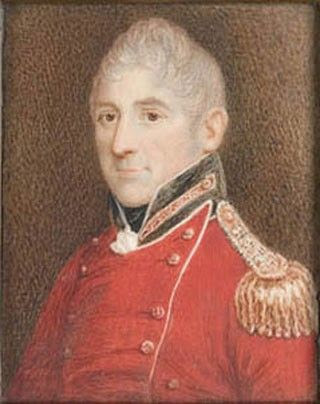
Lord William Charles Augustus
Cavendish-Bentinck (1780-1826) 
Bentinck (later Cavendish-Bentinck), Rt. Hon. Lord William Charles Augustus (1780-1826). 
Third 
son of William Henry Cavendish-Bentinck (1738-1809), 3rd Duke of Portland, and his wife Lady Dorothy, only daughter of William Cavendish (1720-64), 4th Duke of Devonshire, born at Burlington House, Piccadilly, Westminster (Middx), 20 May and baptised at St James, Piccadilly, Westminster, 17 June 1780. An officer in the army (Ensign, 1796; Lt., 1798; Capt., 1798; Maj., 1802; Lt-Col. 1802; retired 1811). MP for Ashburton (Devon), 1807-12; Treasurer of the Household, 1812-26; sworn of the Privy Council, 1812. He married 1st, 21 September 1808 at St Peter, Chester (Ches.), Georgiana Augusta Frederica (who used the surname Seymour) (1782-1813), daughter of the courtesan, Grace Dalrymple Elliott (c.1754-1823), reputedly by either HRH George (1762-1830), Prince of Wales (later King George IV) or George James Cholmondeley (1749-1827), 4th Earl and 1st Marquess of Cholmondeley, both of whom acknowledged paternity), and 2nd, 23 July 1816 at St Martin-in-the-Fields, Westminster (Middx), after a notorious elopement and divorce*, Anne (1788-1875), illegitimate daughter of Richard Colley Wesley (later Wellesley) (1760-1842), 1st Marquess Wellesley, and formerly wife of Sir William Abdy (1778-1868), 7th bt., and had issue:
(1.1) Hon. Georgiana Augusta Frederica Henrietta Cavendish-Bentinck (1811-83), born 21 August 1811 and baptised at Heckfield (Hants), 6 September 1812; raised after her mother's death by Lord Cholmondeley at Cholmondeley Castle; died unmarried, 12 September 1883; administration of goods granted 24 January 1884 (effects £1,568);
(2.1) Anne Hyacinthe Cavendish-Bentinck (1816-88), born 1 September 1816 and baptised at St Mary Abbotts, Kensington (Middx), 14 May 1818; died unmarried at Hotel St. Charles, Cannes (France), 7 June 1888; will proved 15 September 1888 (estate £48,322);
(2.2) Rev. Charles William Frederick (Cavendish-)Bentinck (1817-65), born 8 September 1817 and baptised at St Mary Abbotts, Kensington, 14 May 1818; educated at Merton College and New Inn Hall, Oxford (matriculated 1837; BA 1845; MA 1846); ordained deacon, 1846; vicar of Husborne Crawley and Ridgmont (Beds), 1849-65; married 1st, 26 September 1839 at St George, Hanover Sq., Westminster, Sinetta (1821-50), 'a Romany princess', daughter of James Lambourne, and had issue two sons, who both died in infancy; married 2nd, 13 December 1859 at St Paul, Wilton Place, Westminster, Caroline Louisa (1832-1918) (who m2, 30 November 1870 at St Barnabas, Pimlico (Middx), Harry Warren Scott (1833-89), third son of Sir William Scott, 6th bt., of Ancrum (Berwicks)), eldest daughter of Edwyn Burnaby of Baggrave Hall (Leics), and had issue three daughters; died 17 August 1865 and was buried at Croxton (Cambs);
(2.3) Gen. Arthur Cavendish-Bentinck (1819-77) (q.v.);
(2.4) Emily Cavendish-Bentinck (1820-50), said to have been born in April 1820; married, 8 November 1845 at Cuckney (Notts), Rev. Henry Hopwood (1810-59), rector of Bothal (Northbld), and had issue two sons and one daughter; died of puerperal fever following childbirth, 6 January 1850.
After retiring from the army, he lived in London. His widow lived at Norfolk St. in the Savoy until her death.
He died suddenly of an aneurysm, 28 April 1826 and was buried at St Marylebone (Middx), 3 May 1826; no will has been traced. His first wife died 10 December and was buried at St Marylebone, 17 December 1813. His widow died 19 March 1875; her will was proved 8 May 1875 (effects under £45,000).
* Sir William Abdy was awarded £7,000 in damages for 'criminal conversation' against Cavendish-Bentinck, but this seems never to have been paid.

Lt-Gen. Arthur Cavendish-Bentinck 
Cavendish-Bentinck, Gen. Arthur Charles (1819-77). 
Second son of Lord William Charles Augustus Cavendish-Bentinck (1780-1826) and his second wife, 
Anne, illegitimate daughter of 1st Marquess Wellesley, and formerly wife of Sir William Abdy, 7th bt., born 10 May 1819. An officer in the army (Cornet, 1838; Lt., 1840; Capt., 1847; Maj., 1851; Lt-Col., 1854; retired as Col., 1858; Maj-Gen., 1868; Lt-Gen., 1877). He married 1st, 18 February 1857 at St George, Hanover Sq., Westminster (Middx), Elizabeth Sophie (1835-58), eldest daughter of Sir St Vincent Hawkins-Whitshed, 2nd bt., and 2nd, 10 June 1862 at Weybridge (Surrey), Augusta Mary Elizabeth (1834-93), created in 1880 Baroness Bolsover in her own right, younger daughter of Very Rev. and Hon. Henry Montague Browne, Dean of Lismore, and had issue:
(1.1) William John Arthur Charles James Cavendish-Bentinck (1857-1943), 6th Duke of Portland (q.v.);
(2.1) Lord Henry Cavendish-Bentinck (1863-1931) of Underley Hall, Kirkby Lonsdale (Westmld), born at Eversleigh (Hants), 28 May and baptised at All Saints, Knightsbridge (Middx), 13 July 1863; educated at Eton and Christ Church, Oxford (matriculated 1881); granted the style and precedence of a duke's son, 1880 and was heir presumptive to his half-brother until 1893; Conservative MP for Norfolk NW, 1886-92, Nottingham South, 1895-1906, 1910-29; member of London County Council, 1907-10; an officer in the Derbyshire Yeomanry (Lt-Col.), who served in the Boer War and First World War; Lord Lieutenant of Westmorland, 1927-31; married, 27 January 1892 at St Margaret, Westminster, Lady Olivia Caroline Amelia DGStJ (1869-1939), daughter of Col. Thomas Taylour (1844-93), Earl of Bective, but had no issue; died 6 October 1931; will proved 12 November 1931 (estate £57,452);
(2.2) Lord William Augustus Cavendish-Bentinck (1865-1903), born 31 January and baptised at Send, Ripley (Surrey), 29 March 1865; educated at Christ Church, Oxford (matriculated 1883); granted the style and precedence of a duke's son, 1880; an officer in the 10th Hussars (2nd Lt., 1887; Lt., 1889; Capt., 1893; Maj., 1902), who served in the Boer War and was awarded the DSO, 1901; died unmarried of a heart attack at sea off Ismailia (Egypt), 4 November 1903; will proved 21 November 1903 (estate £100,637);
(2.3) Lord Charles Cavendish-Bentinck (1868-1956), of Birlingham Court (Worcs) and later of Oxton Hall (Notts), born in Dublin, 7 October 1868; granted the style and precedence of a duke's son, 1880; educated at Eton; an officer in the army (2nd Lt., 1889; Lt., 1889; Capt., 1900; Br. Maj., 1900; retired 1906 but returned to regiment, 1914; T/Lt-Col., 1916) who served in the Boer War (wounded and mentioned in despatches) and First World War (wounded, mentioned in despatches three times); Master of Blankney Hunt, 1906-08 and of Southwold and Burton Hunts c.1920; JP (from 1930) and DL (from 1937) for Nottinghamshire; married, 27 February 1897 at Taplow (Bucks), Cecily Mary DGstJ (1872-1936), daughter of Charles Seymour Grenfell, and had issue two daughters; died 19 June 1956; will proved 14 September 1956 (estate £73,143);
(2.4) Lady Ottoline Violet Anne Cavendish-Bentinck (1873-1938), born 16 June and baptised at St Thomas, St Marylebone (Middx), 23 July 1873; granted the style and precedence of a duke's daughter, 1880; educated at Somerville College, Oxford; a famous literary hostess and patron of the arts, who supported and promoted the work of many young artists, sculptors, poets and authors; she was also an enthusiastic decorator, gardener and photographer; married, 8 February 1902, in an open marriage where both parties took lovers, Philip Edward Morrell (1870-1943) of Garsington Manor (Oxon), MP for Oxford South, 1906-10 and Burnley, 1910-18, only surviving son of Frederick Morrell of Black Hall, Oxford, and had issue one son (who died young) and one daughter, but she also brought up several of her husband's children by other women; she had a long affair with Bertrand Russell from 1911 until her death, but other lovers may have included Augustus John, Henry Lamb, Dora Carrington and Roger Fry, as well as a gardener and stonemason employed at Garsington; the affair with the stonemason may have influenced the plot of D.H. Lawrence's Lady Chatterley's Lover (1928); died 21 April 1938 and was buried at Holbeck (Notts); will proved 20 July 1938 (estate £1,832).
He lived at East Court, Wokingham (Berks) and in London after retiring from the army.
He died 11 December 1877 and was buried at Holbeck (Notts); his will was proved 18 March 1878 (effects under £25,000). His first wife died at Kinnard House (Perths) following childbirth, 4 January 1858. His widow died 7 August 1893; her will was proved 27 February 1894 (effects £7,534).

6th Duke of Portland
Cavendish-Bentinck, Rt. Hon. William John Arthur Charles James (1857-1943), 6th Duke of Portland. 
Only child of Gen. Arthur Cavendish-Bentinck (1819-77) and his first wife, 
Elizabeth Sophie, eldest daughter of Sir St Vincent Hawkins-Whitshed, 2nd bt., born at Kinnaird House (Perths.), 28 December 1857. Educated at Eton, 1871-73. An officer in the Coldstream Guards (Lt., 1877-80); Lt-Col. of the Hon. Artillery Company, 1881-89; Hon. Col of 4th Battalion, Sherwood Foresters, 1889-91; President of Nottinghamshire Territorial Army Association. He succeeded his first cousin once removed as 6th Duke of Portland, 6 December 1879, and his stepmother* as 2nd Baron Bolsover, 7 August 1893, and was appointed GCVO, 1896 and KG, 1900, serving as Chancellor of the Order of the Garter, 1937-43. He was Master of the Horse, 1886-92, 1895-1905 and was sworn of the Privy Council, 1886. Chairman of the first Royal Commission on Horse-Breeding, 1888-1912; Lord Lieutenant of Caithness, 1889-1919 and of Nottinghamshire, 1898-1939. President of Highland & Agricultural Society of Scotland, 1888-89; Provincial Grand Master of Nottinghamshire Freemasons, 1898-1933; and Harleian Trustee of the British Museum. He was Bailiff Grand Cross of the Order of St. John, and held foreign orders from Spain, Serbia and Belgium. He was a noted breeder of racehorses, and won the Derby in 1888 (with Ayrshire) and 1889 (with Donovan). He was the author of Men, Women and Things; Fifty years and more of sport in Scotland; Memories of Racing and Hunting; and The Red Deer of Longwell and Braemore. In his later years he fostered research into the history of Welbeck and its collections, leading to the publication of A.S. Turberville's History of Welbeck and its owners (1938-39) and catalogues of his plate and pictures. He married, 11 June 1889 at St Peter, Eaton Sq., Westminster (Middx), Winifred Anna DBE DGStJ JP (1863-1954), Mistress of the Robes to HM Queen Alexandra, 1913-25, only daughter of Thomas Yorke Dallas (later Dallas-Yorke) of Walmsgate (Lincs), and had issue:
(1) Lady Victoria Alexandrina Violet Cavendish-Bentinck (1890-1994), born 27 February 1890; Extra Woman of the Bedchamber to HM Queen Elizabeth (later Queen Elizabeth the Queen Mother), 1937; married, 25 November 1918, Capt. Michael John Erskine Wemyss (1888-1982) of Wemyss Castle (Fife), and had issue two sons; died aged 104, 8 May 1994;
(2) William Arthur Henry Cavendish-Bentinck (1893-1977), 7th Duke of Portland (q.v.);
(3) Lord (Francis) Morven Dallas Cavendish-Bentinck (1900-50), born 27 July 1900; educated at Eton and Christ Church, Oxford and trained in estate management; an officer in the RAF Volunteer Reserve (Fl-Lt.) and in the Nottinghamshire Yeomanry (Lt.); Chairman of Nottingham branch of Alliance Assurance; a semi-professional pianist, he was President of Mansfield & District Music Club; died unmarried, 22 August 1950; will proved 17 January 1951 (estate £56,884).
He inherited the Welbeck Abbey, Bothal Castle and Langwell properties from his first cousin once removed in 1879. He and his son agreed to break the entail on the estates so that they could pass to the 7th Duke's daughters.
He died 26 April 1943 and was buried at Holbeck (Notts); his will was proved 16 September 1943 and 26 April 1943 (estate £210,916). His widow died 30 July 1954; her will was proved 21 October 1954 (estate £87,859).
* This resulted from the unusual remainder in the Bolsover peerage patent to the heirs male of the body of Gen. Arthur Cavendish-Bentinck, rather than only the heirs male by Augusta. As a result, the barony of Bolsover became merged with the dukedom of Portland until it became extinct on the death of the 7th Duke in 1977.

7th Duke of Portland
Cavendish-Bentinck, William Arthur Henry (1893-1977), 7th Duke of Portland. 
Elder son of William John Arthur Charles James Cavendish-Bentinck (1857-1943), 6th Duke of Portland and his wife Winifred Anna DBE, only daughter of Thomas Yorke Dallas-Yorke of Walmsgate (Lincs), born in London, 16 March and baptised at Welbeck, 22 May 1893. Educated at Eton. As a young man he was known as 'Sonny'. An officer in the Royal Horse Guards in the First World War, who served as an ADC on the Personal Staff, 1914-16 and later in France and Gallipoli. Lt-Col. commanding the Nottinghamshire Yeomanry, 1933-36; hon. Air Commodore, 616 Squadron, Auxiliary Air Force. Unionist MP for Newark, 1922-43, who served in government as an assistant whip, 1927, junior Lord of the Treasury, 1928-29 and Aug-Nov 1931. He was styled Marquess of Titchfield until he succeeded his father as 7th Duke of Portland, 26 April 1943. Lord Lieutenant of Nottinghamshire, 1939-62; Chancellor of Nottingham University, 1955-71, which awarded him an honorary degree (LLD, 1955). Joint MFH, Rufford Hunt, 1930. He married, 12 August 1915 at Welbeck, Ivy DBE (1887-1982), Maid of Honour to HM Queen Alexandra, 1912-15, only child of Lord Algernon Charles Gordon-Lennox, and had issue:
(1) Lady (Alexandra Margaret) Anne Cavendish-Bentinck (1916-2008) (q.v.);
(2) Lady (Victoria) Margaret Cavendish-Bentinck (1918-55) (q.v.).
In 1930-32 he built a new house (Welbeck Woodhouse) in the park of Welbeck Abbey, to the designs of Brierley & Rutherford. He inherited the Welbeck Abbey, Bothal Castle and Langwell properties from his father in 1943. At his death his estates passed to his elder daughter, but his titles passed to his first cousin twice removed, Ferdinand William Cavendish-Bentinck (1888-1980).
He died 21 March 1977 and was buried at Holbeck (Notts). His widow died 3 March 1982.

Cavendish-Bentinck, Lady (Alexandra Margaret) Anne (1916-2008). Elder daughter of William Arthur Henry Cavendish-Bentinck (1893-1977), 7th Duke of Portland, and his wife Ivy DBE, only child of Lord Algernon Charles Gordon-Lennox, born 6 September 1916. She was a prominent supporter of charities for the blind and of the Girl Guides, who had a permanent camp at Welbeck. Appointed CStJ. She was unmarried and without issue.
She inherited the Welbeck Abbey estates from her father in 1977, and lived at Welbeck Woodhouse. Welbeck Abbey was leased to the Ministry of Defence as an army training college (Welbeck College) until 2005. At her death, her properties passed to her nephew, William Parente (b. 1951).
She died aged 92 on 29 December 2008, and was buried at Welbeck; her will was proved 26 July 2011.

Cavendish-Bentinck, Lady (Victoria) Margaret (1918-55). Younger daughter of William Arthur Henry Cavendish-Bentinck (1893-1977), 7th Duke of Portland, and his wife Ivy DBE, only child of Lord Algernon Charles Gordon-Lennox, born 9 October 1918. She was a trainbearer for HM Queen Elizabeth (later Queen Elizabeth the Queen Mother) at the coronation of 1937, and was then granted the status of a duke's daughter (six years before her father inherited the peerages). She married, 12 April 1950 at Welbeck Abbey, Don Gaetano Parente (1909-76), Prince of Castel Viscardo (Italy), eldest son of Marchese Enrico Parente, and had issue:
(1) William Henry Marcello Parente (b. 1951) (q.v.).
She died of polio, 29 August 1955, and was buried at Holbeck (Notts). Her husband died 20 July 1976.

Parente, William Henry Marcello (b. 1951). Only son of Gaetano Parente (1909-76), Prince of Castel Viscardo, and his wife Lady (Victoria) Margaret, younger daughter of William Arthur Henry Cavendish-Bentinck (1893-1977), 7th Duke of Portland, born 18 February 1951. High Sheriff of Nottinghamshire, 2003-04. Appointed CBE, 2017. He married, 23 January 1981, Alison Jane MBE DL (b. 1948), psychotherapist, daughter of John Fraser Swan, and had issue:
(1) Margherita Amelia (k/a Daisy) Parente (b. 1981), born 29 August 1981; educated at Bedales School; literary agent; married, 2011, Aaron David Rosenberg (b. 1982), son of Dr Dana Rosenberg of California (USA), and had issue;
(2) (Henry) Joseph Parente (b. 1983), born 12 January 1983; married, 2013, Anuszka, daughter of Mark Elland of Nether Langwith (Notts), and had issue. 
He inherited the Welbeck Abbey estates from his aunt in 2008 and undertook a major restoration programme at Welbeck Abbey, as well as the Welbeck Project, a scheme to transform listed and architecturally significant 18th and 19th century buildings on the estate into a 21st century business community combining rural and creative industries. He recently moved to Welbeck Woodhouse and the Oxford Wing is being restored to provide a home for his son.
Now living. His wife is now living.

Principal sources

Burke's Peerage and Baronetage, 2003, pp. 3181-87; H. Repton, Observations on the theory and practice of landscape gardening, 1803, pp. 65-72; T. Besterman, The Druce-Portland Case, 1935; A. Hamilton Thompson, The Premonstratensian Abbey of Welbeck, 1938; A.S. Turberville, A history of Welbeck and its owners, 1938-39 (2 vols); J. Harris, William Talman: maverick architect, 1982, pp. 19, 46; M.C. Davis, The castles and mansions of Ayrshire, 1991, pp. 261-63; Sir N. Pevsner, I. Richmond, J. Grundy, G. McCombie, P. Ryder & H. Welfare, The buildings of England: Northumberland, 2nd edn., 1992, p.199; S. Daniels, Humphry Repton, 1999, pp. 166-70; P. Smith, 'Welbeck Abbey and the 5th Duke of Portland', in M. Airs (ed.), The Victorian Great House, 2000, pp. 147-64; P. Smith, ‘Lady Oxford’s alterations at Welbeck Abbey, 1741-55’, Georgian Group Journal, 2001, pp. 133-68; P. Smith, 'Welbeck Abbey and the 6th Duke of Portland', in M. Airs (ed.), The Edwardian Great House, 2001, pp. 77-92; L. Worsley & T. Addyman, ‘Riding houses and horses: William Cavendish’s architecture for the art of horsemanship’, Architectural History, 2002, pp. 194-229; P. Smith, 'The survival of the fittest: Welbeck Abbey and the great houses of Nottinghamshire in the 20th century' in M. Airs (ed.), The Twentieth-Century Great House, 2002, pp. 35-56; D.M.L. Onnekink, The Anglo-Dutch Favourite.The career of Hans Willem Bentinck, 1st Earl of Portland (1649-1709), PhD thesis, Univ. of Utrecht, 2004; L. Worsley, ‘Female architectural patronage in the 18th century and the case of Henrietta Cavendish Holles Harley’, Architectural History, 2005, pp. 139-162; A. Gomme & A. Maguire, Design and plan in the country house, 2008, pp. 70-72; H.J. Grainger, The architecture of Sir Ernest George, 2011, pp. 315-22; R. Close & A. Riches, The buildings of Scotland: Ayrshire and Arran, 2012, pp. 326-27; C. Hartwell, Sir N. Pevsner and E. Williamson, The buildings of England: Derbyshire, 3rd edn., 2016, pp. 167-79; C. Hartwell, Sir N. Pevsner and E. Williamson, The buildings of England: Nottinghamshire, 3rd edn., 2020, pp. 678-90; Oxford Dictionary of National Biography entries for 1st Earl, 2nd Duchess, and 3rd and 5th Dukes of Portland, and for Lord William Henry Cavendish-Bentinck;


Location of archives

Cavendish-Bentinck, Dukes of Portland: deeds, family and estate papers relating to Notts, Derbys, Bucks, Herts, Cumberland, London and Northumberland estates, 12th-20th cents [Nottinghamshire Archives, 157DD/P, DD104/1-2]; deeds, estate and family papers relating to Notts, Derbys, Bucks, Herts, Cumberland, London and Northumberland, 14th-20th cents [Nottingham University Archives, Pl, Pw]; Buckinghamshire deeds and papers, 16th cent-1810 [Buckinghamshire Archives, D-RA]; Titchfield deeds, manorial records and estate papers, 13th-18th cents [Hampshire Archives & Local Studies, 5M53]; St Marylebone estate papers, 1765-1882 [City of Westminster Archives BRA1208, D/Wh, Acc 2273, HDW]; Ayrshire estate papers, 1736-20th cent. [Ayrshire Archives, ATD1, ATD13]
Cavendish-Bentinck, Margaret (1715-85), 2nd Duchess of Portland: correspondence and papers, c.1712-81 [Longleat House Archives, PO]

Coat of arms

Quarterly: 1st and 4th, Azure a cross moline Argent (Bentinck); 2nd and 3rd, Sable three stags' heads cabossed Argent attired Or, a crescent for difference (Cavendish)

Can you help?

  • Can anyone supply a good photograph of Welbeck Woodhouse?
  • Can anyone provide photographs or portraits of the people whose names appear in bold above, for whom no image is currently shown?
  • If anyone can offer further information or corrections to any part of this article I should be most grateful. I am always particularly pleased to hear from current owners or the descendants of families associated with a property who can supply information from their own research or personal knowledge for inclusion.

Revision and acknowledgements

This post was first published 5 February 2024 and updated 7 February 2024 and 13 July 2025. I am grateful for the assistance of Pete Smith, Alex Bond and Gregor Matheson Pierrepont with preparing the articles on this family, to Dart Montgomery for suggesting improvements, and to James Hargrave for a correction.

(568) Cavendish-Bentinck of Welbeck Abbey, Dukes of Portland - part 2

This post has been divided into three parts. Part 1 consists of my introduction to the family and its property, and an account of  Welbeck Abbey and Bolsover Castle. This part contains histories of the other houses built or acquired by the family. Part 3 gives the biographical and genealogical details of the family. 

Bulstrode Park, Buckinghamshire

The Temple Bulstrode estate was a property of Bisham Abbey (Berks) for two centures before the Dissolution of the Monasteries, and afterwards was quickly granted by the Crown to Sir Robert Drury (d. 1577) of Hedgerley Park. It seems likely that the Drurys or their succeessors built a house at Bulstrode, but the first building on the site of which anything is known is that depicted on a wonderfully detailed estate map of 1686 by John Fisher in the Centre for Buckinghamshire Studies, which appears to show a modest mid 17th century house with a hipped roof, dormers and cupola, flanked by wings, one of which may be lower, older and semi-timbered. 
Bulstrode Park: detail of 1686 estate map showing the north front
of the  Old Hall. Image: Centre for Buckinghamshire Studies D-RA/3/71. 
The estate map was made at the time the property was acquired by the infamous 'hanging judge', Sir George Jeffreys (1648-89), 1st Baron Jeffreys of Wem, and Fisher's map also incorporates a plan and two elevations for a much larger new house, which was intended to envelop the old manor house. It has been suggested that Fisher was the designer of this house, but it seems more likely that he simply incorporated a plan and elevations produced by the architect on his map. Fisher seems not to have been noted as an architect elsewhere, and since Lord Jeffreys would have had access to the best available designers, it seems improbable that he would have commissioned his plans from a mere surveyor. Although the judge died in 1689 - while awaiting the new king's pleasure in the Tower of London - it would seem from later evidence that these designs were in fact executed, perhaps being finished by the judge's son John, who came of age in 1694 and died in 1702.

Bulstrode Park: plan and elevation for new house from a detail on John Fisher's estate map of 1686. The image has been rotated so that north is at the top. The elevation relates to the east front, on the right hand side of the image as presented. Image: Centre for Buckinghamshire Studies D-RA/3/71.
The plan and elevations on the estate map show that the new house was to have long low elevations. The fifteen-bay east front was to be single storey, with a two-storey pedimented centre of five bays, while the seventeen bay south front was to have a tall piano nobile over a lower basement storey, and six bays either side of its five-bay pedimented centre. Later views confirm that the south front at least was built to these plans, and as far as can be determined from the available evidence, so was the east front. The old hall stood parallel to the south front and to its north, with its central porch tower clearly visible on the plan above. A narrow light well separated the original house from the back of the new south range.

Bulstrode Park: the south front of the house built c.1686 and the adjacent gardens, probably of c.1710, from Vitruvius Britannicus, vol. 4, 1734. The depth of the house is exaggerated, but the view shows the south side of the old hall in the centre of the picture.
The estate was purchased in 1706 by William Bentinck (1649-1709), 1st Earl of Portland, who amassed an extensive portfolio of property in England after 1689. He had been Superintendent of the Royal Gardens in the 1690s and was responsible for bringing the French parterre designer, Claude Desgots, to England to work at Hampton Court. He may have consulted Thomas Hewett (1656-1726) about improvements to the house (a 'Mr Hewett' was paid £30 in 1706) and certainly undertook extensive improvements to the gardens at Bulstrode, with his erstwhile deputy, George London, being employed as the designer. It seems unlikely that work was finished before his death in 1709, when the estate passed to his son Henry, made 1st Duke of Portland in 1716. He was evidently still undertaking improvements in 1715, when bricks were made at Bulstrode by the order of the architect, William Talman, who probably designed some of the more architectural components, such as the staircases at either end of the south front or the orangery north-east of the house. The gardens were depicted in two views in the fourth volume of Vitruvius Britannicus in 1734, and other map and documentary evidence allows us to confirm that most of the features shown were actually carried out: the long canal shown on the western edge of the gardens is still there, and some of the boundaries and avenues are identifiable as relict features by the way they have constrained later developments. 

Bulstrode Park: the wider landscape created for the 1st Earl and 1st Duke of Portland, between 1706 and 1720, from Vitruvius Britannicus, vol. 4, 1734.
In 1745-49, the 2nd Duke of Portland employed Stiff Leadbetter of Eton (Bucks) to make repairs and alterations to the house. Leadbetter, who was trained as a carpenter, was by then also a builder and surveyor, and was on his way to developing a significant architectural practice. His activities at Bulstrode were probably largely confined to new interiors in the house, but he evidently impressed as a few years later he was involved in similar works at Portland House in Whitehall. Work seems to have continued in the 1750s, but whether under Leadbetter's direction or not is unclear. Mary Delany, who stayed at Bulstrode as a guest of the Duchess of Portland many times, recorded in 1756 that 'Bulstrode is greatly improved; the old apartments below new floored and furnished, and many alterations in hand within and without doors'. As this implies, in the 1750s attention turned back to the gardens. The formal landscape shown in Vitruvius Britannicus was by then very old fashioned, and much of it was swept away or altered to a more informal appearance.  In 1756, the great horseshoe-shaped gravel walk 'with great slopes and a place in the the bottom for water (which fronted the house), that could never be made to answer its purpose, is all thrown down, and a lawn is to be substituted in its place, that will fall with a hanging level towards the park, and open a very fine and agreeable view to the house'. The 2nd Duke died in 1762, and Bulstrode passed to his son, the 3rd Duke. However, the 3rd Duke preferred Welbeck to Bulstrode, and effected an exchange with his mother, who had been left Welbeck (her family seat) for life. This explains why, until her death in 1785, Bulstrode remained in the possession of the 2nd Duchess, who created a menagery on the southern border of the park for her collection of exotic animals and birds. In the 1770s a grotto was built, which Mrs Delany and the Duchess decorated with snail shells. The Duchess, whose chief and abiding interest was botany, also created an American garden in the newly informalised landscape, with specimens of many exotic trees and plants from North America. 

Bulstrode Park: plan of the landscape in 1784. Although many of the formal elements of the landscape depicted in Vitruvius Britannicus have been removed, the overall shape of that design remains recognisable. Image: Centre for Buckinghamshire Studies D-RA/3/76.
Bulstrode Park: drawing of the grotto by S.H. Grimm, 1781. Image: British Library.
Bulstrode Park: drawing of the house from the south-east by S.H. Grimm, 1781. Image: British Library.

After the Duchess' death, the property returned to her son, and the 3rd Duke seems to have undertaken further major landscaping work in the park to the designs of Samuel Lapidge, successor to Capability Brown, whose team were at work in the park until the mid 1790s. From 1789 onwards he also consulted Humphry Repton - then making proposals for Welbeck - about further improvements. Repton criticised the tendency of Lapidge's workmen to smooth away hills and hollows in the interest of a level greensward, and produced a Red Book in 1790, but he continued to visit Bulstrode and provide advice until the duke's death. Many of his suggestions appear to have been carried out, including the creation of a new drive and the design of a flower garden, which he engraved for Peacock's Polite Repository in 1802, and it seems to have been one of the commissions of which he was most proud. 


Bulstrode Park: detail of a watercolour of the park showing the east front of the house, 1794. Image: British Museum.

Bulstrode Park: plan of the park from Repton's Observations on the theory and practice of landscape gardening, 1803.
In the 1790s, the 3rd Duke handed over Welbeck to his son (later the 4th Duke) and moved to Bulstrode, where he commissioned the overworked and often inattentive James Wyatt to conduct a rebuilding of the much altered 17th century house. Work seems to have begun about 1806 with the construction of a new west wing and a rebuilding of the south-west corner of the old house in a castellated style. At the same time, parts of the old house were unroofed and partially demolished, so that the house was very much a building site when the 3rd Duke died in 1809 and work at Bulstrode was abandoned, for the 4th Duke had determined to sell the estate and concentrate his resources on Welbeck and his London property.

Bulstrode Park: this drawing may show the house Wyatt intended to build as the west wing (left) and west end of the south wing (centre) closely correspond to what was built. Image: Historic England BB90/4047.
Bulstrode Park: sketch of the house by John Buckler, 1818, showing the partially-rebuilt south range (left) and the partially unroofed east range.
Image: British Library.

Bulstrode Park: perspective view of Wyatville's proposal for completing the house, c.1812.
Image: Sotheby & Co, where the drawing was sold 10 April 1997.
The estate was sold in 1810 to the 11th Duke of Somerset, who in about 1812 commissioned designs from Jeffry Wyatville for completing the mansion begun by Wyatt for the Duke of Portland. Wyatville's designs, now in the RIBA Drawings Collection, show that he intended to retain and remodel the surviving fabric of the old house, giving it a castellated character and a few decorative features, but only in completing the remodelling of the south range, begun by his uncle, did he intend much new work. Even this modest scheme was, however, not proceeded with, and in 1814 the fittings of the chapel (which seems to have lain on the west side of the house, between the two parts rebuilt by Wyatt) were sold. A great deal of timber was sold from the park during the Napoleonic Wars, when timber prices were high, and for much of the early 19th century the estate seems to have been unoccupied and neglected, with the Duke living at Maiden Bradley (Wilts) and later Stover House (Devon).

Bulstrode Park: the perspective drawing of Benjamin Ferrey's
design proposal, showing the house from the north-west.
Bulstrode Park: the west porch tower of the
Wyatt wing was 
the only part of the old house
not demolished in 1861. It is now known
as the Pigeon House.


Matters changed when the 11th Duke of Somerset died in 1855 and was succeeded by his son, Edward Seymour, 12th Duke of Somerset, a Whig politician who clearly had an interest in architectural matters since he had (briefly) been First Commissioner of Works. He decided to make Bulstrode Park his principal seat, and selected as his architect the Gothic Revivalist Benjamin Ferrey, who between 1861 and 1870 almost completely cleared the site and rebuilt a new house of harsh red brick and stone. The only part of the old house suffered to remain was a brick porch tower from the west end of the Wyatt wing, which was made into a garden feature. The architect's perspective drawing makes the house look attractive in a spreading, picturesque way, but the reality is disappointing, partly because the materials have not aged gracefully. The house is of two and three storeys with a big square north tower as the entrance porch and a jumble of gables, spired towers and clustered chimneystacks. The entrance front is rather dwarfed by the adjoining service courts and the garden front is largely symmetrical and recessed behind a wilfully detailed colonnade. The best feature is the unexpectedly jolly and inventive turret at the south-west corner. 

Bulstrode Park: the entrance front.
Bulstrode Park: the present house from the south-west, showing the side elevation and garden front.
Bulstrode Park: plan of the Benjamin Ferrey house from The Builder, 1861.
Little survives of the original Benjamin Ferrey interiors except for the staircase which stands in a top-lit vaulted hall surrounded by a gallery with iron railings and clusters of four twisted columns. The remaining rooms were remodelled c.1900 by F.C. Eden in neo-Georgian style, and have been further altered since during the period when the house was in institutional use by Christian organisations between 1958 and 2016. In the latter year it was sold and planning permission was obtained for its conversion to an hotel, but the house was sold again in 2023 and its future is currently uncertain.

Bulstrode Park: staircase hall, 2017. Image: Landwood Group.

Descent: Crown granted 1538 to Sir Robert Drury (d. 1577); to son, Robert Drury, who sold 1591 to his son, Sir Henry Drury (d. 1617), kt.; to widow, Susan, Lady Drury (fl. 1635) for life, and then to Marmaduke Darrell (b. c.1621); sold 1670 to trustees of Sir William Bowyer (1612-79), 1st bt., who sold also in 1670 to Sir Roger Hill, kt.; sold 1686 to Sir George Jeffreys (1648-89), 1st bt. and 1st Baron Jeffreys of Wem; to son, John Jeffreys (1673-1702), 2nd Baron Jeffreys of Wem; to sister Mary, wife of Charles Dive; sold 1706 to William Bentinck (1649-1709), 1st Earl of Portland; to son, William Henry Bentinck (1682-1726), 2nd Earl and 1st Duke of Portland; to son, William Bentinck (1709-62), 2nd Duke of Portland; to son, William Henry Cavendish-Bentinck (1738-1809), 3rd Duke of Portland; to son, William Henry Cavendish Cavendish-Scott-Bentinck (1768-1854), 4th Duke of Portland, who sold 1810 to Edward Adolphus Seymour (1775-1855), 11th Duke of Somerset; to son, Edward Adolphus Seymour (1804-85), 12th Duke of Somerset; to daughter, Lady Helen Guendolen (1846-1910), wife of Sir John William Ramsden (1831-1914), 5th bt.; to son, Sir John Frecheville Ramsden (1877-1958), 6th bt.; sold 1958 to Bruderhof Community; sold 1966 to Worldwide Evangelisation Crusade Ltd.; sold 2016 to Dr Ahmed Elfituri, who obtained permission for conversion to an hotel; sold 2023.

Bothal Castle, Northumberland

In origin, Bothal is a medieval castle, built on a naturally defensible site on the north bank of the River Wansbeck, east of Morpeth. The site is believed to have been occupied for several centuries before licence to crenellate was granted to Robert Bertram in 1343, after which the stone castle of which parts survive was built. The castle consisted of a gatehouse tower separating an inner bailey with a number of square towers (of which little survives) around it from an outer bailey (the Yethouse Court), which had a further square tower (the Ogle Tower) at its north-west corner. 

Bothal Castle: engraving of the castle by Samuel & Nathaniel Buck, 1728.
Bothal Castle: north side of the gatehouse tower
by S.H. Grimm, c.1790. Image: British Library.
Bothal Castle: drawing from the north-west by James Moore, 1792.
Image: Yale Center for British Art


The four-storey gatehouse tower may stand on the site of an earlier keep, and was always the dominant feature of the building. Its outer face to the north has a pair of crenellated polygonal turrets flanking the gate passage, and two of the merlons support carved stone figures, presumably intended to suggest to approaching enemies a discouraging level of vigilance. Similar figures are found at other castles in the north-east (Alnwick, Raby, Hylton), and they are sometimes called apotropaic, but here their function was to ward off earthly rather than supernatural evil. At the south-west angle of the gatehouse is a taller stone turret containing a newel stair under a pretty umbrella vault. At ground level, the long passageway through the gatehouse has a pointed vault with chamfered ribs, and is flanked by vaulted guard rooms; three 'murder holes' allowed defenders in the room above another means of repelling intruders.

Bothal Castle: the site as shown on the 1st edn OS 25" map, 1896
Bothal Castle: the site as shown on the 1st edn OS 6" map, 1859. 


By the early 18th century Bothal Castle had been abandoned and stood in ruins. The engraving of 1728 by Samuel and Nathaniel Buck  suggests the gatehouse itself was then largely still intact, and the bailey walls survived to a much greater height than is suggested by later drawings and engravings. By the early 19th century, the picturesque qualities of the site were appreciated, and it was regularly depicted in collections of engravings from Francis Grose onwards. 

Bothal Castle: the house from the inner bailey, as enlarged in the 19th and early 20th centuries. Copyright unknown.
Bothal Castle: the house from the west in 2007. Image: PookieFugglestein. No rights reserved.
The 4th Duke of Portland, who was a Fellow of the Society of Antiquaries, funded the restoration of the gatehouse tower in 1830-31, as an estate office for his northern properties and a home for his agent, William Sample. As part of the work, the transomed 16th century window on the south side of the tower and the present drawing room fireplace were brought to Bothal from Cockle Park Tower, which had partially collapsed in 1828. The Sample family remained the tenants of the castle, and extended it to the west in the 1850s and again in 1909. A range of stables had also been built along the west side of the outer court by 1859.

Descent: [The medieval section of this descent is partly speculative.] Robert Bertram (d. 1363); to daughter, Helen, wife of Robert Ogle (d. 1355); to son, Sir Robert Ogle (1353-1410); to younger son, Sir John Ogle (later Bertram) (d. 1450); to son, Sir William Bertram (d. 1466); to son, William Bertram alias Ogle (fl. 1458); to brother, Robert Ogle alias Bertram; perhaps to son, Robert Ogle alias Bertram, who died young, and on his death to Ralph Ogle (1468-1512), 3rd Baron Ogle; to son, Robert Ogle (c.1490-1540), 4th Baron Ogle; to son, Robert Ogle (d. 1545), 5th Baron Ogle; to son, Robert Ogle (c.1526-62), 6th Baron Ogle; to half-brother, Cuthbert Ogle (c.1540-97), 7th Baron Ogle; to daughter, Catherine (d. 1629), 8th Baroness Ogle, wife of Sir Charles Cavendish (d. 1617); to son, Sir William Cavendish (1593-1676), later created Viscount Mansfield (1620), Earl of Newcastle on Tyne (1628), Marquess of Newcastle on Tyne (1643) and Earl of Ogle and Duke of Newcastle upon Tyne (1665); to son, Henry Cavendish (1630-91), 2nd Duke of Newcastle upon Tyne; to daughter, Lady Margaret Cavendish (1661-1716), wife of John Holles (1662-1711), 4th Earl of Clare and later Duke of Newcastle upon Tyne; to daughter, Lady Henrietta Cavendish-Holles (1694-1755), wife of Edward Harley (d. 1741), 2nd Earl of Oxford and Mortimer; to daughter Lady Margaret (d. 1785), wife of William Bentinck (1709-62), 2nd Duke of Portland; to son, William Henry Cavendish-Bentinck (1738-1809), 3rd Duke of Portland; to son, William Henry Cavendish Cavendish-Scott-Bentinck (1768-1854), 4th Duke of Portland; to son, William John Cavendish Cavendish-Scott-Bentinck (1800-79), 5th Duke of Portland; to first cousin once removed, William John Arthur Charles James Cavendish-Bentinck (1857-1943), 6th Duke of Portland; to son, William Arthur Henry Cavendish-Bentinck (1893-1977), 7th Duke of Portland; to daughter, Lady Anne Cavendish-Bentinck (1916-2008); to nephew, William Henry Marcello Parente (b. 1951), Prince of Castel Viscardo.

Fullarton House, Troon, Ayrshire

Fullarton House, Troon: an early 20th century postcard view, showing the three-storey centre of 1745 and the lower wings and pavilions of c.1790. 

Fullarton House: second and first floor plans, as first built.
Image: RCAHMS.
The house was built in 1745 for William Fullarton, whose family had owned the estate since the 13th century, but was on a different site to its predecessors. As first built, it was a rather Gibbsian three-storey, seven-bay house with a three-bay breakfront on both the entrance and rear elevations, supporting steep-sided pediments decorated with mighty urns. The house was entered on the ground floor of the west front, but the principal reception rooms were placed on the upper floors. As originally built, a staircase lay behind the entrance hall and extended into the breakfront on the east elevation. The dining room and two other reception rooms were on the first floor, and the drawing room, with a coved ceiling and fine plasterwork, was on the second floor. The east front had a row of three oculi surmounted by a curiously Mannerist pedimental swag on the first floor, probably to disguise the fact that the staircase rose against this wall.

Fullarton House, Troon: the grand saloon of c.1745 (the north room on the second floor) shortly before demolition. Image: RCAHMS.
In 1790, the Adam brothers were called in by Col. William Fullarton, and made designs for a larger new mansion in the castle style, a castellated stable block, and a classical mausoleum. Only the stables were built, with the two more visible fronts decorated in the castle style and the rest more plainly treated. 

Fullarton House, Troon: the castle-style stable block designed by Robert & James Adam, 1790. Image: Roger Griffiths. No rights reserved.
Although the castle-style house was never built, work did begin in 1791 on adding two-storey wings to the original house, and probably also on constructing the charming pavilions and strongly architectural piers which framed the west front. The pavilions and piers are very probably the work of Robert and James Adam, but it is hard to accept that the wings were designed by them, even allowing for a sudden reduction in the budget. On the entrance front, the wings were merely stepped forward from the older house and had Venetian windows on the ground and first floors. At the rear, the wings were much longer, cramping the appearance of the main block, although the fenestration was the same as on the entrance side. The interior was significantly replanned with the addition of the wings, which included two new main staircases, allowing that behind the entrance hall to be taken out. A new single-storey curved and glazed corridor, linking the two staircase halls, was added in front of the east elevation, probably around 1820, in order to assist the circulation.

Fullarton House: east (rear) elevation, showing the far-projecting wings and the glazed passageway linking them. Image: RCAHMS.

In the late 19th and 20th centuries, the house was let to Lord and Lady Glenarthur, but after they moved to London, the house was sold in 1928 to the local council, and parts of it were converted into flats. As is so often the case, the Town Council failed to undertake adequate maintenance, and the condition of the property quickly deteriorated. It was pulled down in 1966, but the stable block survived and was converted into housing by Hay, Steel & Macfarlane in 1974.

Descent: built for William Fullarton (d. 1759); to son, Col. William Fullarton (1754-1808); sold 1805 to William Henry Cavendish-Bentinck (1738-1809), 3rd Duke of Portland; to son, William Henry Cavendish Cavendish-Scott-Bentinck (1768-1854), 4th Duke of Portland; to son, William John Cavendish Cavendish-Scott-Bentinck (1800-79), 5th Duke of Portland; to sisters, Charlotte (1806-89), Viscountess Ossington, and Lucy Joan (1807-99), Baroness Howard de Walden, who seem to have bequeathed it to William John Arthur Charles James Cavendish-Bentinck (1857-1943), 6th Duke of Portland; sold 1928 to Troon Town Council, which demolished it in 1966.


Langwell House, Berriedale, Caithness

The core of the present house is a crowstep-gabled farmhouse, said to have been built after 1813 for James Horne, but possibly including some 18th century work. This modest house was purchased by the 5th Duke of Portland in 1857 and somewhat enlarged, creating a rambling house. Much of it was apparently built of ashlar stone, but it was harled in the 20th century and remains so today.
 
Langwell House: postcard view of the house c.1930.
Langwell House: the house today. Image: Robert Richmond.
The estate, later of more than 81,000 acres, was purchased for £90,000, presumably to replace Fullarton, which the Duke knew would pass on his death to his sisters. He never lived at Langwell, although he did visit it occasionally, but he caused most of the estate to be converted in a deer forest, and the 6th and 7th Dukes used it as a shooting lodge. 

Langwell Lodge: the walled garden c.1930, from an old postcard.
The large walled garden at the west end of the policies was created in the early 19th century for the original farmhouse, but the present layout was devised by the head gardener, John Murray, for the 6th Duke in 1916. After falling into disrepair, was restored by Lady Anne Cavendish-Bentinck, and it is now open to the public on an occasional basis through Scotland's National Gardens Scheme.

Descent: sold 1788 to Sir John Sinclair of Ulbster (Caithness); sold 1813 to James Horne (1754-1831); to nephew, Donald Horne (1787-1870); sold 1857 to William John Cavendish Cavendish-Scott-Bentinck (1800-79), 5th Duke of Portland; to first cousin once removed, William John Arthur Charles James Cavendish-Bentinck (1857-1943), 6th Duke of Portland; to son, William Arthur Henry Cavendish-Bentinck (1893-1977), 7th Duke of Portland; to daughter, Lady Anne Cavendish-Bentinck (1916-2008); to nephew, William Henry Marcello Parente (b. 1951), Prince of Castel Viscardo.

To continue to part 3 of this post, click here.

Principal sources

Burke's Peerage and Baronetage, 2003, pp. 3181-87; H. Repton, Observations on the theory and practice of landscape gardening, 1803, pp. 65-72; T. Besterman, The Druce-Portland Case, 1935; A. Hamilton Thompson, The Premonstratensian Abbey of Welbeck, 1938; A.S. Turberville, A history of Welbeck and its owners, 1938-39 (2 vols); J. Harris, William Talman: maverick architect, 1982, pp. 19, 46; M.C. Davis, The castles and mansions of Ayrshire, 1991, pp. 261-63; Sir N. Pevsner, I. Richmond, J. Grundy, G. McCombie, P. Ryder & H. Welfare, The buildings of England: Northumberland, 2nd edn., 1992, p.199; S. Daniels, Humphry Repton, 1999, pp. 166-70; P. Smith, 'Welbeck Abbey and the 5th Duke of Portland', in M. Airs (ed.), The Victorian Great House, 2000, pp. 147-64; P. Smith, ‘Lady Oxford’s alterations at Welbeck Abbey, 1741-55’, Georgian Group Journal, 2001, pp. 133-68; P. Smith, 'Welbeck Abbey and the 6th Duke of Portland', in M. Airs (ed.), The Edwardian Great House, 2001, pp. 77-92; L. Worsley & T. Addyman, ‘Riding houses and horses: William Cavendish’s architecture for the art of horsemanship’, Architectural History, 2002, pp. 194-229; P. Smith, 'The survival of the fittest: Welbeck Abbey and the great houses of Nottinghamshire in the 20th century' in M. Airs (ed.), The Twentieth-Century Great House, 2002, pp. 35-56; D.M.L. Onnekink, The Anglo-Dutch Favourite.The career of Hans Willem Bentinck, 1st Earl of Portland (1649-1709), PhD thesis, Univ. of Utrecht, 2004; L. Worsley, ‘Female architectural patronage in the 18th century and the case of Henrietta Cavendish Holles Harley’, Architectural History, 2005, pp. 139-162; A. Gomme & A. Maguire, Design and plan in the country house, 2008, pp. 70-72; H.J. Grainger, The architecture of Sir Ernest George, 2011, pp. 315-22; R. Close & A. Riches, The buildings of Scotland: Ayrshire and Arran, 2012, pp. 326-27; C. Hartwell, Sir N. Pevsner and E. Williamson, The buildings of England: Derbyshire, 3rd edn., 2016, pp. 167-79; C. Hartwell, Sir N. Pevsner and E. Williamson, The buildings of England: Nottinghamshire, 3rd edn., 2020, pp. 678-90; Oxford Dictionary of National Biography entries for 1st Earl, 2nd Duchess, and 3rd and 5th Dukes of Portland, and for Lord William Henry Cavendish-Bentinck;

Revision and acknowledgements

This post was first published 5 February and updated 7 February 2024. I am grateful for the assistance of Pete Smith, Alex Bond and Gregor Matheson Pierrepont with preparing the articles on this family, and to Dart Montgomery for suggesting improvements.